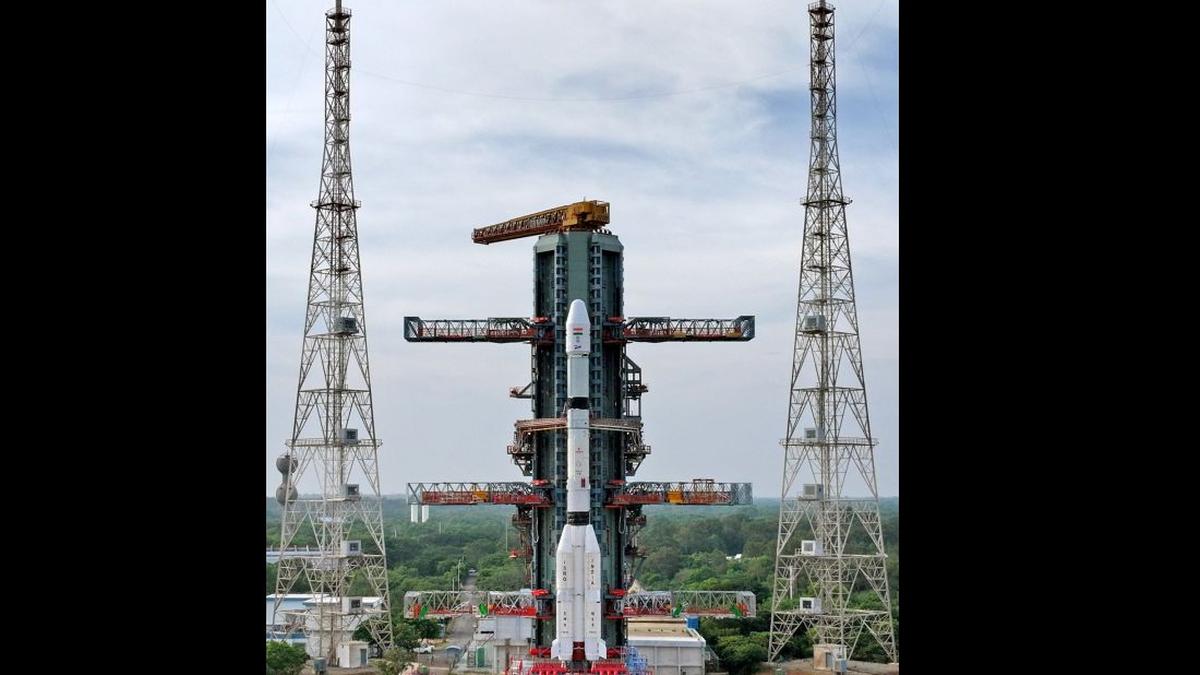
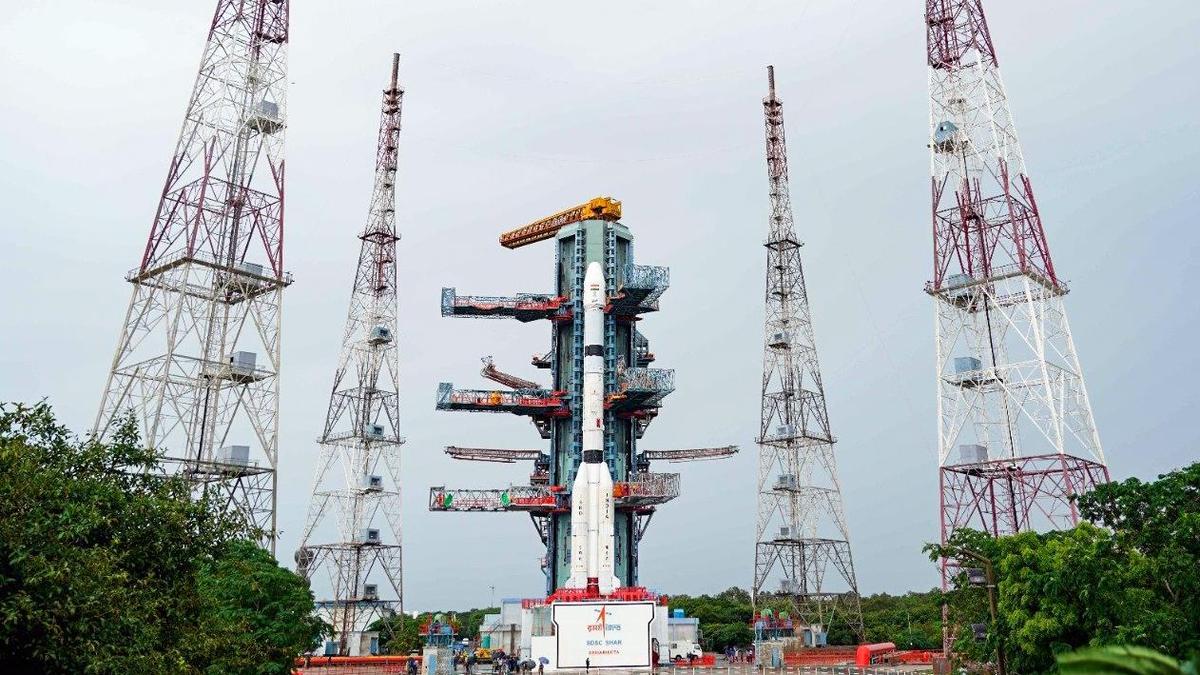
ISRO successfully launched the NVS-03 navigation satellite on Friday, October 30, 2026, aboard its GSLV-F18 rocket from the Satish Dhawan Space Centre in Sriharikota. The rocket lifted off from the second launch pad and, about 18 minutes later, placed the satellite into its intended geosynchronous transfer orbit. ISRO confirmed on the night of October 30 that the satellite had reached its intended orbit.
The mission matters because India’s own navigation system is running on fumes. NavIC, the regional constellation that India depends on for positioning services, needs at least four satellites in working order to run its core services in theory. Information shared by the Indian government shows that only three of the constellation’s 11 satellites can currently perform their primary functions.
Those three are the first-generation IRNSS-1B and IRNSS-1I, along with the second-generation NVS-01. IRNSS-1B has already outlived its designed 10-year lifespan, so its continued operation is uncertain. IRNSS-1I could keep working until around 2028. NVS-01, if it performs as intended, has at least another decade ahead of it.
The satellite that failed to climb
The problem is not just the count. NVS-02, launched in January 2025, was unable to raise its orbit after its onboard engines failed to fire. That left the satellite severely limited in what it could do, which means NVS-01 is currently the only satellite that can be considered reliably operational over the long term.
NVS-03 is meant to change that math. The satellite carries an indigenous atomic clock alongside procured atomic clocks, a detail that sits at the heart of what ISRO hopes to restore. Precise timing is what turns a satellite signal into a usable position fix, so a working clock onboard is not a minor component.
A launch schedule built on gaps
The NVS series has not moved at a steady pace. NVS-01 was launched in May 2023, followed by NVS-02 in January 2025, a gap of 19 months. NVS-03, now in orbit, came nearly 20 months after its predecessor.
The wider launch programme has also taken hits. ISRO recorded three failures in six missions launched from Indian soil between January 2025 and January 2026. Those setbacks have made the agency’s schedule harder to hold, and every successful flight now carries extra weight.
That is why the orbit insertion on Friday night drew so much attention. Each NVS satellite that reaches its target orbit is one more piece in a system that has been missing parts for a long time.
The GSLV-F18 vehicle has successfully and precisely injected the NVS-03 satellite weighing 2250 kg in the intended elliptical orbit.
That line came from ISRO Chairman Dr. V. Narayanan, who also congratulated the agency’s teams, industrial partners and academic collaborators on what he called an outstanding accomplishment.
How far NavIC still has to go
Launching NVS-03 is only the start. Restoring NavIC to its minimum operational capacity would require ISRO to launch at least two more NVS-series satellites, NVS-04 and NVS-05. Together with NVS-01 and NVS-03, those four satellites would form the smallest constellation able to resume the system’s core navigation services. Those launches would need to happen within a relatively short window to keep the system continuous.
Four satellites would only meet the basic requirement, though. For stronger coverage and uninterrupted service, India would need backup satellites already in orbit. That means building and maintaining a constellation of around six to seven NVS-series satellites to secure the long-term stability of a regional system like NavIC.
The gap between where NavIC stands and where it needs to be is wide. Closing it depends on the next launches arriving on time and working as designed, something the recent record makes hard to take for granted.
How it compares globally
The United States operates the Global Positioning System, which underpins a vast range of civilian, commercial and military activity worldwide. Twenty-four satellites are considered sufficient for global coverage and optimal performance, but the US keeps a larger constellation of at least 30. That extra capacity works as a safety net, keeping services running even when some satellites malfunction or go offline.
China runs its own satellite-based system, BeiDou, as an alternative to GPS for its domestic and global positioning needs. BeiDou’s global services are designed around a constellation of 30 satellites, and estimates suggest about 35 are currently in orbit.
Against those systems, NavIC is a regional network that has been running with a thin margin. The NVS-03 launch does not close that gap on its own, but it is the first real move toward rebuilding the cushion that a navigation system needs to keep working when satellites fail.
The Andhra Pradesh connection
The launch took place from the Satish Dhawan Space Centre in Sriharikota, which sits in Andhra Pradesh. Every GSLV mission that lifts off from the spaceport puts the state at the centre of India’s satellite navigation effort, and this one is no exception. The rocket’s flight path and the orbit insertion that followed were carried out from the coastal launch complex in the state.
The mission also ties Andhra Pradesh to the outcome of NavIC’s recovery. A working regional navigation system depends on satellites that begin their lives at places like Sriharikota, so the progress of the NVS programme runs directly through the state’s launch infrastructure.
What comes next
For now, the immediate story is a clean launch and a satellite in the right orbit after a long wait. The longer story is whether ISRO can keep the NVS programme moving fast enough to rebuild NavIC before more of its satellites reach the end of their lives. With only three satellites doing the core work today, every additional successful launch counts.
The next steps will decide how quickly India can move from a system running on a few aging satellites to one with the depth and backup it needs. For a navigation network that millions of users rely on, that is the number to watch.
TL;DR
- ISRO’s GSLV-F18 successfully placed the NVS-03 navigation satellite into orbit on October 30, 2026.
- The 2,250 kg satellite reached its intended geosynchronous transfer orbit about 18 minutes after lift-off from Sriharikota.
- Only three of NavIC’s 11 satellites can currently perform their primary functions, according to the Indian government.
- NVS-02 failed to raise its orbit after its onboard engines did not fire, limiting its usefulness.
- Restoring NavIC’s minimum capacity needs NVS-04 and NVS-05, with six to seven satellites required for long-term stability.
- NVS-03 carries an indigenous atomic clock alongside procured atomic clocks.