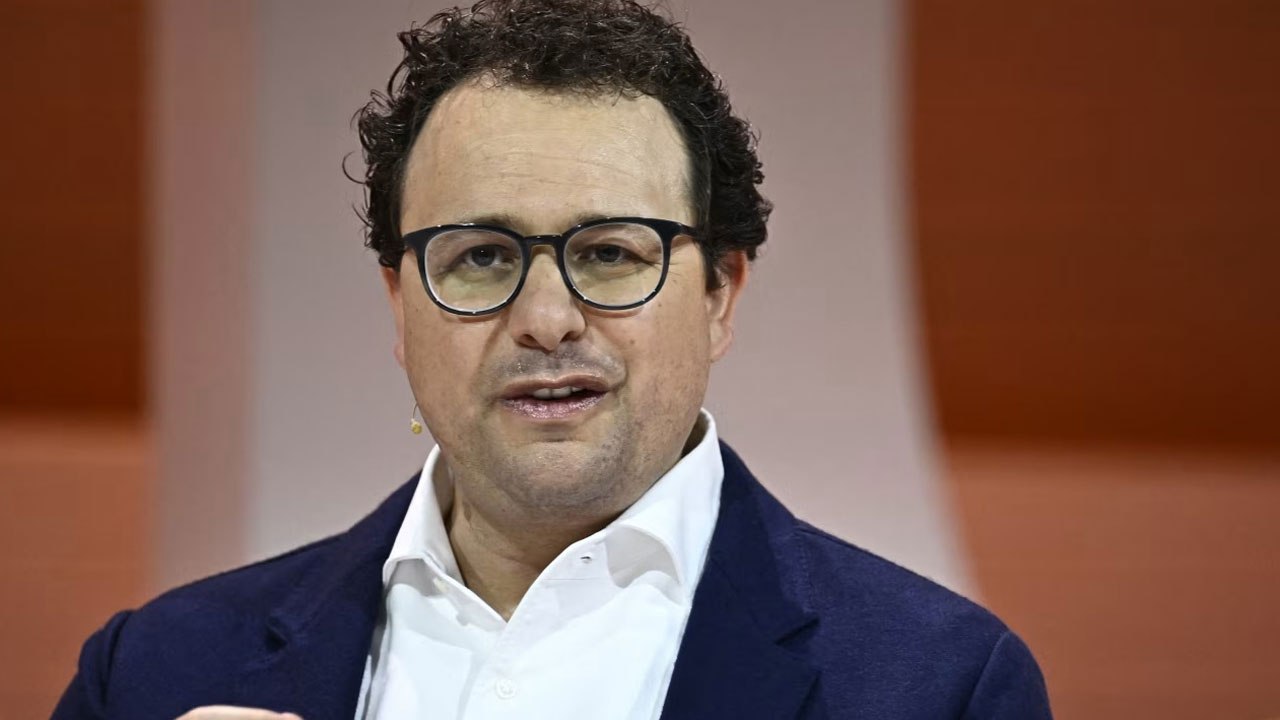
Anthropic chief executive Dario Amodei has said that rapid progress in artificial intelligence could transform medicine, potentially turning cancer, Alzheimer’s, heart disease and mental illness into diseases of the past within the next ten years. The report, filed from New Delhi on Thursday, places his prediction at the center of a debate that has drawn both excitement and sharp doubt from people who work in drug development.
Amodei’s core argument is simple. If AI is used the right way, it could help find solutions to problems that have troubled humanity for thousands of years. Anthropic is the company behind Claude, its AI chatbot, so the claim comes from someone who builds the technology he is describing.
The case for optimism
The hope in Amodei’s message is hard to miss. Diseases that have shaped families, hospitals and research budgets for generations could, in his telling, lose their hold on people. Cancer, Alzheimer’s and heart disease sit at the top of that list, along with mental illness, which the report includes alongside the more physical conditions.
Used the right way, AI could find solutions to problems that have troubled humanity for thousands of years.
The report presents this as a view from the top of the AI industry rather than a settled scientific finding. That distinction matters, because the timeline Amodei points to is far shorter than what most medical researchers would expect from any new treatment.
Where the skepticism comes from
Several figures in the pharmaceutical industry have questioned whether AI can deliver on that schedule. Jeff Leiden, executive chairman of Vertex Pharmaceuticals, pointed to a sobering record. According to the report, about 50 AI companies helped examine 10,000 drug compounds. None of them produced a drug that could work on its own.
That result does not mean AI has failed in drug discovery. It does show that finding promising chemistry and building a working medicine are two very different jobs. Leiden’s comments cut directly against the idea that a few more years of progress will erase the gap between a computer-generated idea and a treatment patients can take.
Other experts made the same point from a different angle. Identifying a molecule that could be useful for a drug does not turn that molecule into medicine, they said. The path from that first discovery runs through laboratory experiments, studies in animals, clinical trials in humans and approval from regulatory bodies. Each step can stop a promising candidate in its tracks.
The slow road from lab to patient
The timeline is the part of the debate that most often gets lost in headlines. Developing a drug and making it available to the public has typically taken about 12 years, the experts noted. A large share of that time goes to testing and safety checks, the parts of the process that cannot be rushed without putting people at risk.
That is why the prediction of curing major diseases within a decade draws such strong pushback. Even if AI speeds up the early search for drug candidates, the later stages of proving that a treatment is safe and effective still take years. The report makes clear that these stages do not disappear because a computer model looks promising.
Two prominent researchers raised a deeper concern about the technology itself. Cognitive scientist Gary Marcus and cardiologist Eric Topol said that current AI models do not yet have the full ability to understand the complex cause-and-effect relationships found in biology. Biology rarely follows simple rules, and a system that spots patterns in data may still miss how a treatment behaves inside a living body.
The report also notes a simple fact that cuts through much of the excitement. So far, no medicine designed by AI has been fully adopted for medical use. The gap between a promising result and a drug in a pharmacy remains wide, and the experts quoted in the report agree that closing it requires the same evidence medicine has always demanded.
What the debate means for patients
For patients waiting on new treatments, the disagreement is more than an academic argument. Amodei’s vision offers a reason to be hopeful that research will move faster and that tools like AI could help scientists reach answers that once took decades. The skeptics do not dismiss that possibility. They are asking that hope be matched by proof.
Both sides agree on one point. There is no shortcut around research and testing if a new treatment is to be shown to work. Whether AI can shorten the road to that proof is the question that will decide whether the ten-year timeline holds, or whether it becomes another bold prediction that the lab and the clinic had to test.
TL;DR
- Anthropic CEO Dario Amodei says AI could make cancer, Alzheimer’s, heart disease and mental illness diseases of the past within ten years.
- He argues that AI used the right way could find solutions to problems troubling humanity for thousands of years.
- Vertex Pharmaceuticals executive chairman Jeff Leiden said about 50 AI companies helped examine 10,000 drug compounds without producing a working drug.
- Experts say an AI-identified molecule does not become medicine without lab tests, animal studies, human trials and regulatory approval.
- Developing a drug and bringing it to the public has typically taken about 12 years.
- No medicine designed by AI has yet been fully adopted for medical use, according to the report.