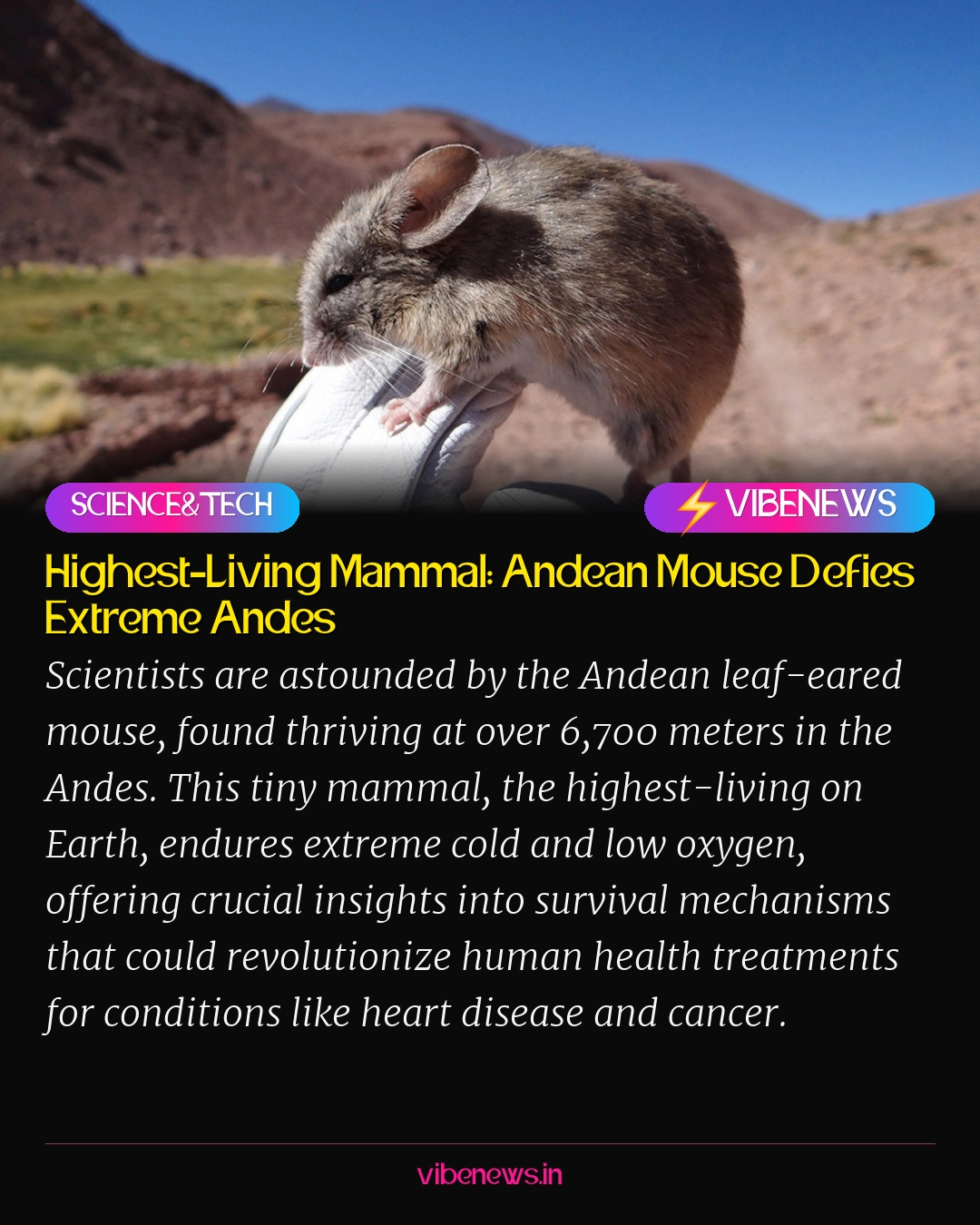
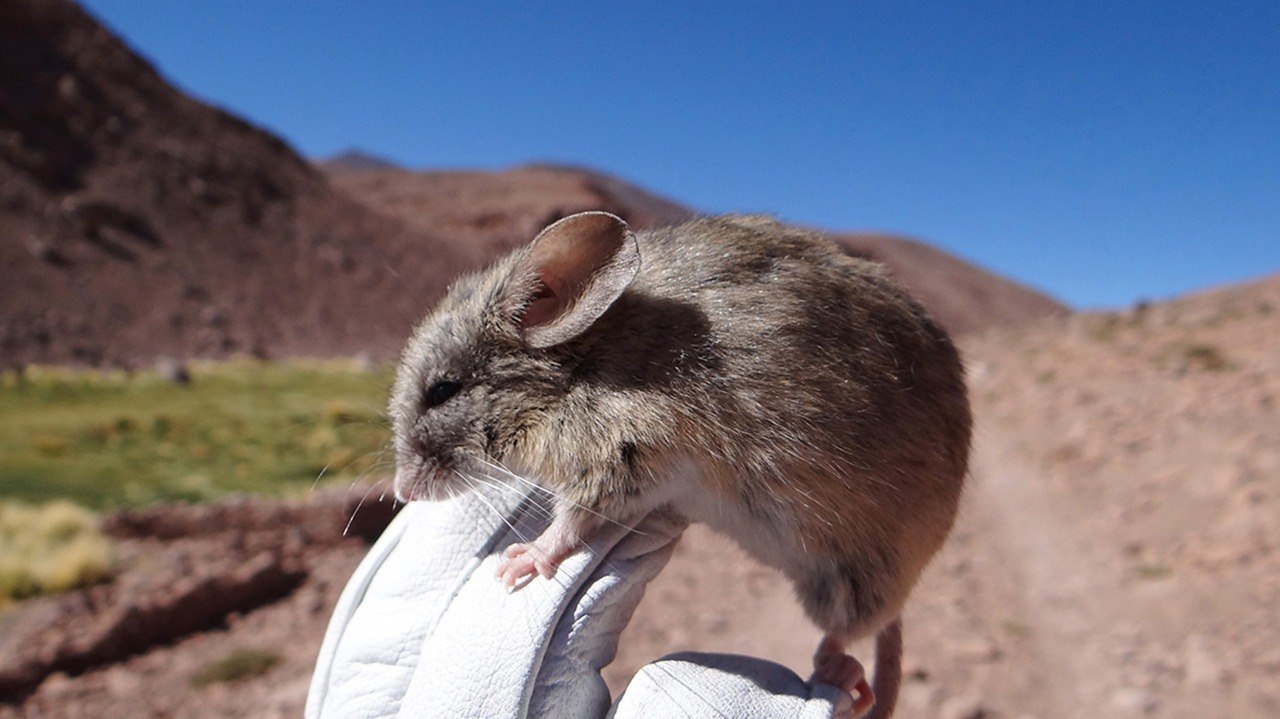
The Andean leaf-eared mouse (Phyllotis xanthopygus rupestris) has been discovered thriving at an astonishing 6,700 meters (approximately 22,000 feet) in the Andes Mountains, making it the highest-living mammal ever recorded. This tiny creature endures extreme cold and oxygen levels as low as 44% of sea-level, offering unprecedented insights into survival that could inform new treatments for human conditions like heart disease and cancer.
This groundbreaking discovery challenges previous assumptions about the limits of mammalian life, revealing a species that not only survives but also reproduces in an environment considered uninhabitable for most complex organisms. The research, led by Jay Storz from the University of Nebraska-Lincoln and published in the prestigious ’Science’ journal, highlights remarkable physiological and genetic adaptations.
Unveiling the Highest-Living Mammal
The Andean leaf-eared mouse was found inhabiting volcanic peaks within the Puna de Atacama region, spanning parts of Chile and Argentina. This desolate landscape is characterized by perpetual sub-zero temperatures and severe hypoxia, where the atmospheric pressure is so low that oxygen availability is less than half of what is found at sea level.
For decades, scientists believed that no mammal could sustain life, let alone reproduce, under such brutal conditions. The presence of these mice, actively breeding and forming stable populations, has therefore redefined the biological boundaries of mammalian existence.
The Research Expedition and Discovery
The journey to uncover these resilient rodents began in 2020 when Storz’s team first observed signs of mice on high-altitude volcanoes like Llullaillaco. Subsequent expeditions involved capturing live specimens at elevations exceeding 6,000 meters. The discovery of naturally mummified mouse remains preserved in the ice further confirmed their permanent residency in these extreme environments, rather than just transient visits.
These findings were crucial in establishing that the mice were not merely passing through but had established a sustained presence and reproductive cycle in an environment previously thought to be devoid of such complex life.
Extraordinary Adaptations for Extreme Survival
To understand how these mice defy the odds, researchers conducted extensive genetic and physiological analyses. Their investigations revealed a suite of unique adaptations that allow the Andean leaf-eared mouse to thrive where humans cannot.
Efficient Thermogenesis and Energy Production
One key adaptation is an exceptionally efficient process of heat generation, known as thermogenesis. The mitochondria within their muscle cells operate with superior efficiency, enabling them to produce energy effectively even with limited oxygen. This enhanced metabolic function is critical for maintaining body temperature in freezing conditions.
This ability to generate and conserve heat is a fundamental requirement for survival in environments where ambient temperatures consistently remain below freezing, preventing hypothermia.
Unique Respiratory Strategy
Unlike many high-altitude adapted mammals that increase their red blood cell count to carry more oxygen, the Andean leaf-eared mouse employs a different strategy. Increasing red blood cells can thicken blood, posing cardiovascular risks. Instead, these mice have evolved to breathe more rapidly, efficiently extracting necessary oxygen from the thin air without compromising blood viscosity.
This respiratory modification allows for optimal oxygen uptake while avoiding the potential health complications associated with polycythemia, a condition common in other high-altitude dwellers.
Genetic Predispositions for Resilience
Genetic analysis further revealed specialized genes that aid in breaking down toxic compounds found in the sparse, hardy vegetation at these altitudes. Additionally, these genes enhance their ability to convert fat into energy, providing a crucial fuel source in an environment where food is scarce and energy demands are high.
These genetic adaptations underscore a long evolutionary history of fine-tuning to the specific challenges presented by the Andean high-altitude ecosystem.
Implications for Human Health and Medicine
The study of the Andean leaf-eared mouse holds significant promise for advancements in human medicine. Many human health conditions, such as heart disease, stroke, and certain cancers, involve tissues experiencing oxygen deprivation, or hypoxia.
By understanding the precise mechanisms through which these mice survive and thrive under extreme low-oxygen conditions, scientists hope to develop novel therapeutic strategies. This research could lead to new treatments that help human cells and tissues better cope with oxygen scarcity, potentially improving outcomes for millions globally.
The Andean leaf-eared mouse stands as a powerful testament to nature’s incredible capacity for adaptation, offering a living blueprint for resilience in the face of seemingly insurmountable environmental challenges.
TL;DR
- The <strong>Andean leaf-eared mouse</strong> (Phyllotis xanthopygus rupestris) is confirmed as the highest-living mammal, found thriving at over <strong>6,700 meters</strong> (22,000 feet) in the <strong>Andes Mountains</strong>.
- This tiny creature endures extreme cold and oxygen levels as low as <strong>44% of sea-level</strong>, challenging previous scientific understanding of mammalian survival limits.
- Research led by <strong>Jay Storz</strong> from the <strong>University of Nebraska-Lincoln</strong>, published in <strong>’Science’ journal</strong>, details its unique physiological and genetic adaptations.
- Key adaptations include highly efficient <strong>thermogenesis</strong>, rapid respiration without increasing red blood cells, and specialized genes for detoxifying plants and converting fat to energy.
- The study offers crucial insights for human health, potentially leading to new treatments for conditions involving <strong>oxygen deprivation</strong>, such as heart disease and cancer.