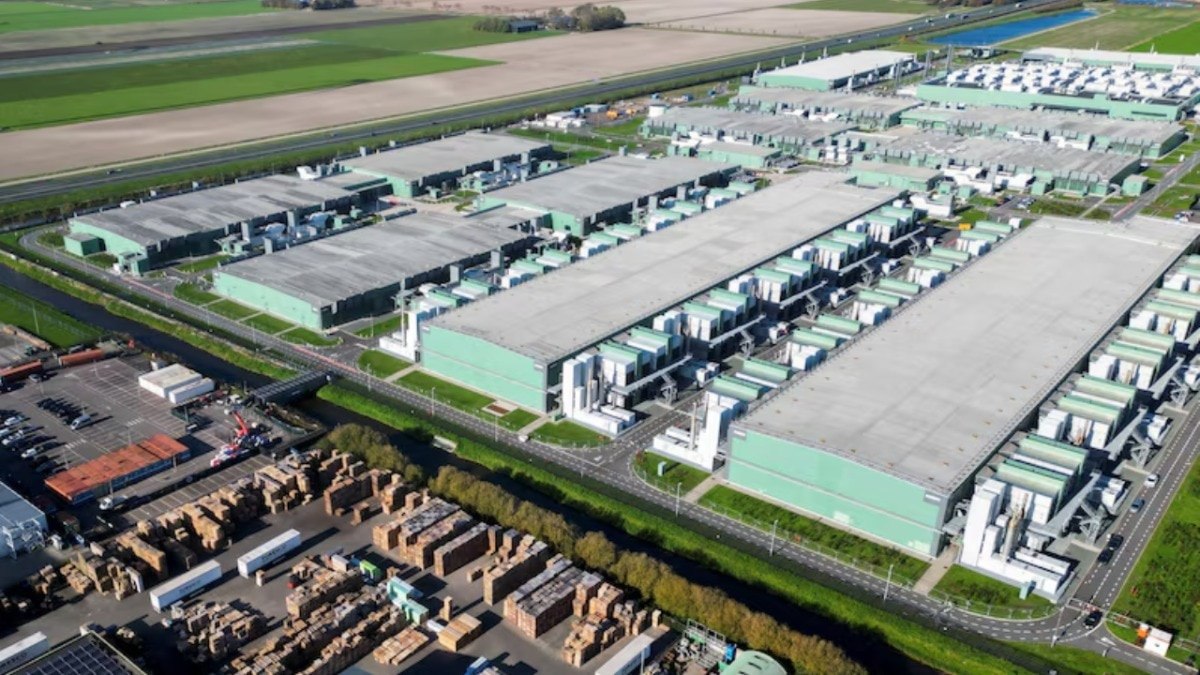
Microsoft has been pressing the Trump administration to abandon plans to bar imports of Chinese optical transceivers, a component that sits at the center of the AI data center buildout, three people familiar with the situation said.
The plan itself is not new. The administration has been moving toward a ban on US imports of new models of Chinese optical transceivers, and the Federal Communications Commission, which oversees the US telecom industry, is the agency working on the restriction. What is new is the pushback from inside the industry that would have to live with the consequences. The sources say Microsoft is one of a group of companies and trade groups making the case that the ban could do lasting damage to America’s position in the AI race.
What the devices do and why Washington is worried
Optical transceivers allow data to travel over fiber-optic cables at the speed of light within data centers. They are the connective tissue that links servers, routers and switches. Some data centers need millions of them.
The administration’s concern is security. Officials worry that Beijing could use the devices to steal data, install malware or disrupt service at US data centers. Those risks are the reason the ban is being considered at all, and they are the reason the debate is hard to settle quickly. Any restriction has to balance the security argument against the practical need to keep the buildout moving.
The scale of the buildout at stake
Microsoft has 35 data centers under construction in the US and another 134 planned, according to Cleanview, a market intelligence company that tracks data center development. Those numbers help explain why the company is paying close attention. A supply disruption that slows even a portion of that pipeline would be felt quickly.
John Miller, general counsel of the Information Technology Industry Council, a tech lobbying group that has publicly urged the administration not to move forward with a ban, put the risk in plain terms. Many cloud companies have already bought the AI chips they need for the buildout, he said. Without transceivers to connect them, those chips could sit idle.
"It really threatens to arguably grind (the data center rollout) to a halt," said John Miller, general counsel of the Information Technology Industry Council.
Miller’s point is that the chips are only half of the system. Expensive hardware that cannot be connected does not produce AI capacity, and that is the core of the industry’s argument.
Behind the closed-door meetings
Microsoft was one of a handful of firms that met with officials from the White House Office of Science and Technology Policy and the National Security Council in September. According to two of the sources, the companies used those meetings to flag the supply chain problems any ban would create. The discussions were not made public at the time, and the efforts have not been previously reported.
Microsoft declined to comment. The White House, the FCC and the Chinese embassy in Washington did not immediately respond to requests for comment. That silence leaves the most important details in the hands of anonymous sources, which is one reason the internal debate is worth examining closely.
Why China dominates the supply
The competitive picture is what makes the ban so difficult. China holds two-thirds of the global market for optical transceivers, according to Counterpoint Research. Chinese firms such as Eoptolink and Zhongji Innolight dominate global supply, and their customers include top American hyperscalers. Zhongji Innolight was also added to the Pentagon’s list of Chinese military-backed companies.
US companies do compete in this space. Coherent and Lumentum produce technology that rivals Chinese products, but according to a report by the Foundation for American Innovation, they lack the scale to replace Chinese vendors. That gap is the heart of the industry’s fear. A ban that cuts off supply before domestic producers can ramp up would hit American data centers first.
A threshold that could split the difference
Morgan Stanley said in an October client note that the administration was considering barring Chinese optical transceivers capable of handling 3.2 terabits of data per second. Production of those higher-speed units is not expected to ramp up until 2028, with widespread installation expected in 2029.
Such a threshold could avoid antagonizing US companies and Beijing while giving American optical companies time to expand production. Two of the sources said the 3.2 terabit per second threshold is under consideration. The FCC itself has not addressed the optical transceiver issue publicly.
ITI had already put its position on paper. In a letter to the FCC on August 13, the group urged the watchdog to refrain from adding optical transceivers to a trade blacklist, citing the potential effects that supply disruptions could have on data center deployment and US AI leadership.
Congress may not wait
The agency is not the only institution weighing in. In September, a bipartisan group of US lawmakers introduced legislation that would bar the federal government from equipping sensitive government systems with Chinese-made optical transceivers. That bill is a sign that concern about the hardware is not confined to the executive branch, and that lawmakers from both parties see the security question as urgent.
The FCC’s deliberations have now set off alarms in an industry trying to meet surging demand for cloud and AI services. That demand is arriving at the same moment consumers are pushing back over rising energy costs and water use. For Microsoft and its rivals, the question is no longer only whether a ban is coming. It is whether the country can secure its data centers without stalling the infrastructure those data centers depend on.
TL;DR
- Microsoft is pressing the Trump administration to drop plans to bar imports of Chinese optical transceivers used in AI data centers.
- The FCC is working on the proposed ban, which targets new models of the devices.
- Optical transceivers link servers, routers and switches, and some data centers need millions of them.
- Microsoft has 35 data centers under construction in the US and 134 more planned.
- China holds two-thirds of the global optical transceiver market, according to Counterpoint Research.
- The administration is reportedly considering a threshold of 3.2 terabits per second, with widespread installation expected in 2029.