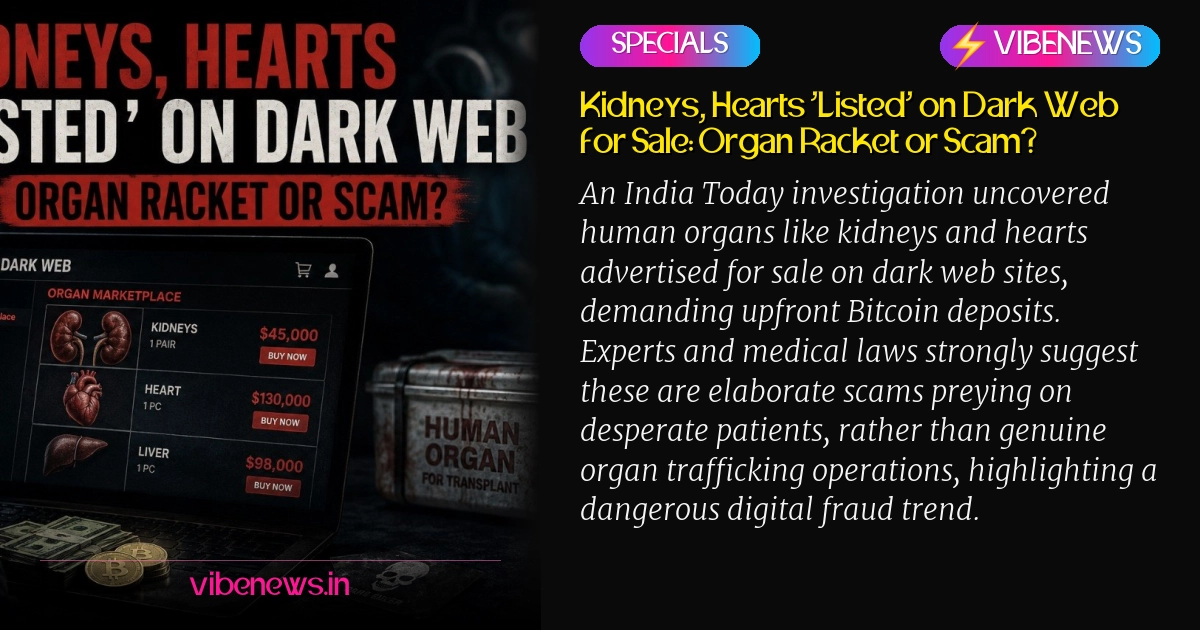
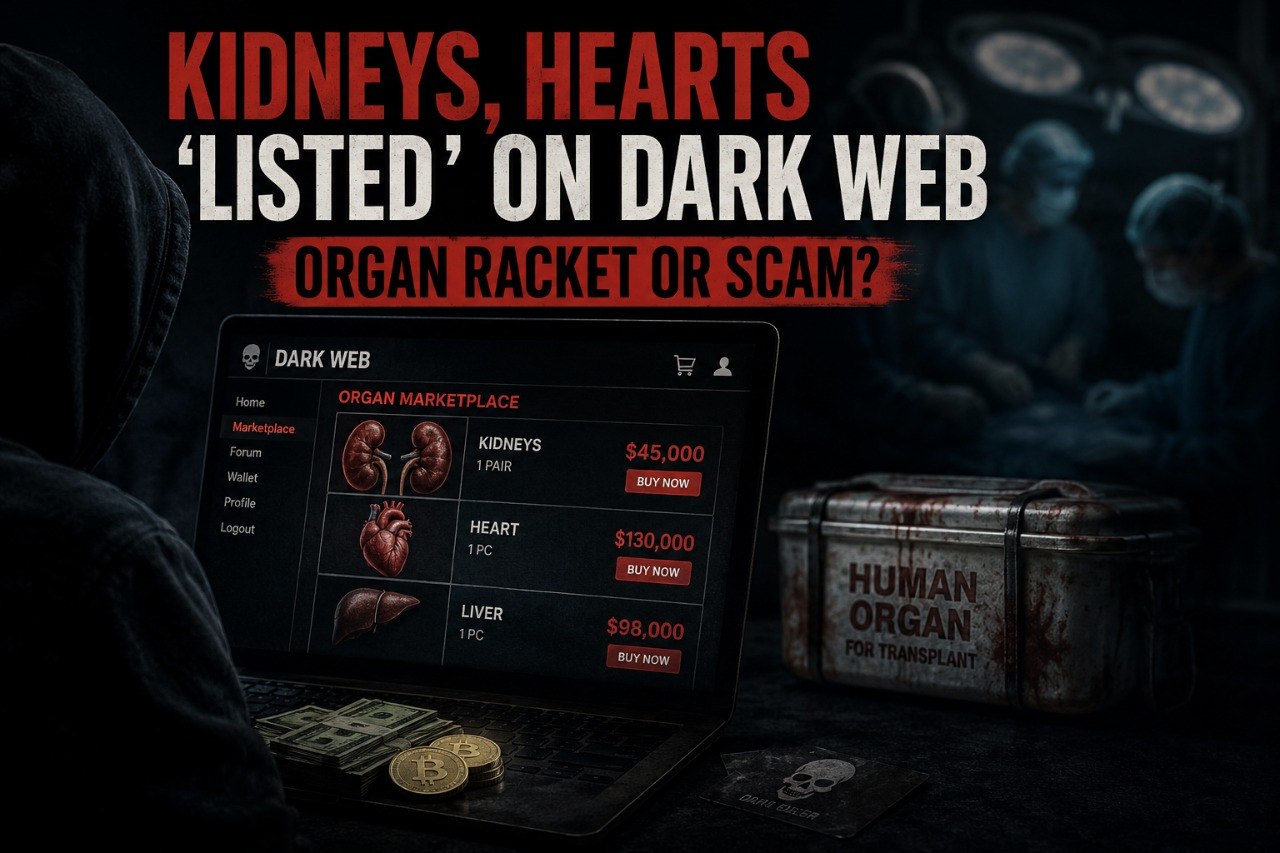
An extensive investigation by India Today’s Open Source Intelligence (OSINT) team has revealed multiple dark web platforms openly advertising human organs for sale, raising serious concerns about potential organ trafficking or, more likely, sophisticated scams targeting vulnerable individuals. These illicit online marketplaces list kidneys, hearts, lungs, and livers with price tags and descriptions reminiscent of conventional e-commerce sites, often demanding significant Bitcoin deposits upfront for purported medical services.
The investigation found sellers promising extraordinary services, such as a kidney delivered to India within two days, a matching donor in Delhi within minutes, and comprehensive packages covering medical reports, hospital arrangements, and even a doctor in Mumbai. One dark web vendor quoted a human kidney for $85,000, a heart for $69,000, and a liver for $35,000, claiming to offer “cheap and legal” organs to bypass long waiting lists and shortages. Such claims directly contradict India’s stringent laws governing organ transplants, which involve extensive legal and medical protocols.
To probe these assertions, the India Today OSINT team posed as a prospective buyer seeking a kidney in India. The seller, operating through an onion website and later shifting negotiations to Telegram, claimed to have a “fresh harvest” kidney available within 24 hours and a “live matching donor” in Delhi, described as a healthy 24-year-old male with O negative blood. The quoted package price for a kidney was $50,000, which supposedly included donor compensation, surgery, hospital stay, and airport pickup. However, the seller insisted on a $2,000 Bitcoin deposit to reserve the donor, refusing to disclose hospital details until payment, citing concerns over police surveillance.
Medical experts have unequivocally dismissed the feasibility of such rapid and unregulated organ procurement. Dr. Vikas Jain, Vice President (Surgeon) of the Indian Society of Organ Transplantation, stated that these promises are “not possible” under the Human Organ Transplant Act. He explained that 90 to 95 percent of organ transplants in India involve living donors, while organs from deceased donors are allocated through the National Organ and Tissue Transplant Organisation (NOTTO) and state bodies, following rigorous procedures.
Dr. Jain highlighted the impracticality of arranging a kidney and completing all necessary procedures within 24 hours, noting that just the initial tests require six to eight hours. Furthermore, Indian law typically mandates that donors and recipients be close relatives, with authorization committees conducting thorough examinations, including document verification, family trees, and sometimes DNA testing, to approve a transplant. The idea of a quick, anonymous donor is entirely at odds with these established safeguards.
During the investigation, the dark web vendor attempted to establish credibility by providing the name of a prominent Mumbai-based urologist associated with a reputed private hospital. However, the vendor declined to share any further verifiable details, such as the hospital’s name or direct contact information for the doctor, continuing to demand advance payment. India Today could not independently verify any association between the named doctor and the purported transaction. Experts suggest that fraud networks frequently invoke the names of established medical professionals and hospitals to gain the trust of desperate patients seeking urgent treatment, exploiting their vulnerability.
The use of Telegram as the primary channel for negotiations after initial contact on the dark web also raised red flags. Messaging platforms offering anonymity can provide a private conduit for suspected vendors to conduct discussions while shielding their identities. Telegram has previously been scrutinized in India for its alleged role in various illicit activities, including the circulation of leaked examination materials in the NEET paper leak and the sharing of child sexual abuse material and financial scams, as reported by the Home Ministry’s Indian Cyber Crime Coordination Centre.
While the investigation did not definitively conclude whether these networks facilitate actual illegal organ trade or are solely elaborate advance-payment scams, the overwhelming evidence points towards the latter. The promises made by these dark web sellers directly contradict India’s strict transplant laws, established medical protocols, and the national organ allocation system. This suggests that desperate patients, already facing life-threatening conditions and long waiting lists, are being targeted by fraudsters who exploit their hope for quick solutions, ultimately duping them of substantial sums of money. The findings underscore the critical need for public awareness regarding such fraudulent schemes and the importance of adhering to legal and ethical pathways for organ transplantation.
This investigation serves as a stark warning to individuals and families navigating the complexities of organ transplantation. The allure of quick fixes on the dark web is a dangerous illusion, designed to exploit desperation rather than provide legitimate medical solutions. Vigilance and adherence to official medical and legal channels remain paramount in the face of such predatory online activities.
TL;DR
- An India Today OSINT investigation uncovered human organs like kidneys, hearts, and livers listed for sale on dark web websites.
- Sellers demanded upfront Bitcoin deposits, promising rapid organ delivery and matching donors, often within days or hours.
- A vendor quoted a $50,000 package for a kidney, requiring a $2,000 Bitcoin deposit before disclosing hospital details.
- Medical experts, including Dr. Vikas Jain of the Indian Society of Organ Transplantation, confirmed these promises are impossible under India’s strict Human Organ Transplant Act.
- Indian laws mandate extensive medical and legal procedures, including close relative donor-recipient relationships and thorough authorization committee reviews.
- Fraudsters used tactics like naming reputed doctors and shifting negotiations to anonymous platforms like Telegram to gain trust and evade detection.
- The investigation strongly suggests these dark web listings are primarily elaborate advance-payment scams targeting desperate patients, rather than genuine organ trafficking operations.
- The findings highlight the vulnerability of patients seeking urgent treatment and the dangers of illicit online marketplaces.