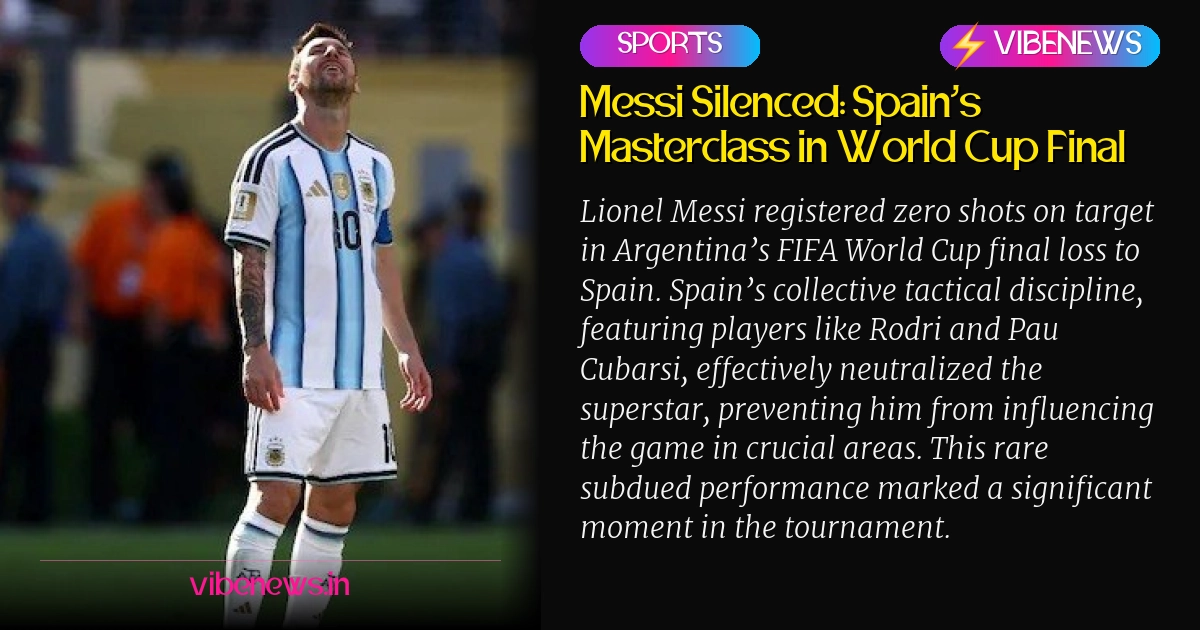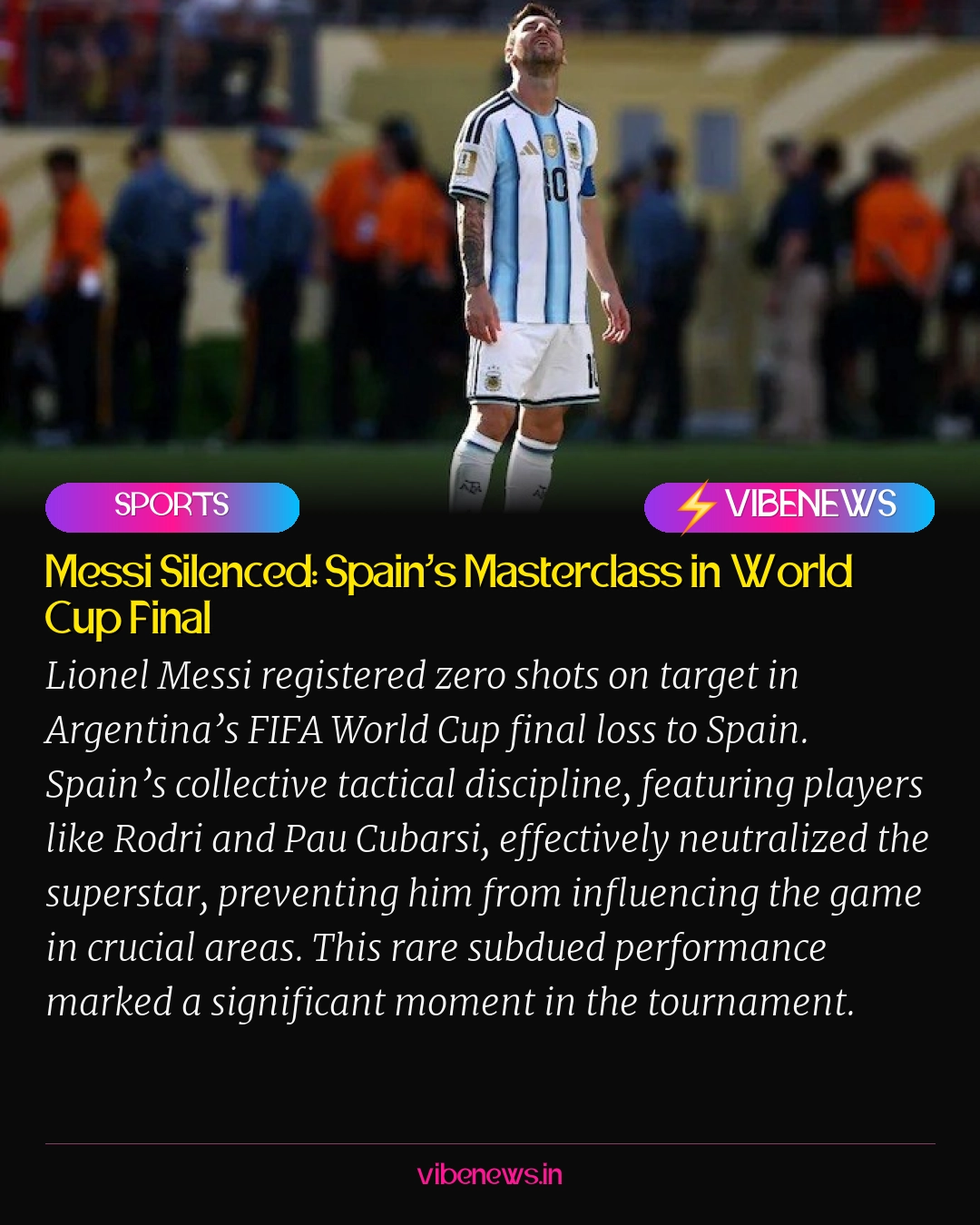
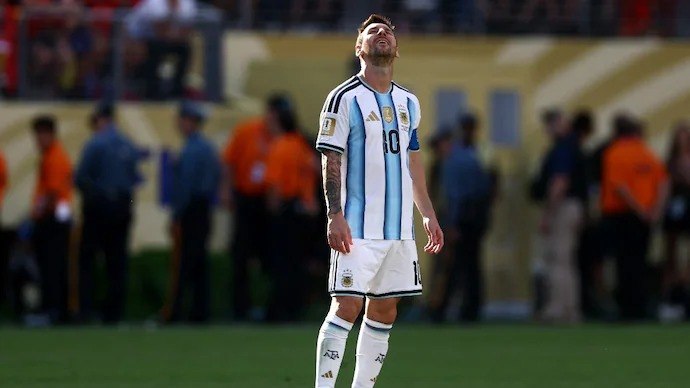
In a rare and stunning turn of events, Lionel Messi, the Argentine maestro, failed to register a single shot on target during Argentina’s FIFA World Cup final defeat against Spain on July 20, 2026. This unprecedented performance for a player of his caliber in such a pivotal match was largely due to Spain’s meticulously executed collective defensive strategy, which effectively neutralized his influence across the pitch.
Unlike many teams that attempt to individually mark Messi, Spain adopted a systemic approach, trusting their structural integrity and monopolizing possession. This tactical masterclass ensured Messi rarely received the ball in dangerous areas, forcing him to operate far from Spain’s goal and significantly limiting his creative impact throughout the World Cup final in New York.
Spain’s Tactical Blueprint: Neutralizing Messi
Spain’s strategy was not to assign a single defender to shadow Messi, but rather to create a suffocating collective press and deny him space. Their midfield and defense worked in unison, ensuring that by the time Messi turned to face goal, passing options had already vanished.
Players like Rodri consistently screened passes into Messi’s feet from his position in front of the back four. Meanwhile, Pedri and Fabian Ruiz were quick to close down any pockets of space Messi might find between the lines, preventing him from building momentum.
Collective Discipline Over Individual Marking
The defensive maturity of players like Pau Cubarsi was also crucial. Cubarsi seamlessly stepped into midfield when needed and retreated comfortably, maintaining Spain’s shape. This collective discipline meant that no single player appeared to be doing anything extraordinary, yet their combined effort was remarkably effective.
Spain’s approach forced Messi to collect possession 35 or 40 yards from their goal, often with his back to the target and surrounded by teammates who were themselves struggling under Spain’s relentless press. This prevented him from orchestrating attacks around the penalty area, a role he typically thrives in.
Messi’s Frustration: Operating Away From Goal
Messi’s passing map in the final showed a concentration around the left half-space and central midfield, with most combinations involving Rodrigo De Paul, Nahuel Molina, Leandro Paredes, and Giuliano Simeone. This indicated he was forced to link play closer to the center circle, rather than with Argentina’s forwards, highlighting how effectively Spain pushed him away from goal-scoring positions.
He was repeatedly forced into safer passes back into midfield instead of turning towards goal. This subtle but constant frustration slowly drained Argentina of the decisive moments they had relied on throughout the tournament, where Messi would typically conjure a game-changing play.
The Impact of Possession and Pressure
Spain’s dominance in possession was a key factor in neutralizing Messi. They finished the match with close to two-thirds of the possession, completing nearly twice as many passes as Argentina. This meant Lionel Scaloni’s side spent long periods without the ball, denying Messi the repeated opportunities he needs to influence matches.
These extended spells waiting to regain possession proved just as damaging to Argentina’s rhythm and Messi’s impact as anything Spain did when they had the ball. The lack of sustained pressure from Argentina’s attack was evident throughout the evening.
Argentina’s Struggle to Create
Argentina’s inability to create sustained pressure was a direct consequence of Spain’s tactical superiority. Messi, usually the catalyst for their attacks, found himself reacting to the game rather than controlling it. The absence of his typical magic left Argentina struggling to break down Spain’s resolute defense.
When Ferran Torres finally broke the deadlock in extra time, it felt like a deserved reward for Spain’s comprehensive control over almost every aspect of the contest. Messi remained on the pitch, tirelessly searching for an opening, but Spain simply never afforded him one.
A Defining Moment for Both Nations
This FIFA World Cup final will be remembered as a testament to Spain’s collective strength and tactical acumen, securing a second star above their crest. For Messi, it was one of those rare nights where the game refused to bend to his will, a stark contrast to his otherwise remarkable World Cup campaign where he still earned the Silver Ball.
The match underscored not that age had caught up with Messi, but rather the extraordinary effort and tactical brilliance required from an outstanding Spain side to keep him quiet. It was a defining moment that showcased the power of collective discipline against individual genius on football’s biggest stage.
TL;DR
- <strong>Lionel Messi</strong> registered zero shots on target in <strong>Argentina’s FIFA World Cup final</strong> loss to <strong>Spain</strong> on July 20, 2026.
- Spain’s victory was attributed to a collective tactical masterclass, effectively neutralizing Messi without individual marking.
- Key Spanish players like <strong>Rodri</strong>, <strong>Pedri</strong>, <strong>Fabian Ruiz</strong>, and <strong>Pau Cubarsi</strong> maintained defensive shape and denied Messi space in dangerous areas.
- Messi was forced to operate in central midfield and left half-space, far from Spain’s goal, limiting his creative influence.
- Spain dominated possession, completing nearly twice as many passes as Argentina, which further restricted Messi’s opportunities.
- The final highlighted Spain’s collective discipline against Messi’s individual brilliance, leading to <strong>Ferran Torres’s</strong> extra-time winner.