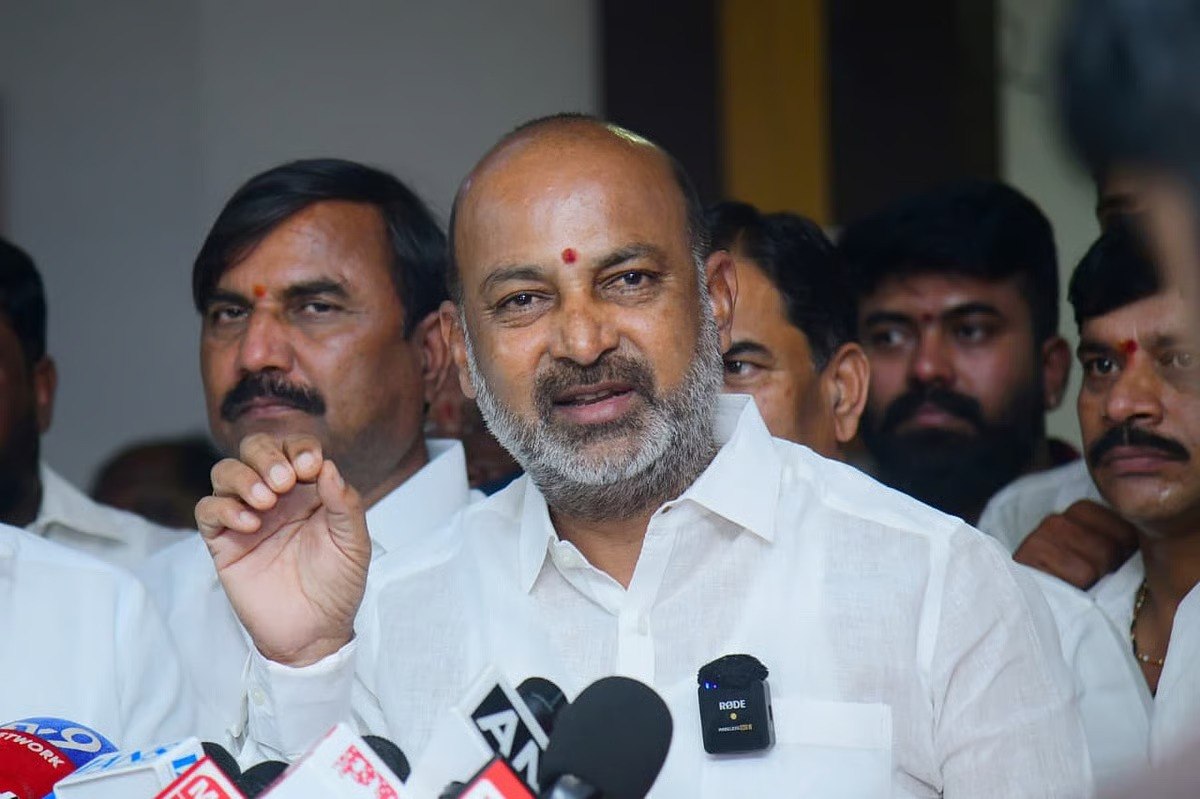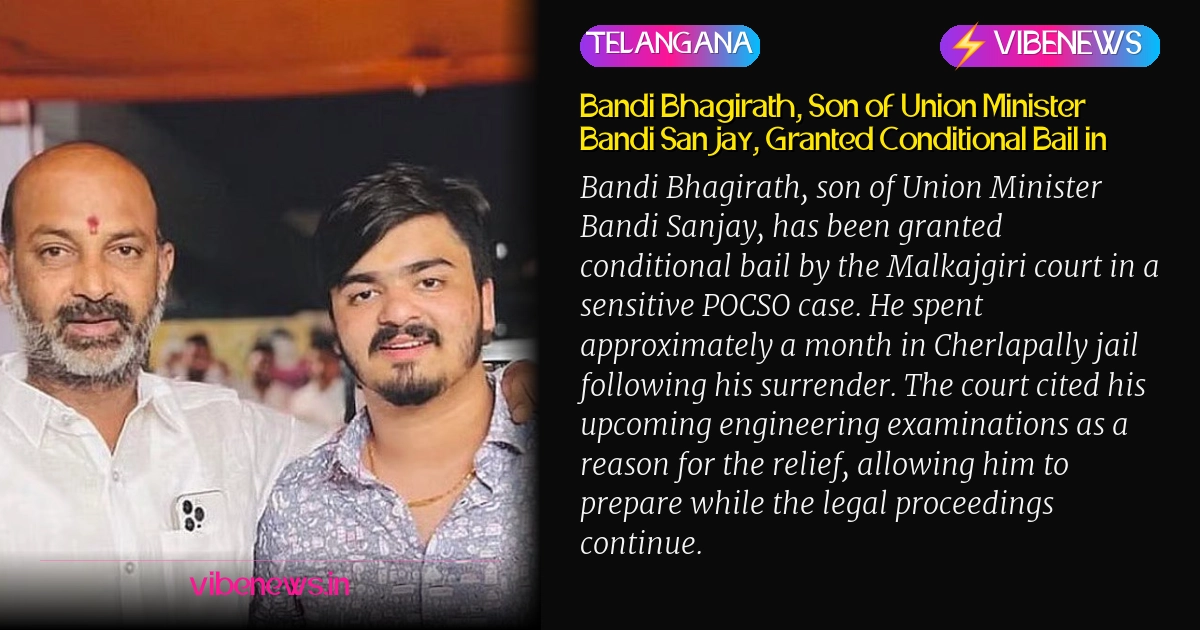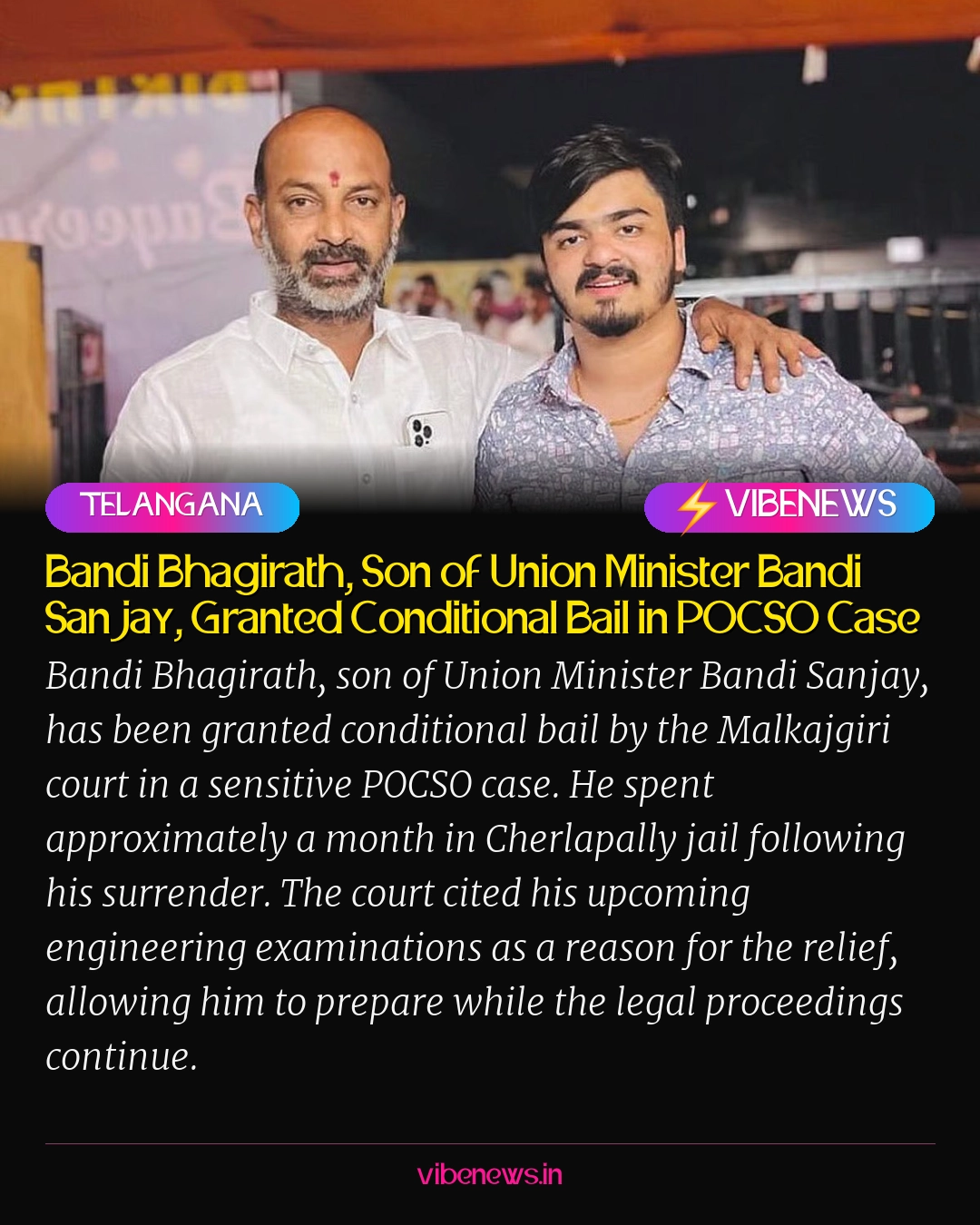
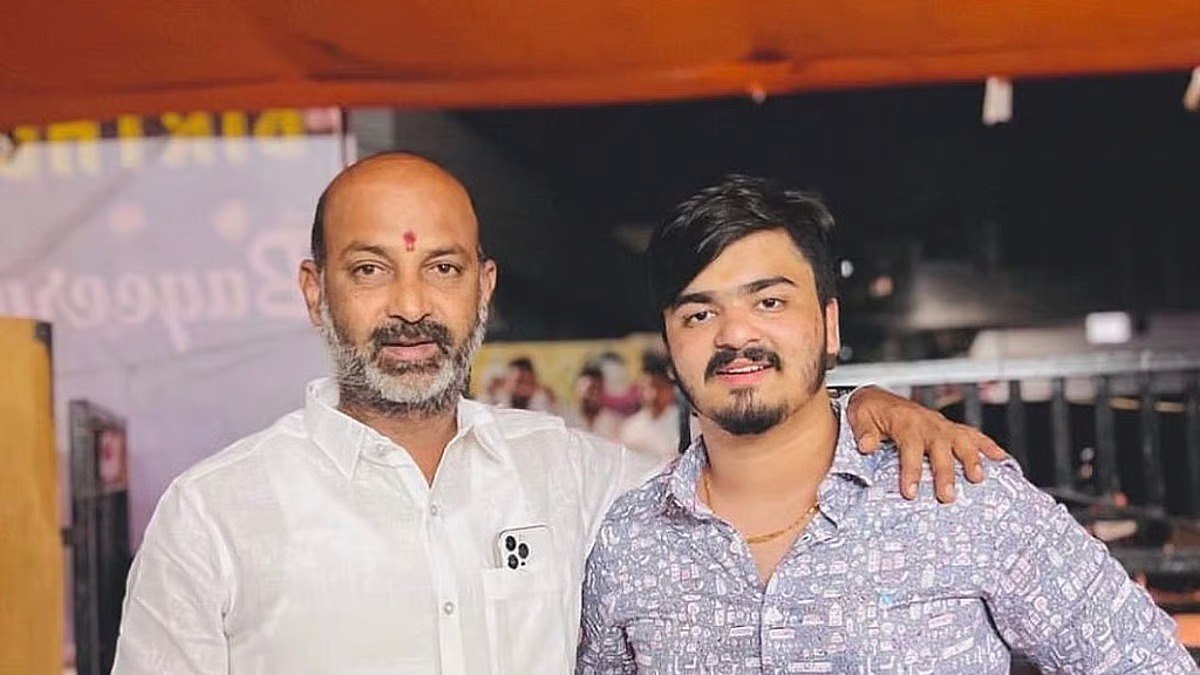
Bandi Bhagirath, son of Union Minister Bandi Sanjay, has secured conditional bail from the Malkajgiri court this week in a case filed under the Protection of Children from Sexual Offences (POCSO) Act. This significant development follows his nearly month-long incarceration as a remand prisoner in Cherlapally jail, a period during which the high-profile case drew considerable attention across both Telangana and Andhra Pradesh.
The court's decision to grant bail was primarily influenced by Bhagirath's upcoming engineering examinations, providing him temporary relief under specific conditions. This marks a crucial turn in a legal battle that has kept the son of the prominent Union Minister in judicial custody since his surrender.
The case originated from a complaint lodged by the mother of a minor girl, leading to the registration of a stringent POCSO case against Bhagirath. Given his familial connection to a Union Minister, the matter quickly escalated into a major topic of public and political discussion, highlighting the sensitivity and gravity associated with such allegations.
Following initial reports that he had gone into hiding, Bhagirath eventually surrendered to the police on May 17. Subsequently, the Medchal court remanded him to judicial custody for 14 days, leading to his transfer to Cherlapally jail. His legal team had reportedly filed multiple bail petitions in the interim, all of which were previously rejected, prolonging his stay in jail for over a month.
The POCSO Act, enacted in 2012, is a comprehensive law designed to protect children from sexual abuse and exploitation. It defines various forms of sexual offences against children and prescribes severe penalties, underscoring the state's commitment to safeguarding minors. Cases filed under this act are treated with utmost seriousness by the judiciary, often involving rigorous investigative and judicial processes.
The involvement of a political family member in a POCSO case naturally attracts intense media scrutiny and public debate. This particular instance has been no exception, sparking discussions about accountability, due process, and the implications for public figures and their families. The granting of conditional bail, while a relief for Bhagirath, does not signify the conclusion of the legal proceedings; it merely allows him to be out of custody during the ongoing investigation and trial.
Conditional bail typically entails a set of directives that the accused must adhere to, such as not tampering with evidence, not influencing witnesses, cooperating with the investigation, and appearing for all scheduled court hearings. Failure to comply with these conditions can lead to the cancellation of bail and re-arrest. While the specific conditions imposed by the Malkajgiri court were not immediately detailed, they are standard practice in such cases.
Bhagirath's release will allow him to focus on his academic commitments, but the legal battle against him will continue to unfold in the courts. The focus will now shift to the progression of the investigation, the filing of charges, and the eventual trial, which will determine the ultimate outcome of this high-profile case. The public and political spheres will undoubtedly continue to monitor developments closely.
TL;DR
- Bandi Bhagirath, son of Union Minister Bandi Sanjay, was granted conditional bail by the Malkajgiri court.
- He had been held as a remand prisoner in Cherlapally jail for approximately one month in a POCSO Act case.
- The court cited his upcoming engineering examinations as the primary reason for granting bail.
- The case stems from a complaint filed by the mother of a minor girl, leading to stringent POCSO charges.
- Bhagirath surrendered to police on May 17 after initial reports of him going into hiding.
- His previous bail petitions were reportedly rejected, prolonging his judicial custody.
- The case has garnered significant public and political attention across Telangana and Andhra Pradesh due to his father's stature.
- Conditional bail allows his release for exams, but the legal proceedings and trial in the POCSO case will continue.