Chhattisgarh’s forest department is moving 50 blackbucks from the Barnawapara Wildlife Sanctuary to the Gomarda Wildlife Sanctuary, bringing back a species that disappeared from the area more than five decades ago. The report, published on November 17, 2026, says the translocation is part of a wider plan to restore biodiversity in the region.
The blackbuck, known scientifically as Antilope cervicapra, once roamed Gomarda freely. Over time, hunting, poaching, encroachment on forest land and development activities drove its numbers down across the Chhattisgarh region. By the 1970s, the species had vanished completely from Gomarda, and for more than five decades no blackbucks lived there.
Where the sanctuary sits
Gomarda Wildlife Sanctuary lies in the Saranggarh area of the Saranggarh-Bilaigarh district in Chhattisgarh. It was previously part of Raigarh district. The state declared it a wildlife sanctuary in 1975, and it takes its name from the Gomarda village within its boundaries.
The sanctuary spreads across roughly 277.91 square kilometres. Its terrain includes hills, plateaus, rocky ground and open grasslands. Some stretches are unsuitable for farming, which is exactly why they serve as natural habitat for wildlife.
Water is another key feature. The Lath and Mānai rivers are the main water sources in the sanctuary, and they play a critical role in keeping animals hydrated, especially during summer. The vegetation is tropical dry deciduous forest, with sal, bija, tendu, salai and bamboo among the tree species found there. Grasslands form an important part of the local ecosystem alongside the forests.
A species that needed a second chance
Forest officials have now drawn up a dedicated plan to bring the blackbuck back. The first step is shifting 50 animals from the Barnawapara Wildlife Sanctuary. The report describes the move as both recently carried out and still under way, so the exact stage of the transfer remains unclear from the available details.
Officials believe Gomarda is well suited for the job. The sanctuary has the open grasslands and water sources that blackbucks need. Officials expect the program to strengthen biodiversity in the sanctuary if it succeeds, and they also hope it will bring more wildlife tourism and new employment opportunities for local residents.
Officials consider the Gomarda area suitable for the rehabilitation of blackbucks, citing its grasslands and water resources.
Barnawapara offers the blueprint
The Gomarda plan builds on a reintroduction effort that already worked at Barnawapara. In 2017-18, the forest authorities moved 50 blackbucks from the National Zoological Park in Delhi and 27 from the Kanan Pendari Zoological Garden in Bilaspur to the sanctuary.
The results have been encouraging. The blackbuck population at Barnawapara now exceeds 150. For a species that had nearly disappeared from parts of the state, that growth shows that a well-managed reintroduction can take hold.
That track record is a big reason officials are confident about Gomarda. The sanctuary’s grasslands and water sources are considered favourable, and the earlier success gives the forest department a working model to follow.
What makes the blackbuck special
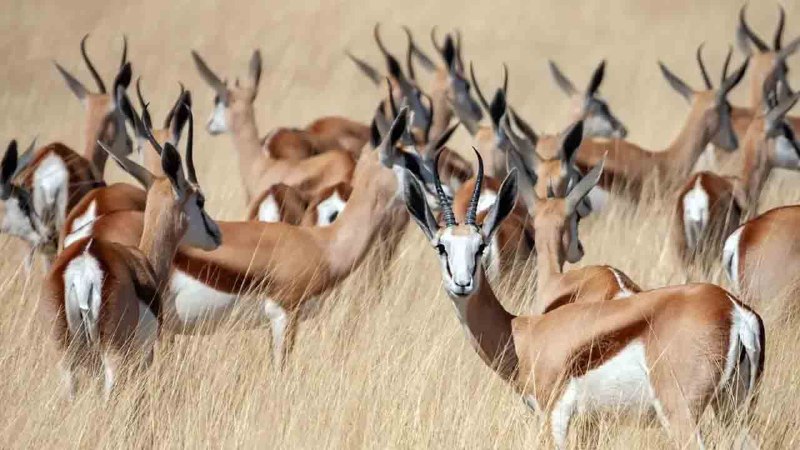
Despite its name, the blackbuck is not a deer. It belongs to the antelope family and is native to the Indian subcontinent. Male blackbucks carry long, twisted horns, which are among their most recognisable features. They prefer open grasslands and areas with sparse shrubs.
The species is protected under Schedule I of the Indian Wildlife (Protection) Act, 1972, which gives it the highest level of legal protection under the law.
Why reintroduction matters
The process of bringing back a species that has disappeared from an area is known as reintroduction. Conservationists treat it as a key tool for protecting biodiversity, and the Gomarda effort is a clear example of how it works in practice.
The sanctuary already supports a wide range of animals. Chital, sambar, nilgai, gaur (the Indian bison), singa, barking deer or muntjac, wild boar, leopards, wild dogs known as dhole, foxes, hyenas and sloth bears all live there. Birds such as peacocks, parakeets, eagles, owls and kingfishers are also found in the area. Adding blackbucks to this mix could help rebuild the grassland ecosystem that the sanctuary depends on.
For students and competitive exam candidates, the case offers a clear lesson in how wildlife policy works on the ground. A species lost to hunting and habitat loss can return when officials move animals carefully, pick the right site and build on a previous success. Gomarda’s blackbucks will show whether that approach holds up over the coming years.
TL;DR
- Chhattisgarh’s forest department is moving 50 blackbucks from Barnawapara to Gomarda Wildlife Sanctuary.
- Blackbucks disappeared from Gomarda in the 1970s due to hunting, poaching, encroachment and development.
- The Barnawapara reintroduction of 2017-18 succeeded, and its blackbuck population now exceeds 150.
- Gomarda’s open grasslands and rivers like the Lath and Mānai make it a suitable habitat, officials believe.
- The project could boost biodiversity, wildlife tourism and local employment if it succeeds.