Farmers in Garrapodu mandal of Nalgonda district have been told to start reworking their sowing plans now, before the next farming season begins. Haliya Assistant Director of Agriculture (ADA) Sarita made the call on Monday, November 9, while speaking to farmers at the Rythu Vedika in the mandal, citing the expected impact of El Niño.
Sarita explained what the weather phenomenon could mean on the ground. In the coming season, El Niño may bring lower rainfall, higher temperatures and a tighter supply of water. For farmers who depend on rain and borewells, those changes can quickly turn a planned crop into a loss. Her message was simple: do not wait for the monsoon to show its hand before deciding what to plant.
Crops that need less water
The ADA urged farmers to lean toward dryland crops that need less water. She named red gram (kandi), green gram (pesara), black gram (minumu), jowar, bajra (sajja) and foxtail millet (korra) as options worth considering. These are the crops she asked farmers to study before finalising their field plans.
She did not offer a one-size-fits-all list. Farmers were told to choose crops based on local weather conditions, soil type and the water available to them. A crop that suits a field with good soil moisture may not suit a field that depends on a dry spell-prone source, and Sarita wanted growers to weigh those differences before committing seed and money.
The advice carried a clear financial logic. A crop that uses less water is less exposed if rain falls short, which is the scenario farmers fear most when El Niño is in the forecast. The message was not to abandon farming, but to adjust what goes into the ground so that a weak season does not wipe out the investment.
Farmers should prepare their cropping plans in advance and plan agriculture in a way that overcomes the impact of El Niño. (Translated from the ADA’s remarks as reported.)
Why paddy straw should not be burned
Sarita also raised a practice that many farmers still rely on after harvest. She asked growers not to set fire to paddy straw in their fields once the paddy is cut. Burning, she said, destroys beneficial soil microbes that keep the land fertile and also causes environmental pollution.
Instead, she suggested that farmers plough the straw back into the field or use it through other organic methods. The approach keeps nutrients in the soil and avoids the smoke that comes with open burning. For a farmer already worried about the coming season, the advice links two problems: soil health and water-smart planning, since healthier soil holds moisture better.
The ADA asked farmers to combine water-saving practices with the right crop choice. In her view, the goal is to plan the season so that El Niño’s effects are reduced rather than simply endured.
What it means for Telangana farmers
The advisory is aimed directly at farmers in Nalgonda, a district in Telangana where paddy and dryland crops both play a major role in local livelihoods. For growers across the district, the warning arrives early enough to change their plans, provided they act before sowing. Farmers who wait until rain patterns are clear may have fewer options, and the crops suggested by the ADA are the ones she believes can cope better with reduced water.
Who was in the room
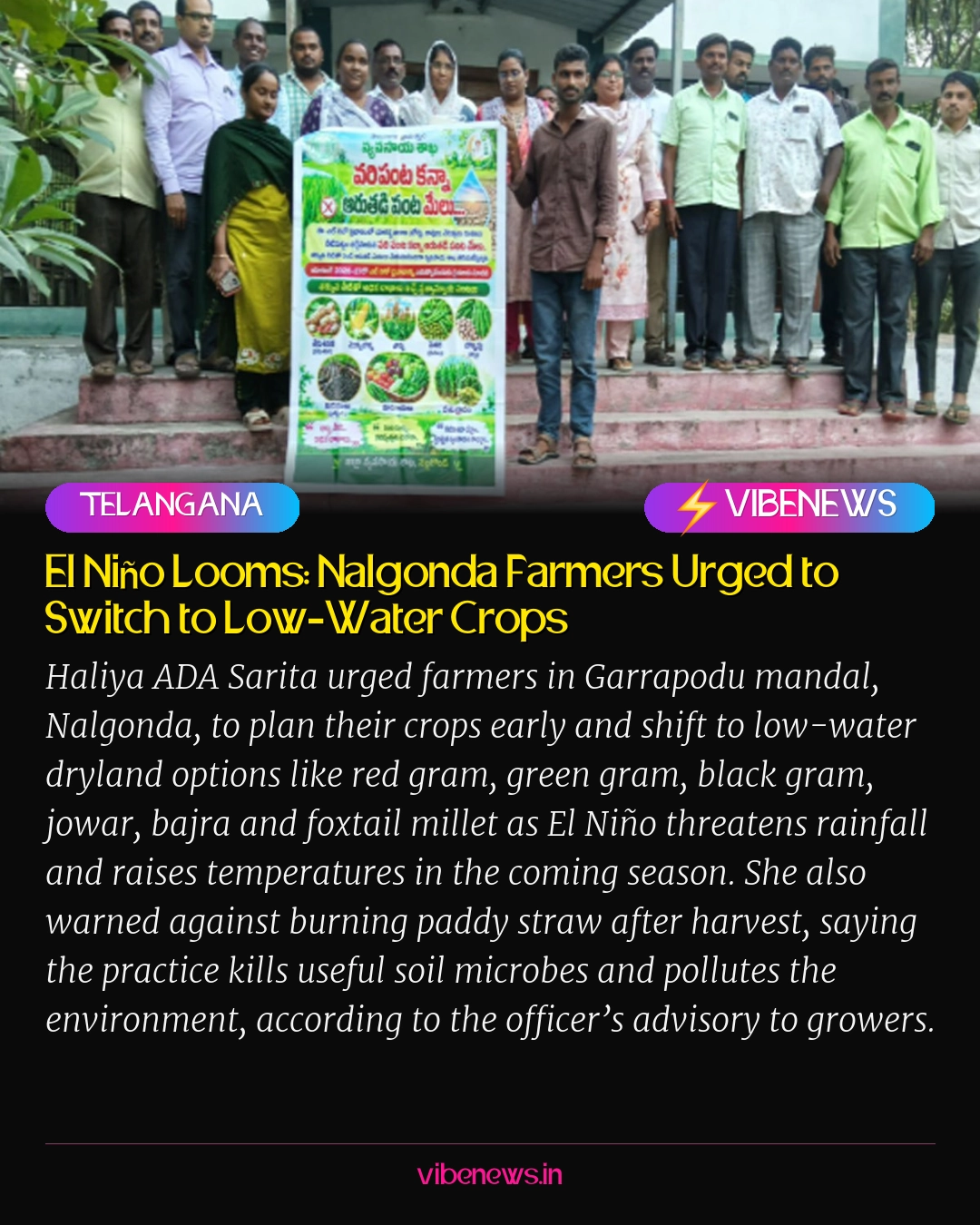
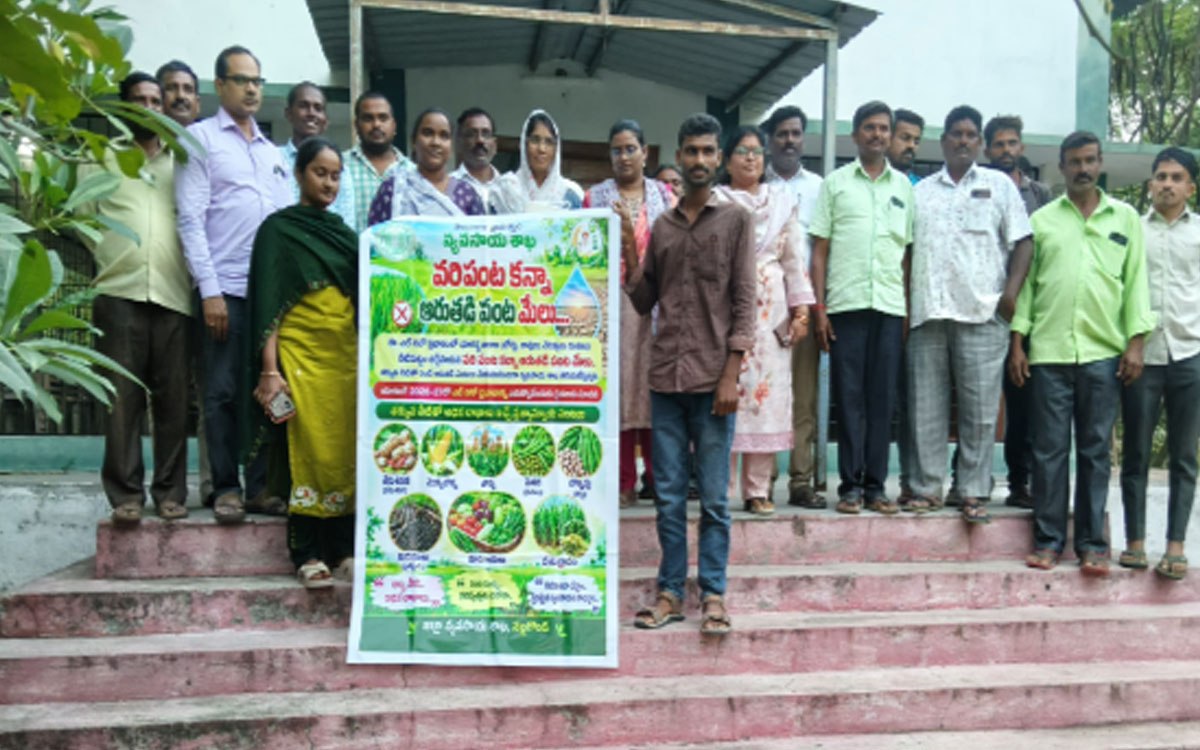
The session was attended by Mandal Agriculture Officer Kancherla Madhava Reddy and several agriculture extension officers, including Ramanjaneyulu, Gautami, Bhageeratha, Hafeeda, Jyotsna, Dharani and Netaji. Public representatives and farmers also took part. Their presence signals that the district’s agriculture machinery is pushing the same message through the local network of officers and farmer hubs.
What the advisory does not say
The reported advisory does not give rainfall figures, a timeline for when El Niño conditions will take hold, or estimates of expected crop losses. It also does not name specific crops that farmers should avoid. Its focus is on what to grow instead, and on stopping the burning of paddy straw. Farmers who want exact guidance on sowing dates, seed choice or field-specific planning should contact their mandal agriculture office directly.
For now, the message from the Haliya ADA is clear enough. Plan the season early, pick crops that need less water, and keep the soil healthy after harvest. Growers who act on that advice before sowing have the best chance of protecting their investment if El Niño delivers the dry conditions it is expected to bring.
TL;DR
- Farmers in Nalgonda’s Garrapodu mandal were urged on Monday to plan early and shift to low-water crops as El Niño threatens the coming season.
- Haliya ADA Sarita listed red gram, green gram, black gram, jowar, bajra and foxtail millet as dryland options to consider.
- El Niño may bring lower rainfall, higher temperatures and reduced water availability, according to the advisory.
- Crop choices should depend on local weather, soil type and water availability, the ADA said.
- Farmers were told not to burn paddy straw after harvest, as burning kills useful soil microbes and causes pollution.