Farmers in Bhadradri Kothagudem district were urged on Friday to shift their attention toward millet cultivation, with agricultural scientists saying the crops can deliver better yields while using less water and requiring little investment.
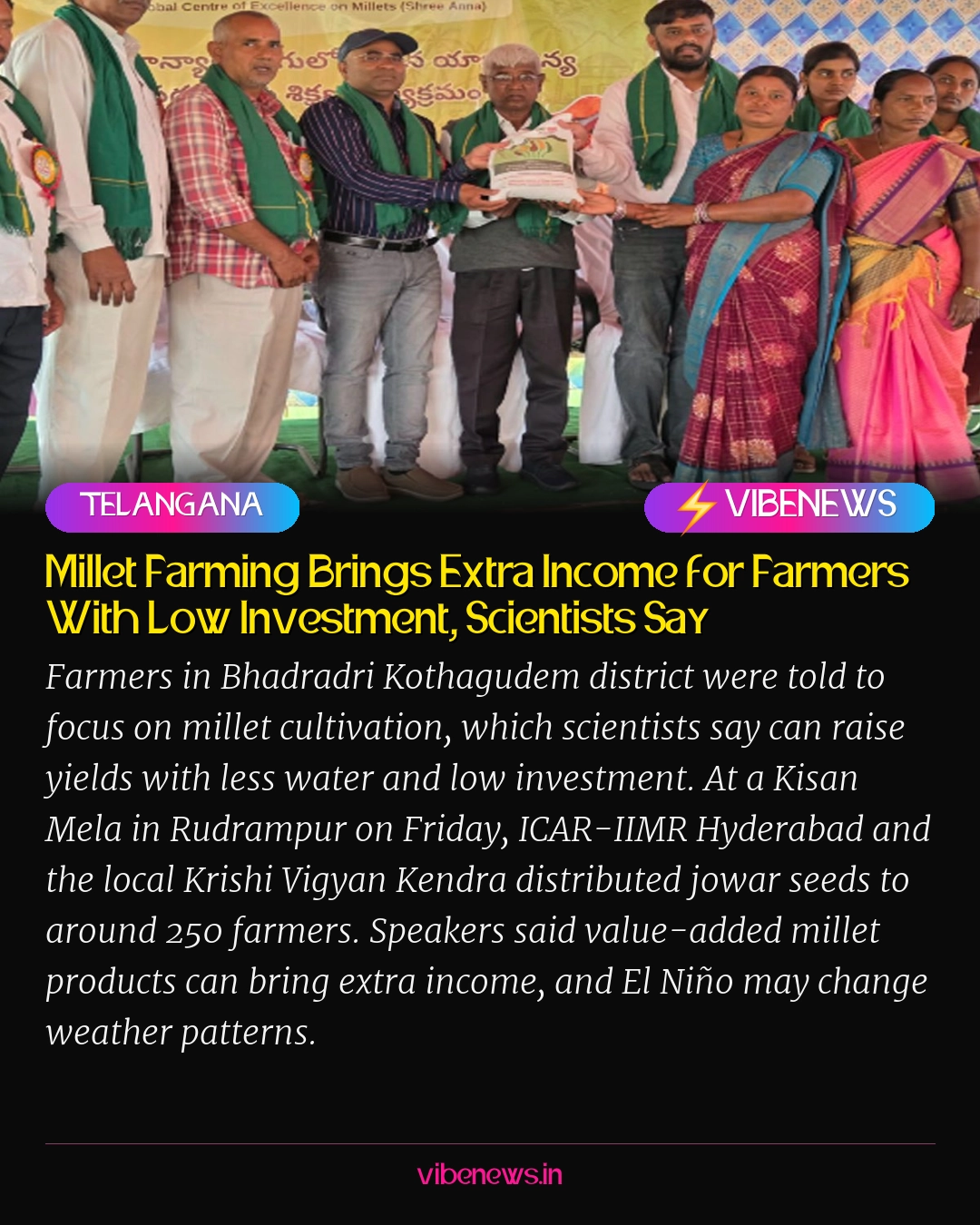
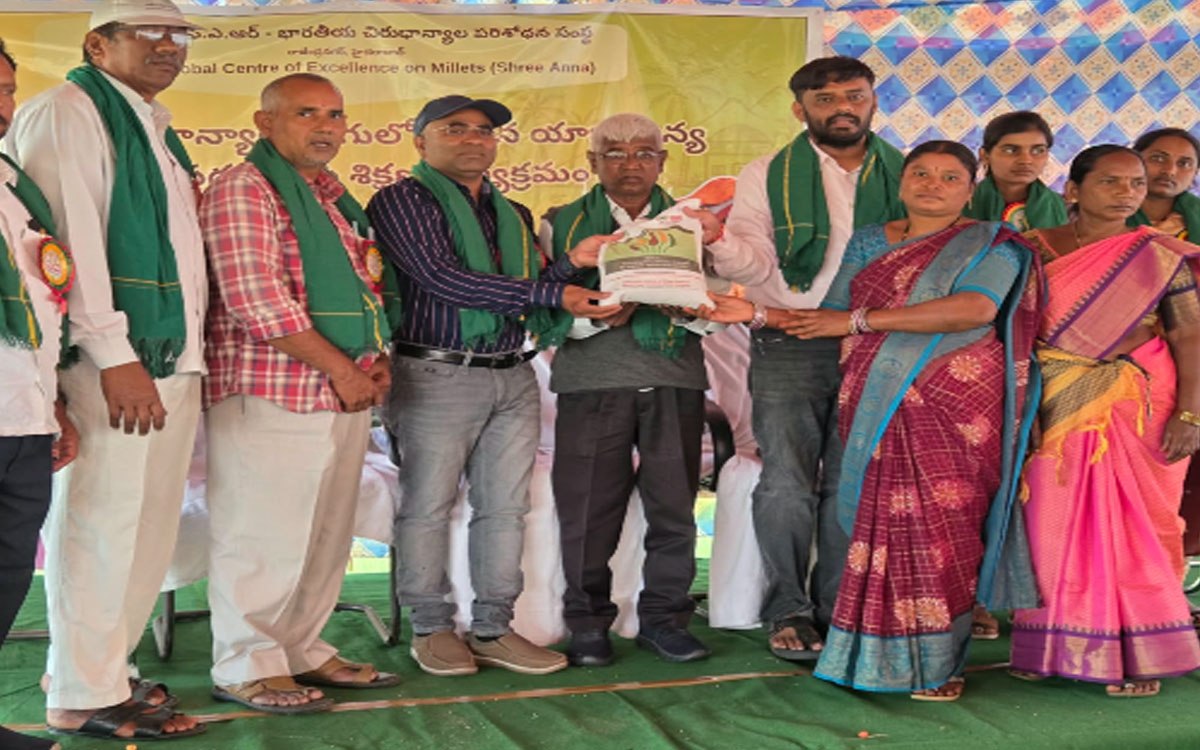
The call came at a Kisan Mela held on the premises of the Krishi Vigyan Kendra (KVK) in Rudrampur. The programme was organised by the KVK in collaboration with the ICAR-Indian Institute of Millets Research (IIMR) in Hyderabad, and it included the distribution of jowar seeds. According to the report, around 250 farmers attended the event, and the same number received jowar seeds as part of the drive to encourage millet farming.
A pitch built on nutrition and extra income
Dr. A. Srinivas, senior scientist and head at ICAR-IIMR, was the chief guest. He told the gathering that millets are rich in nutritional value and that eating them benefits human health. He also laid out a practical way for farmers to earn more from the crop. By turning millets into value-added products and selling them, farmers can make additional income, he said.
Farmers can earn extra income by preparing value-added products from millets and selling them.
That message about processing and sales was one of the main points of the day. Scientists kept returning to the idea that millets are not just a food crop but a way to add to a household’s earnings without heavy spending. The report describes millets as a route to good returns on low investment, while also playing a key role in ensuring nutrition security for people.
Less water, changing weather
The speakers tied the push for millets to uncertain weather. Dr. T. Bharath, senior scientist and head of the KVK, said weather conditions could shift because of El Niño. In that situation, he urged farmers to give priority to millet crops that can be cultivated with less water. The argument was simple: when water is scarce or rain is unpredictable, crops that need less of it become a more sensible choice.
That concern carries a direct local meaning for Telangana. The event took place in a district of the state, and the warning about El Niño and water availability applies to the farmers who sow crops on Bhadradri Kothagudem’s fields. The advice to switch toward low-water crops was aimed at farmers in this part of the state, not at an abstract policy audience.
What farmers were taught on the ground
Dr. D. Sravanthi, assistant professor of agronomy, walked farmers through the cultivation practices for jowar, sajja and ragi. Her session covered balanced use of fertilisers, water management and weed control. These are the everyday decisions that determine how a crop performs, and the scientists presented them as the basics farmers need to get right before expecting better yields.
The KVK also explained the technical services, training and agricultural extension programmes it offers to farmers. For many small growers, the centre is the point of contact for new varieties, seed access and advice on crop management, and the Friday event was a chance to put those services in front of a large group at once.
Farmers also heard from M. Yadagiri, a member of REAC, who shared his work in the agriculture sector and his own farming experience. Practical stories of this kind often carry more weight with farmers than technical presentations, and his remarks gave the event a grounded, first-hand voice.
Officials and partners at the event
Several officials and local partners attended the programme. They included Shobhan Babu, assistant director of agriculture, Papa Rao, horticulture officer, Amru, director of the farmer producer organisation (FPO), and Shekhar, director of the agricultural market committee. Representatives of the CHESAD voluntary organisation also took part, along with other participants.
What the report does not say
The report does not quantify how much extra income millet farmers could earn. It does not provide figures on yields, prices or the cost of seeds and processing. The scientists made the case for millets in broad terms, and the available details stop at the message itself: low investment, value addition and crops suited to unpredictable rain.
Still, the event offered farmers a clear set of steps to consider. Grow crops that need less water, pay attention to fertiliser balance, water management and weed control, and explore selling value-added millet products. The scientists left the audience with one repeated instruction, which was to expand millet cultivation as a way to build income without spending heavily.
TL;DR
- Scientists urged farmers in Bhadradri Kothagudem district to focus on millet cultivation at a Kisan Mela held in Rudrampur on Friday.
- The event was organised by the Krishi Vigyan Kendra with ICAR-IIMR Hyderabad and included jowar seed distribution.
- Around 250 farmers attended the programme and received jowar seeds.
- Speakers said value-added millet products can help farmers earn extra income.
- Officials linked the push to El Niño, which may change weather patterns and favour low-water crops.