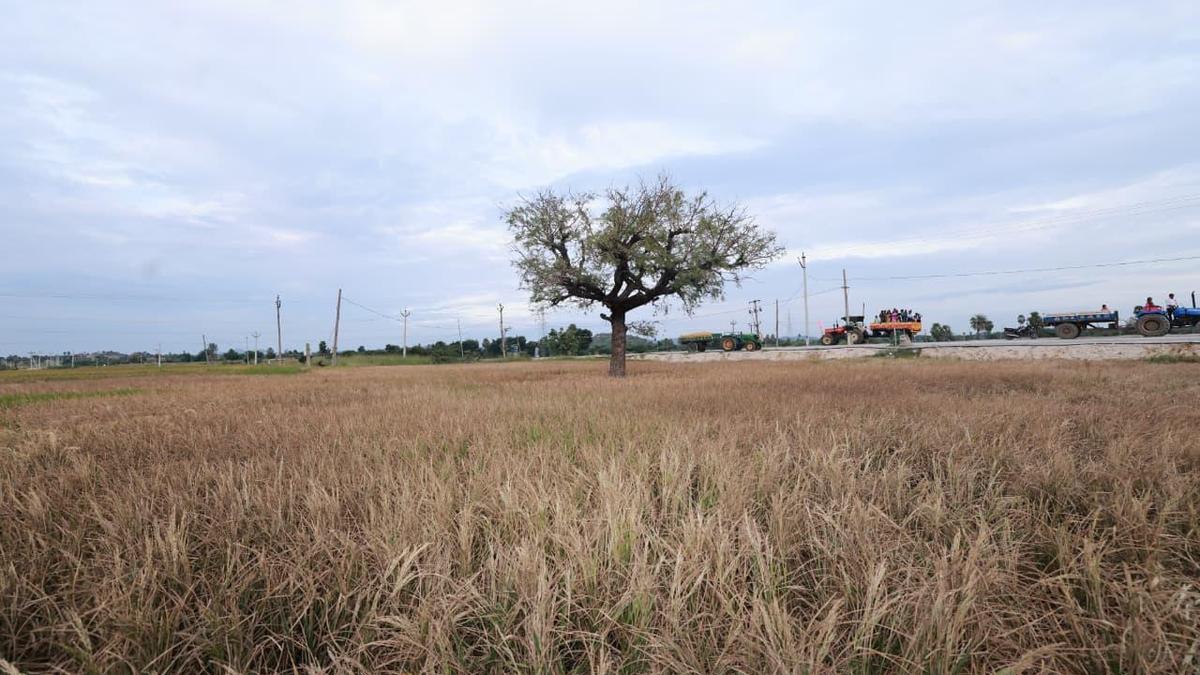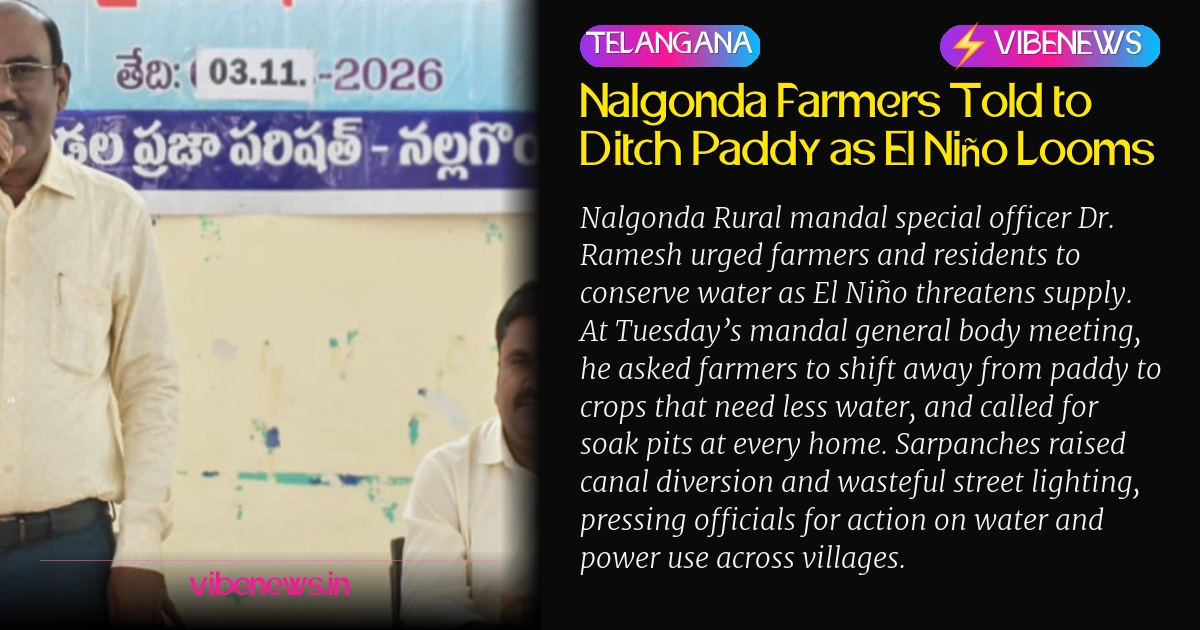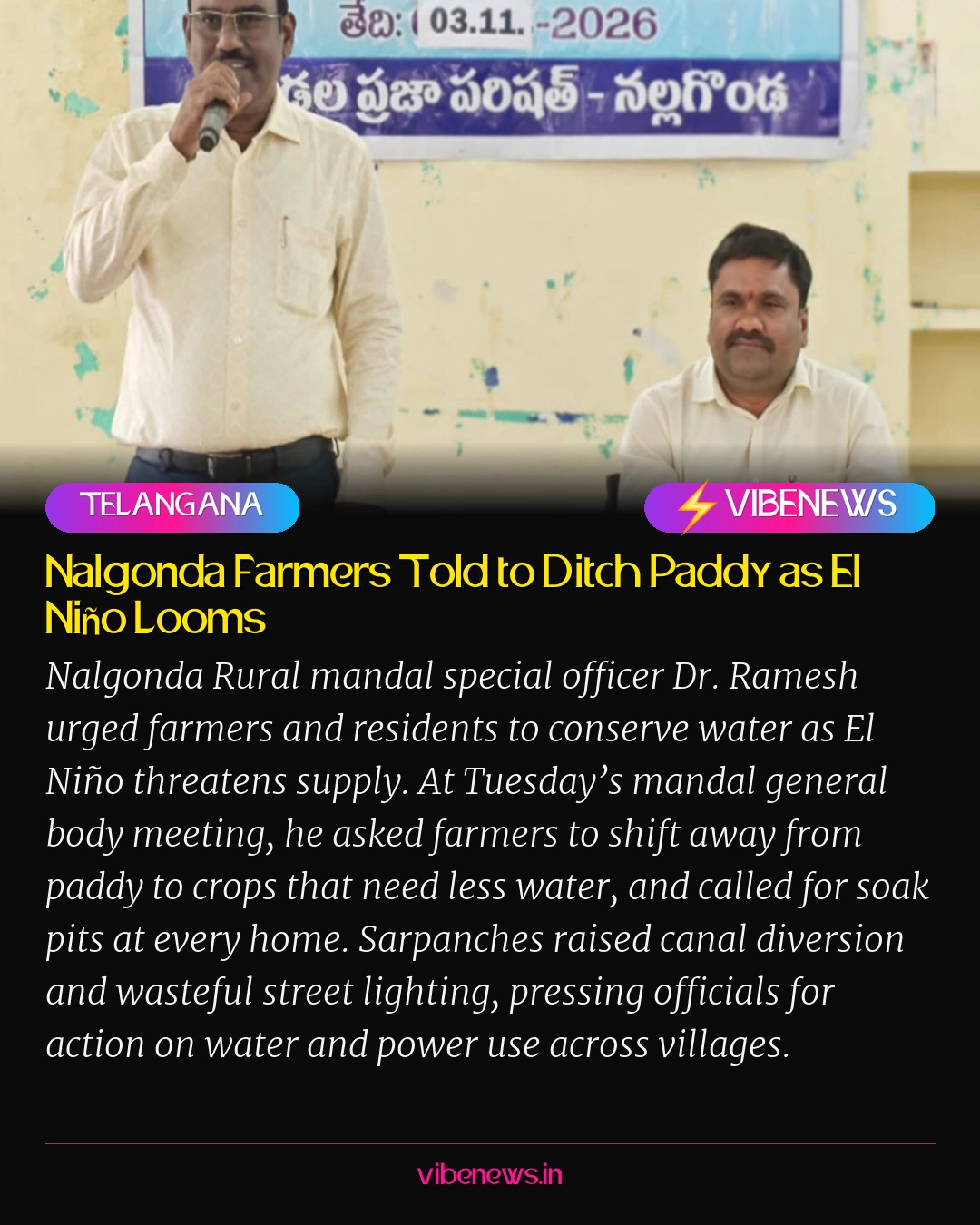

Nalgonda Rural mandal special officer Dr. Ramesh urged farmers and residents on Tuesday to conserve water and move away from paddy cultivation, warning that water availability could shrink in the days ahead as El Niño conditions take shape.
Ramesh, who is also the joint director of the animal husbandry department, made the appeal as chief guest at the mandal general body meeting in Nalgonda. The message was blunt: the region cannot afford to treat water as an endless resource, and the time to act is before the shortage arrives, not after.
Farmers were asked to replace paddy with alternative crops that can be grown with less water. Paddy is one of the most water-intensive crops in the state, and the official’s advice points directly at the biggest single draw on the region’s irrigation supply. He did not stop at fields, though. He also asked that every household build a soak pit, known locally as inkudu gunta, so that rainwater and wastewater can seep back into the ground instead of running off.
Villages are being asked to act together
Responsibility for spreading the message was handed down the administrative chain. Panchayat secretaries and sarpanches were told to coordinate with residents and run awareness drives in their villages. Mandal-level officials were directed to make regular field visits and check whether residents are getting the basic services they are entitled to.
The message was delivered in front of a long list of officials, including the MPDO, the MPO, the RWS assistant engineer, the horticulture officer, several veterinary doctors and a range of sarpanches from across the mandal. The size of the gathering signals that the administration sees water as a mandal-wide problem, not a problem for one or two villages.
Canal water is at the center of the local fight
Several sarpanches who spoke at the meeting turned the discussion toward a more immediate concern: canal water. They asked officials to take steps to fill the village tanks in every gram panchayat using the water currently being released through the canal.
The sarpanches also raised a serious accusation. They said that in some villages, people were cutting breaches into canals that carry water downstream, cutting off supply to villages farther along the route. They demanded strict action against anyone found doing it. In a season where every litre matters, that kind of tampering is not a minor local dispute. It decides which villages get water and which go dry.
For residents in those downstream villages, the stakes are simple. A breached canal means tanks that stay empty, wells that do not recharge and fields that may go unplanted. The sarpanches’ demand for enforcement shows that, for some communities, the water crisis is already being felt through who controls the flow.
The power problem is part of the same story
The meeting also addressed electricity, which the sarpanches linked directly to water conservation. They complained that street lights in some villages remain switched on in broad daylight. To stop this kind of waste, they suggested installing on-off switches for the lights.
Officials framed the issue the same way. Water and electricity must both be used carefully, and the aim, according to the discussion, is to make sure conservation practices are built into daily routines at the village level. A light left burning in the afternoon is small on its own, but across dozens of villages it adds up to a visible example of waste that residents can see and that leaders can fix.
In the words of the official, the message to the people was clear. Water saved now is the only reserve some villages will have if the dry months stretch longer than expected.
Keeping in mind that water availability may decline in the coming days, farmers should cultivate crops that need less water instead of paddy, and everyone should build soak pits at home.
Why Telangana should be paying attention
The warning from Nalgonda is more than a local bulletin. It is a signal that the state’s agricultural and rural communities are being asked to prepare for a shortage before it is confirmed. Officials are not waiting for a crisis to declare itself. They are asking farmers to change planting decisions and households to change how they handle rainwater now.
That approach puts pressure on farmers, who must weigh the risk of changing crops against the familiar returns of paddy. It also puts pressure on village leaders, who must turn district-level advice into practical action, from digging soak pits to policing canal breaches. For many families, the decisions made in the next few weeks will determine whether their wells, tanks and fields hold up through the season ahead.
The meeting did not provide a timeline for when water shortages might hit, or detail how many villages are already facing canal problems. What it did show is an administration and a set of local leaders who see the danger, and who are trying to act before the shortage becomes a emergency that people cannot manage on their own.
For now, the instruction from Nalgonda is simple and urgent: switch crops where possible, recharge the ground at home, stop anyone tampering with canals, and stop wasting power and water in every village. The warning has been issued. What happens next depends on whether those words turn into daily habits in the fields and homes of the mandal.
TL;DR
- Nalgonda Rural mandal special officer Dr. Ramesh urged farmers to avoid paddy and grow crops that need less water.
- The warning comes as El Niño conditions threaten to reduce water availability in the coming days.
- Every household was asked to build a soak pit to recharge groundwater and conserve rainwater.
- Sarpanches demanded action against people cutting canal breaches that cut off water to downstream villages.
- Officials were also urged to curb daytime street light use by installing on-off switches.