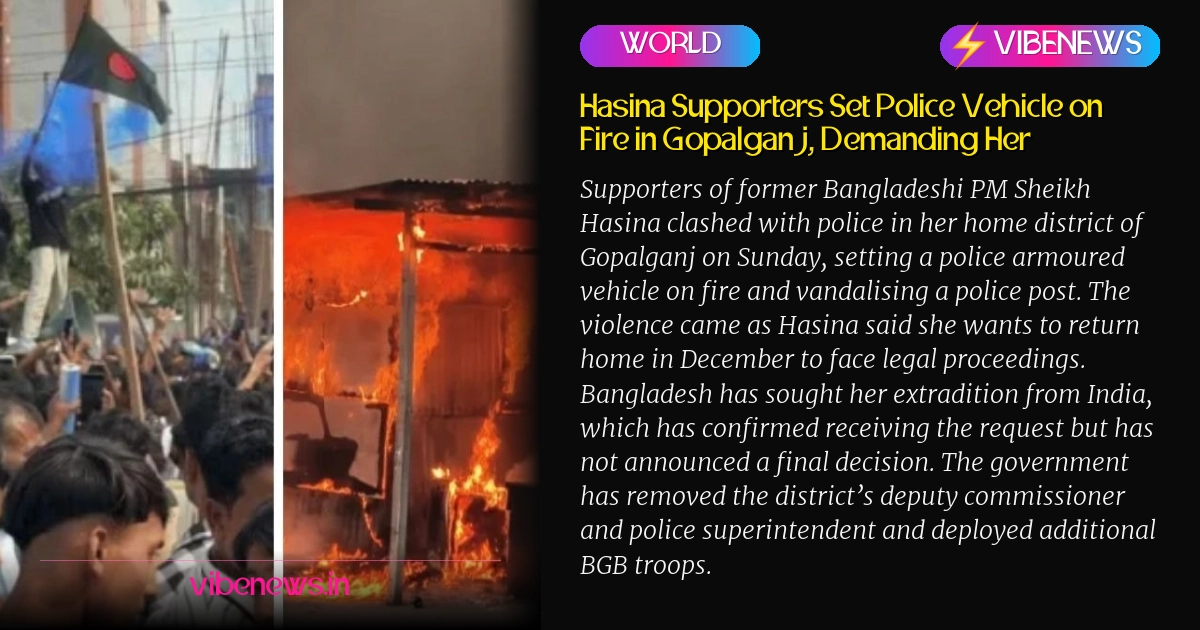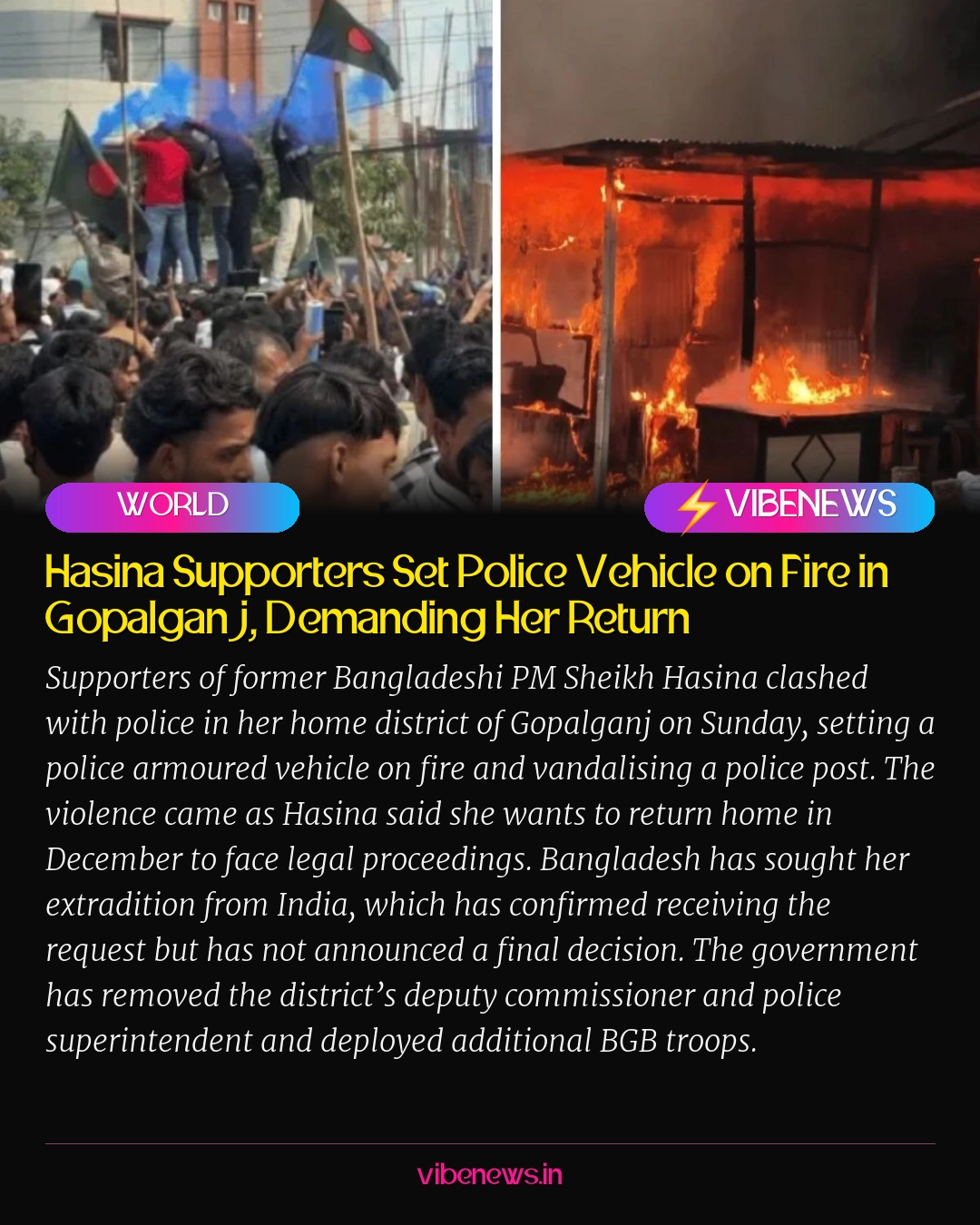
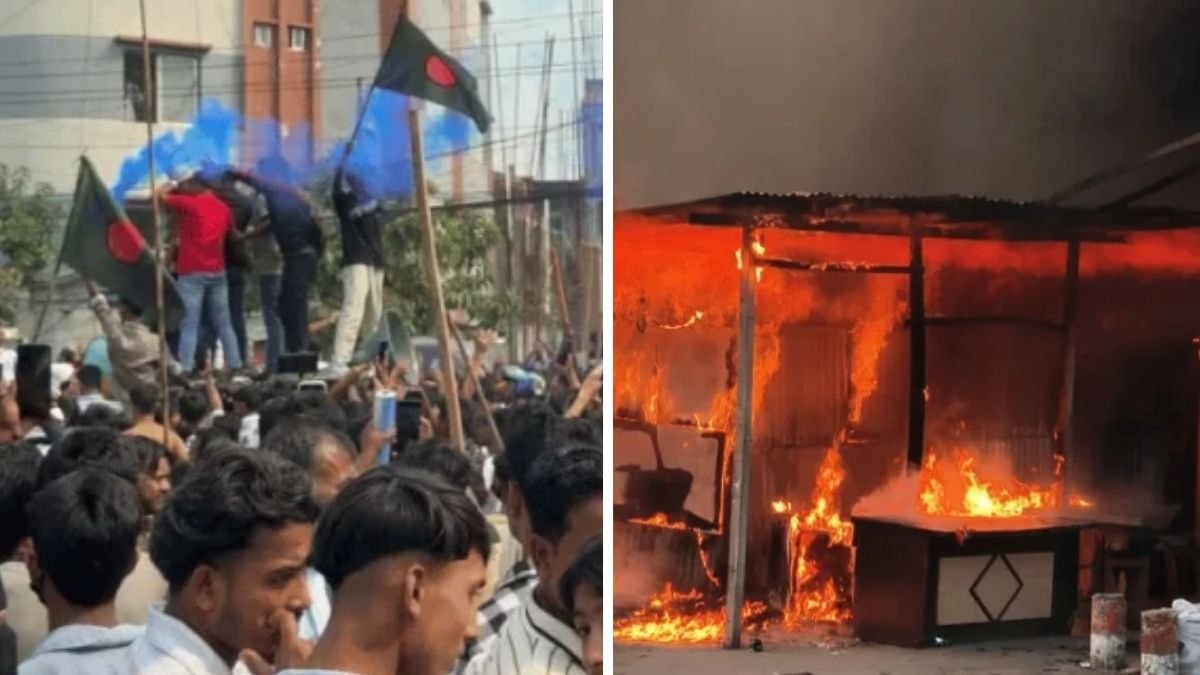
Supporters of former Bangladeshi prime minister Sheikh Hasina set fire to a police armoured vehicle and vandalised a police post in her home district of Gopalganj on Sunday, as hundreds of Awami League activists poured onto the streets demanding that she be brought back to the country.
The protesters also broke through police barricades, blocked roads and pulled down a memorial built to mark the fall of Hasina’s government. Several carried sharp weapons, sticks and other makeshift weapons. Women activists joined the demonstration as well.
The unrest followed a night of arson. On Saturday, unknown people set fire to two offices of the ruling Bangladesh Nationalist Party (BNP) in Tungipara, the village that is Hasina’s birthplace. Tension in the area rose sharply after that, and the violence in Gopalganj followed.
A rally with a clear message
Iliyas Haq, the Awami League’s district leader in Gopalganj, addressed a rally during the protests. His message left little room for ambiguity about where the party stands.
The movement will continue until Sheikh Hasina is brought back to the country.
The demand is the central thread running through the protests. Hasina has lived in India since August 2024, when she was removed from power after a student-led movement. Now she has said she wants to return to Bangladesh in December, and she has described the goal as facing the legal process at home.
That legal process is severe. In November 2025, a Bangladeshi court sentenced Hasina to death in absentia for crimes against humanity linked to the crackdown on protesters. Hasina has rejected the charges and the trial itself. Her supporters, meanwhile, are treating her return as a political cause that cannot wait.
Dhaka pushes, New Delhi holds back
The Gopalganj violence has put India at the centre of a diplomatic standoff. Bangladesh is seeking Hasina’s extradition from India. Law minister MD Asaduzzaman said on Saturday that the legal steps needed to bring her back had been completed, and that the decision now rests with India.
India has confirmed that it received an extradition request from Bangladesh. It has not made a final decision public. Foreign Ministry spokesperson Randhir Jaiswal said on Friday that the matter is legal in nature and that related aspects would be considered accordingly. That answer offers no timeline, and it leaves the question open while protests continue on the other side of the border.
For readers in India, the story is not only about unrest across the border. A request of this kind lands directly on New Delhi’s desk, and every street confrontation in Bangladesh adds pressure on a decision that India has not yet made.
The government responds
The Bangladesh government moved quickly to contain the situation in Gopalganj. It removed the district’s deputy commissioner and the superintendent of police from their posts. Additional units of the Border Guard Bangladesh (BGB) have been deployed to help maintain law and order in the district.
Prime Minister Tarique Rahman chaired a cabinet meeting on Sunday, where the situation in Gopalganj was discussed. A home ministry official said the government is monitoring the situation closely and that the deployment of security forces could be increased if needed.
The official line is measured, but the streets of Gopalganj tell a more volatile story. Burning vehicles, damaged police posts and a demolished memorial are the kind of images that tend to harden positions on both sides. Whether the calm holds may depend on what happens in the weeks before Hasina’s planned December return, and on whether New Delhi decides to act on the extradition request.
What is certain for now is that Gopalganj, a district tied to Hasina’s family and political identity, has become the focal point of a dispute that reaches far beyond its borders. Police are on alert, troops are on the roads, and the question of whether Hasina will ever stand before a Bangladeshi court in person remains unanswered.
TL;DR
- Hasina supporters torched a police armoured vehicle and vandalised a police post in Gopalganj on Sunday.
- Awami League activists blocked roads, broke police barricades and demolished a memorial marking Hasina’s government’s fall.
- Hasina has said she wants to return to Bangladesh in December to face legal proceedings.
- A Bangladeshi court sentenced her to death in absentia in November 2025; she rejects the charges.
- Dhaka has sought her extradition from India, which confirmed the request but has not announced a decision.
- The government removed Gopalganj’s deputy commissioner and police superintendent and deployed extra BGB troops.