Paraguay’s President Santiago Peña was impeached and arrested on Friday night, days after the collapse of the Ueno bank left millions of people locked out of their accounts.
Ueno had sold Paraguayans a sleek financial future built around a credit card tap and a ping on the phone. The pitch included 40 percent cash back on credit card purchases, splashy sponsorship deals with soccer teams, and ambitions to become a billion-dollar start-up. The offer worked. Two out of three adult Paraguayans signed up, including Indigenous people opening their first bank accounts, members of the country’s elites and young urbanites.
The Morning the App Went Dark
The digital illusion ended last week. Amid charges of insider dealing and collusion between the bank and regulators, customers opened their apps on Tuesday morning and saw the words “Try Later.” Trying later did not help. The bank had collapsed.
“Trying later didn’t help.”
The failure pulled Paraguay, a low-tax nation sometimes billed as the new Dubai, into a crisis that touched money, politics and criminal investigations at the same time. What had looked like a modern success story turned, within days, into a national emergency.
The damage reached into ordinary life. Millions of people could not withdraw cash. They could not use their credit cards. They could not open the bank’s app to buy fuel, medicine or food. The lockout did not stay confined to financial transactions. It reached the most basic purchases a household makes, and it reached them all at once.
Protests, Charges and an Impeachment
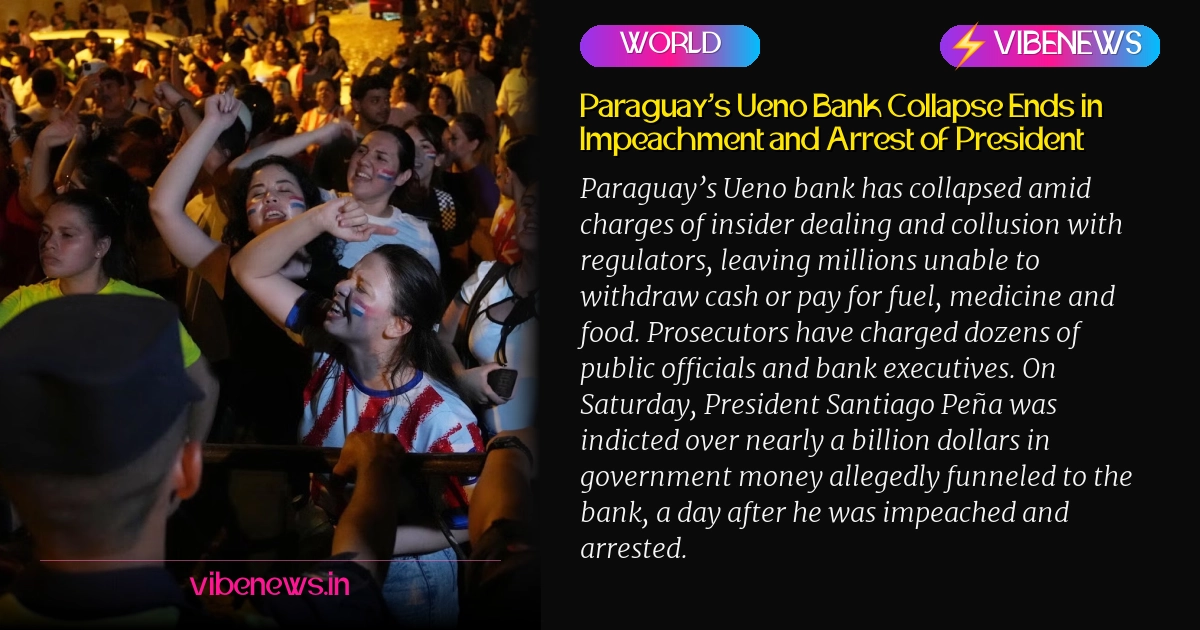
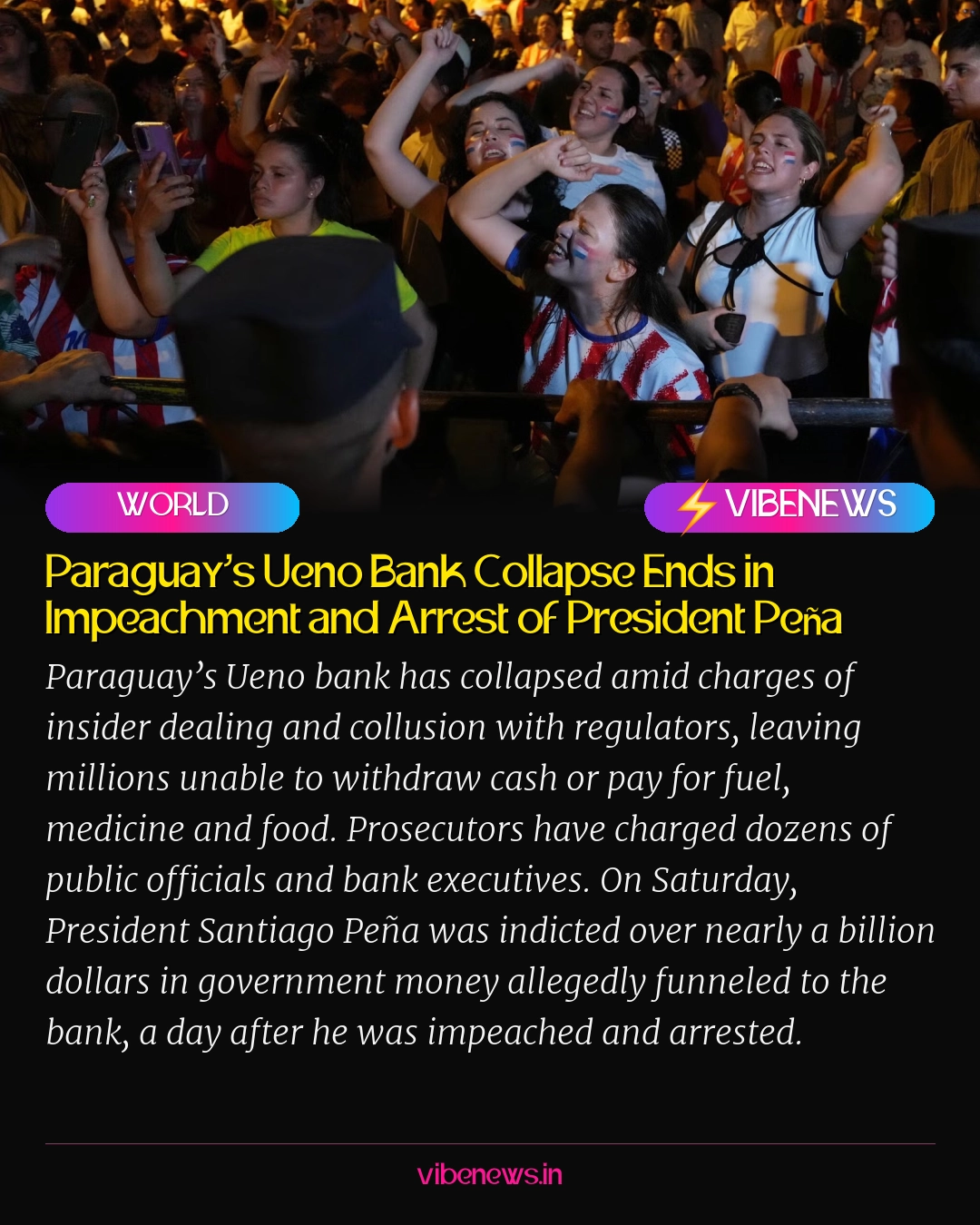
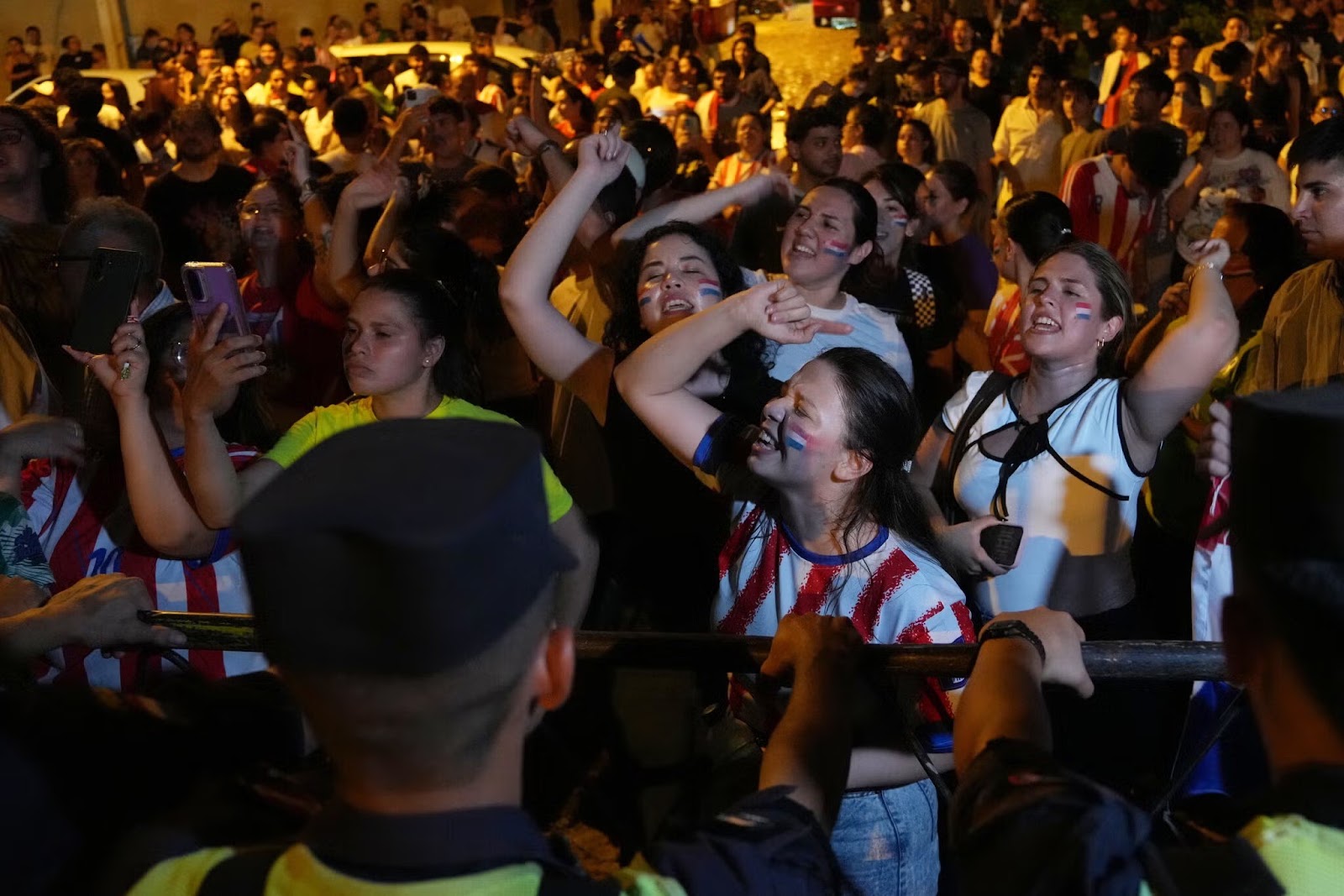
Prosecutors filed charges against dozens of public officials and the bank’s executives. Anger spilled into the streets, and days of protests built toward a single night. On Friday, lawmakers voted unanimously to impeach President Santiago Peña, and he was arrested.
Peña is an ally of President Trump and was once an international darling of the right. That background gives his fall an international edge. A leader who had been widely celebrated abroad now faces criminal allegations at home, tied to the collapse of a bank that many Paraguayans had embraced.
What Prosecutors Allege
On Saturday, prosecutors indicted Peña. They accuse him of funneling nearly a billion dollars of government money to Ueno. In the same period, the bank’s executives made reckless insider loans, according to the charges. The allegation links public money to private lending decisions, and it puts the presidency at the center of a case that started with a banking app going dark.
Prosecutors also named Carlos Carvallo, the former president of the nation’s central bank. They say he looked the other way while the bank went under, and that he lied to lawmakers during that period. These remain allegations. They describe what prosecutors say happened, and they have not been settled in court.
The scale of the case is hard to miss. A bank that drew in two out of three adult Paraguayans collapsed quickly, and the charges now reach from the executive offices of the bank to the central bank and the presidency. Each layer raises the same question: who knew what, and when did they know it?
Why the Story Keeps Growing
Ueno’s appeal was built on convenience. A single tap and a notification made banking feel effortless, and rewards on every card purchase gave people a reason to keep using it. That same design made the collapse feel sudden. One morning the app worked, and the next it said “Try Later” to people who needed to buy food or medicine.
The political fallout now runs alongside the financial one. Protests, impeachment, an arrest and a criminal indictment have all landed within a short window. For a country that had been held up as a model of low taxes and digital ambition, the speed of the reversal is the detail that stands out most.
What happens next will depend on the courts and on the investigations that are still underway. The charges against Peña, Carvallo and the bank’s executives are the starting point, not the end of the account. For now, the story remains one of promises made through a phone screen and consequences that arrived through the same screen, with millions of people left waiting for their money to come back.
TL;DR
- Paraguay’s President Santiago Peña was impeached and arrested on Friday night after the Ueno bank collapsed.
- Millions of Paraguayans were locked out of accounts, cards and apps, unable to buy fuel, medicine or food.
- On Saturday, prosecutors indicted Peña over nearly a billion dollars in government money allegedly funneled to Ueno.
- Former central bank president Carlos Carvallo is accused of looking the other way and lying to lawmakers.
- Prosecutors have charged dozens of public officials and bank executives, and the allegations remain unproven in court.