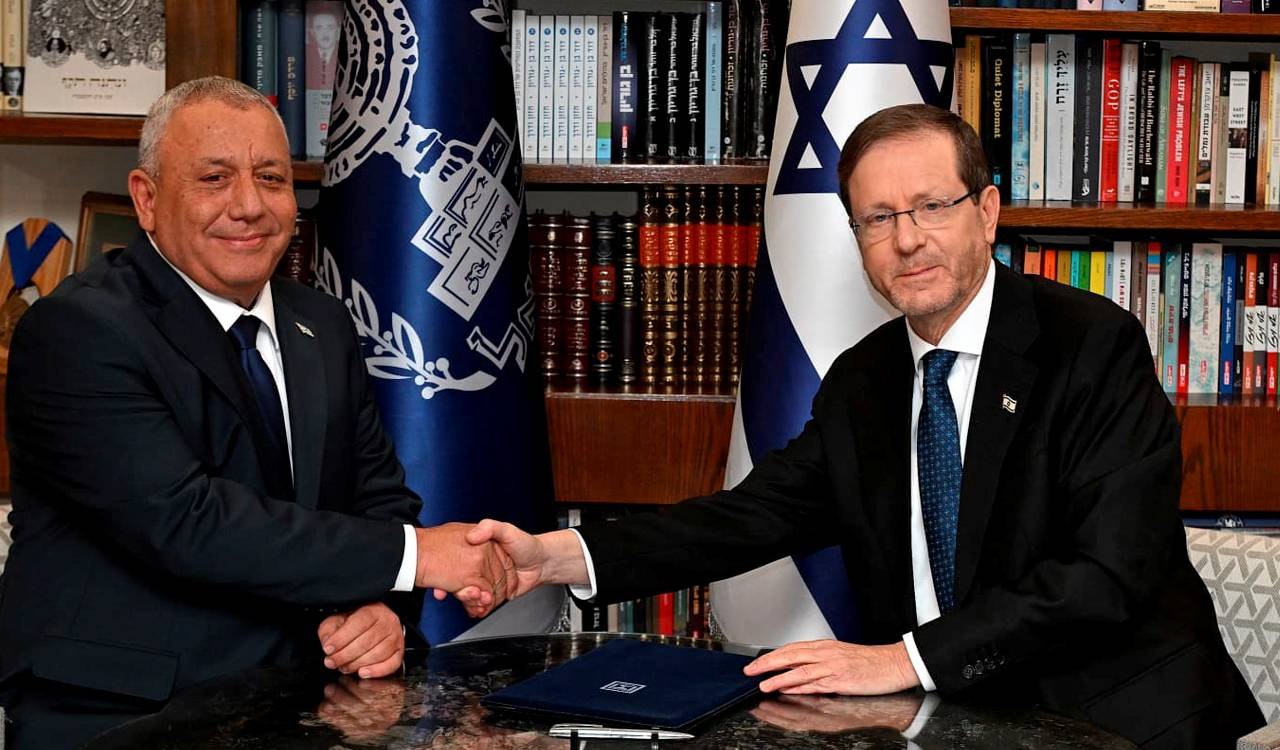
Israeli President Isaac Herzog on Sunday formally asked Yashar party leader Gadi Eisenkot to form the next government, after 67 of the 120 elected members of parliament recommended him. Prime Minister Benjamin Netanyahu received recommendations from 46.
The decision puts Eisenkot, a former chief of the Israel Defence Forces, in the driver’s seat of one of the most closely watched political contests in the country’s recent history. Eisenkot now has 28 days to assemble a coalition and win approval from the Knesset, Israel’s parliament. He can ask Herzog for an extra 14 days if talks stall.
A split verdict on Netanyahu
The October 27 elections were widely treated as a referendum on Netanyahu’s leadership, and voters did not deliver a clear answer. The vote left the country’s politics split into two competing blocs with no outright majority.
Netanyahu’s bloc won 53 seats. The anti-Netanyahu alliance, also called the ‘Change Bloc’, won 48. The remaining 19 seats went to Arab parties, which sit outside both camps in what the reporting describes as a fractured mandate.
Netanyahu’s Likud emerged as the single largest party. That did not translate into a full endorsement from his own side. The United Torah Judaism party, with seven lawmakers, chose not to recommend any candidate, which meant Netanyahu could not collect backing from every member of his bloc.
Consultations in public
Herzog held consultations with representatives of every faction elected to the 26th Knesset, as required under Section 7 of the Basic Law: The Government. The sessions were livestreamed, so the public could hear the discussions as they happened.
Speaking at a ceremony at the President’s Residence in Jerusalem, Herzog said the talks had brought out the disputes and painful points in Israeli public life, along with the many voices within the country’s society and politics. He described the conversations as conducted with openness and transparency.
He then laid out the arithmetic that drove his decision. Factions representing 67 lawmakers recommended Eisenkot, while those representing 46 backed Netanyahu. One faction with seven lawmakers recommended no one.
“In light of this, and following talks I have held with various figures in recent days, it is therefore evident that Mr. Eisenkot has received the clear and unequivocal support of a majority of Members of Knesset on the most central question: who has the better chance of forming the next government that will win the confidence of the Knesset.”
Herzog said he acted under his authority in the Basic Law, which gives the president the power to choose who gets the first attempt at forming a government.
Eisenkot’s first pitch
Eisenkot did not frame the task as a simple political contest. He told the room that Israel faces a “challenging and fateful state of emergency.” He pointed to ongoing wars, military objectives that have not been met, and what he called a “devastating diplomatic crisis.”
He also said that “even some of Israel’s closest allies” are reconsidering their relations with the country. That remark was an apparent reference to strained ties with the United States, though he did not spell out the details in the portion of remarks reported.
Eisenkot promised to approach the coming negotiations with patience, humility and composure. He pledged a ‘deep commitment’ to what he described as a Jewish, democratic, egalitarian, liberal and secure Israel.
The Arab parties and the Hamas question
The Arab parties, which hold 19 seats across two blocs, the Joint List and Ra’am, grudgingly recommended Eisenkot. Their stated aim is to oust Netanyahu. That support does not automatically lead to a seat at the table.
Both the Netanyahu and Eisenkot blocs had earlier shown a general reluctance to work with the Arab parties. Most parties in both blocs, with the exception of the Democrats, have said they do not want to sit with the Arab parties in a government.
The main obstacle is the Arab parties’ reluctance to designate Hamas as a terrorist organisation. Much of the Jewish population considers that position unacceptable after the October 7, 2023 attacks by the Gaza-based group, which killed around 1,200 people. Any coalition math that depends on the Arab parties will have to clear that hurdle.
What happens next
Eisenkot has no guarantee of success. His 28-day window is tight for a parliament this divided, and the 14-day extension is an option, not a promise. A government only exists once it wins the confidence of the Knesset.
For now, the story is about who holds the mandate to try. Herzog’s choice rests on a clear count of recommendations, not on a majority that has already formed. Whether Eisenkot can turn that count into a working coalition will be the real test in the weeks ahead.
TL;DR
- President Isaac Herzog tasked Gadi Eisenkot with forming Israel’s next government after 67 of 120 lawmakers recommended him.
- Netanyahu received recommendations from 46 lawmakers, short of the support needed to form a government.
- Eisenkot has 28 days to build a coalition and can request a 14-day extension from Herzog.
- The October 27 elections produced no clear majority, with Netanyahu’s bloc at 53 seats and the anti-Netanyahu bloc at 48.
- The 19 Arab party seats remain a sticking point, tied to Hamas designation demands.