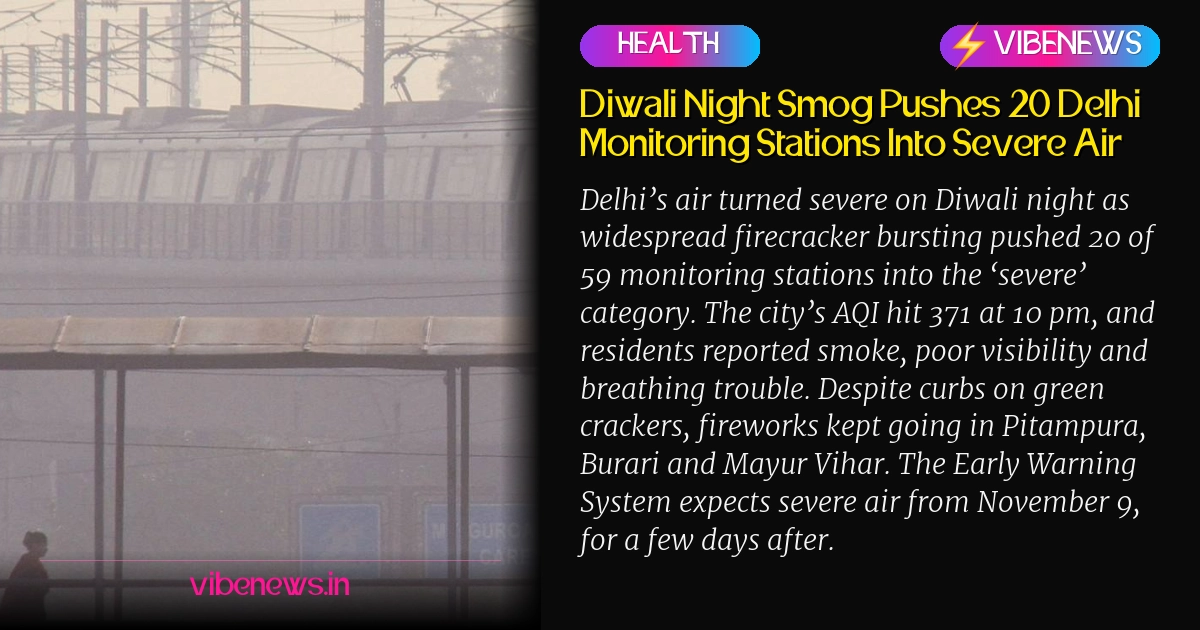
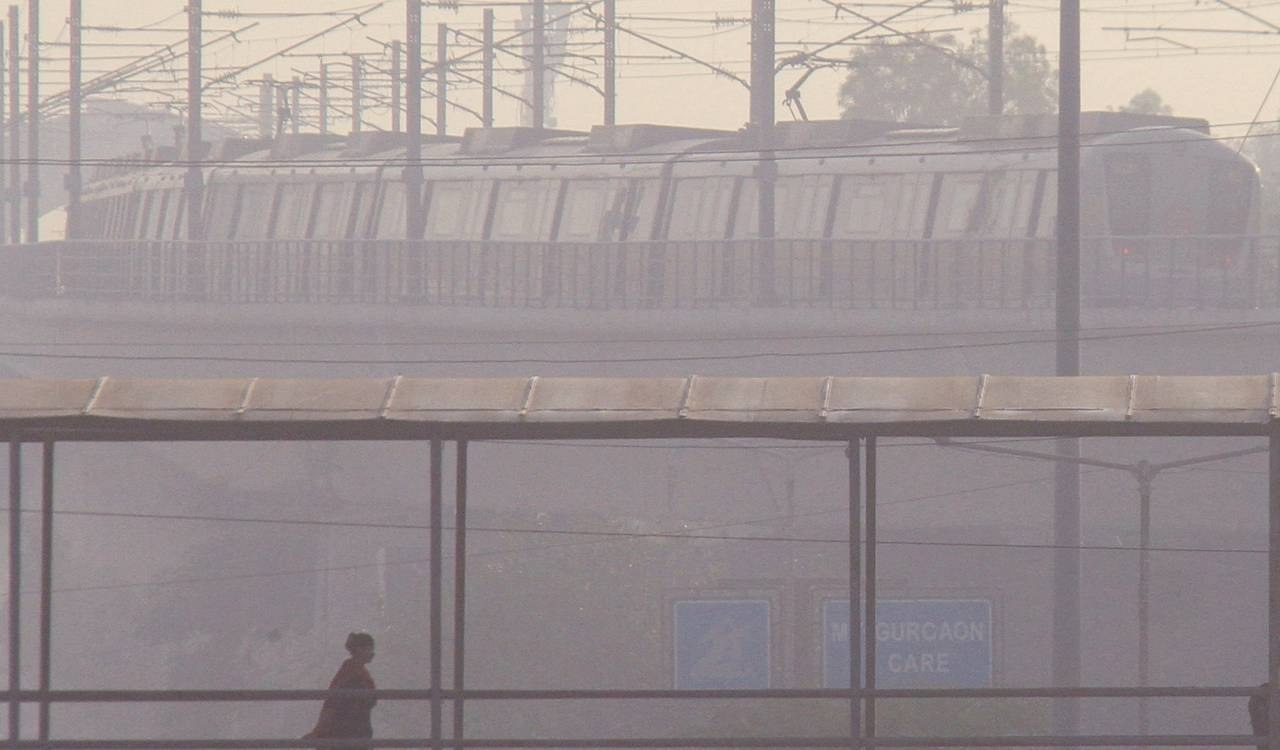
Delhi’s air turned severe on Diwali night, with 20 of the city’s 59 monitoring stations recording ‘severe’ readings as firecracker smoke settled over neighbourhoods. The overall Air Quality Index stood at 371 at 10 pm, and the haze was thick enough to blur streetlights.
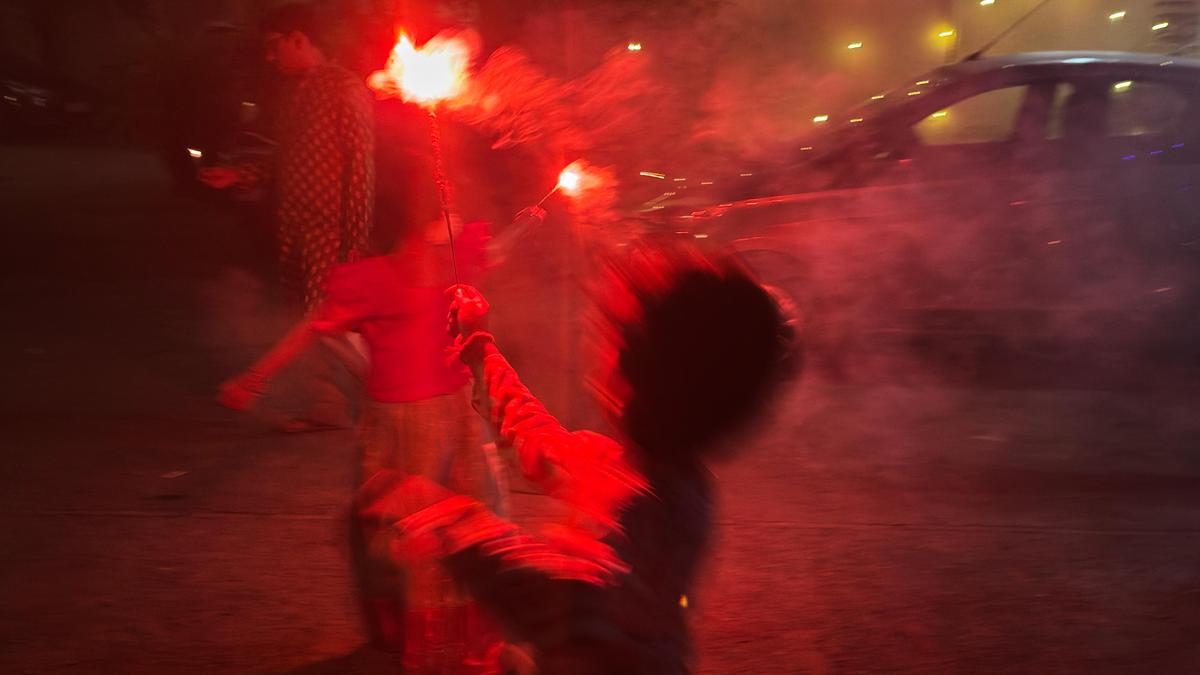
The smoke built up as the evening wore on. Fumes from crackers hung over roads and homes, and visibility dropped across several parts of the capital. People who live there described the air in plain terms, and the reports describe the same thing.
The smell of burnt crackers lingered in the air, while visibility dropped in several parts of the capital and residents reported difficulty breathing.
The timing made the damage worse. Roads stayed largely empty during the day, but firecracker bursting picked up from around 5 to 6 pm and gathered pace after dark. By then the city had already been edging toward the severe threshold. The AQI was at 371 by 7 pm, and it was still at that level at 10 pm.
Rules on paper, fireworks on the streets
The Delhi government had asked residents ahead of Diwali to follow the Supreme Court’s directions on the sale and use of green firecrackers. The District Magistrate (East) went further in an order. That order allowed green crackers to be burst only on November 7 and 8, and only in two windows: 6 am to 7 am, and 8 pm to 10 pm.
Those limits did not stop the noise or the smoke. Several parts of Delhi kept witnessing firecrackers on Sunday evening. Reports came in of fireworks from Pitampura, Burari, Mayur Vihar and parts of Lutyens’ Delhi.
Residents said bursting was especially intense in Burari, in outer Delhi. Similar reports came from Mayur Vihar. In the Bishambardas Marg area and in Lutyens’ Delhi, people said fireworks continued, though the intensity had dropped slightly.
The worst-hit neighbourhoods
Sonia Vihar recorded the worst air in the city, with an AQI of 463. Jahangirpuri followed at 450. Burari, Alipur and Punjabi Bagh were among other areas with high pollution levels.
Six stations stayed in the severe category through the entire day. Those were Sonia Vihar, Jahangirpuri, Punjabi Bagh, Burari, Okhla and Rohini. For residents of those areas, the bad air was not a passing evening problem.
Of the 59 stations that reported at 10 pm, 20 were in the severe category, six were in the poor category and 33 were in the very poor category. Put another way, most of the city’s network was reading unhealthy air at the same hour that families were lighting crackers outside their homes.
Social media users also reported conditions as the night went on. Several people posted on X about the strong smell of smoke, reduced visibility and difficulty breathing. Their posts described celebrations that carried on through the night, while the air kept getting worse.
What the numbers mean
The city’s average AQI for the day settled at 376, in the very poor category. On Saturday, the average was 369. The Central Pollution Control Board classifies AQI readings in bands. A reading from 0 to 50 is good, 51 to 100 is satisfactory, 101 to 200 is moderate, 201 to 300 is poor, 301 to 400 is very poor, and 401 to 500 is severe.
By that scale, the daily average sits in the very poor band, just above the level that tips into poor territory on the other side. The night-time station readings went higher, and several hit the severe band.
The Air Quality Early Warning System has forecast that Delhi’s air will slip into the severe category from November 9. The forecast says it will stay there for the subsequent few days. The agency points to weather that is working against the city. A ventilation index below 6,000 square metres per second, together with average wind speeds under 10 kilometres per hour, makes it hard for pollutants to disperse.
Where the pollution is coming from
Weather and air quality experts have pinned the expected deterioration on several causes. These include unfavourable meteorological conditions, vehicular emissions, Diwali celebrations and the ongoing peak stubble-burning season in neighbouring states.
PM2.5, the fine particulate matter that penetrates deep into the lungs, remained the main pollutant in the capital on Sunday. Firecracker emissions added to those particulate levels. The Decision Support System for Delhi says the transport sector was set to be the largest contributor to pollution on Sunday, at 19 per cent. Stubble burning was set to contribute 3.5 per cent that day. The forecast puts its contribution at around 2.99 per cent on Monday.
The figures show that vehicles, not farm fires, were the biggest source on Sunday. The fire-related share is smaller in the data, but the forecast for the days ahead still points to a stubble-burning season that is far from over in the region.
The reports do not include hospital admissions or medical data from the night. What they do show is residents struggling to breathe on one of the year’s biggest festival nights, with a forecast that offers little relief for the days ahead.
TL;DR
- Delhi’s AQI reached 371 at 10 pm on Diwali night, with 20 of 59 monitoring stations in the severe category.
- Sonia Vihar recorded the worst air at 463 AQI, followed by Jahangirpuri at 450.
- Firecrackers kept bursting despite green cracker restrictions, with reports from Pitampura, Burari and Mayur Vihar.
- Delhi’s daily average AQI settled at 376 in the very poor category, up from 369 on Saturday.
- The Early Warning System forecasts severe air from November 9 for several days.
- Transport was the largest pollution contributor on Sunday at 19 per cent, per the Decision Support System.