The Food Safety and Standards Authority of India has seized 3,280 tonnes of what it calls "banned and non-compliant" food products, worth ₹82 crore, during a nationwide inspection drive. The regulator also cancelled 52 licences and sealed 314 establishments.
The drive began on September 1 and was aimed at checking adulteration during the festive season. In a social media post on Saturday, November 7, 2026, the FSSAI said it had stepped up vigilance in view of the festivals. The regulator’s post put the numbers in one place, and they are hard to ignore.
How the numbers add up
Between September 1 and November 5, FSSAI inspected 56,431 food establishments across states and Union Territories. Inspectors seized non-compliant food products, including paneer, ghee, milk and sweets. Beyond the seizures, the regulator issued 10,047 improvement notices to food business operators.
The enforcement did not stop at warnings. The FSSAI cancelled 52 licences, suspended 1,133 licences and sealed 314 establishments. For anyone who buys sweets or dairy during the festive rush, those are the numbers that show how many businesses were pulled up for substandard practices.
The seizure figures themselves differ slightly across the regulator’s statements. The FSSAI put the quantity at 3,279.57 tonnes, worth ₹81.80 crore, in its detailed account, while the headline figure is rounded to 3,280 tonnes and ₹82 crore. Both point to the same scale of action.
What the regulator said about the drive
The FSSAI framed the campaign as a response to the festive period, when demand for sweets, dairy and ghee typically rises. The regulator said it had acted decisively against violations and wanted to ensure food reaching consumers was safe.
"Through rigorous checks on over 56,000 food establishments, authorities took decisive action against substandard practices."
That line came from the regulator’s own post, and it sets the tone for the campaign. The authority is not describing a routine audit. It is describing a push to clean up the market during its busiest weeks.
Enforcement beyond festival season
The FSSAI also said that, this calendar year, it has stepped up enforcement actions against food business operators and e-commerce companies. That means the drive is part of a wider effort to police food sold both in shops and online, not only one festive window.
The regulator did not say which specific brands or companies were involved in the seizures, and the source material does not name any. What it did say is that the products included paneer, ghee, milk and sweets, all everyday items that many households buy in bulk during festivals.
A raid in Raipur
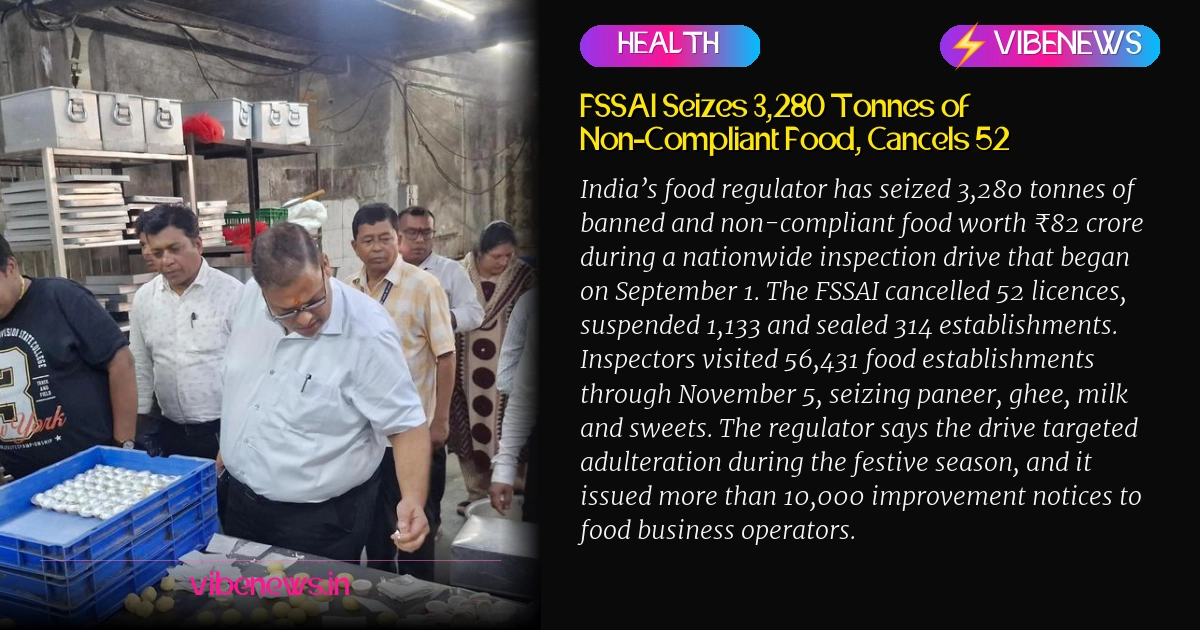
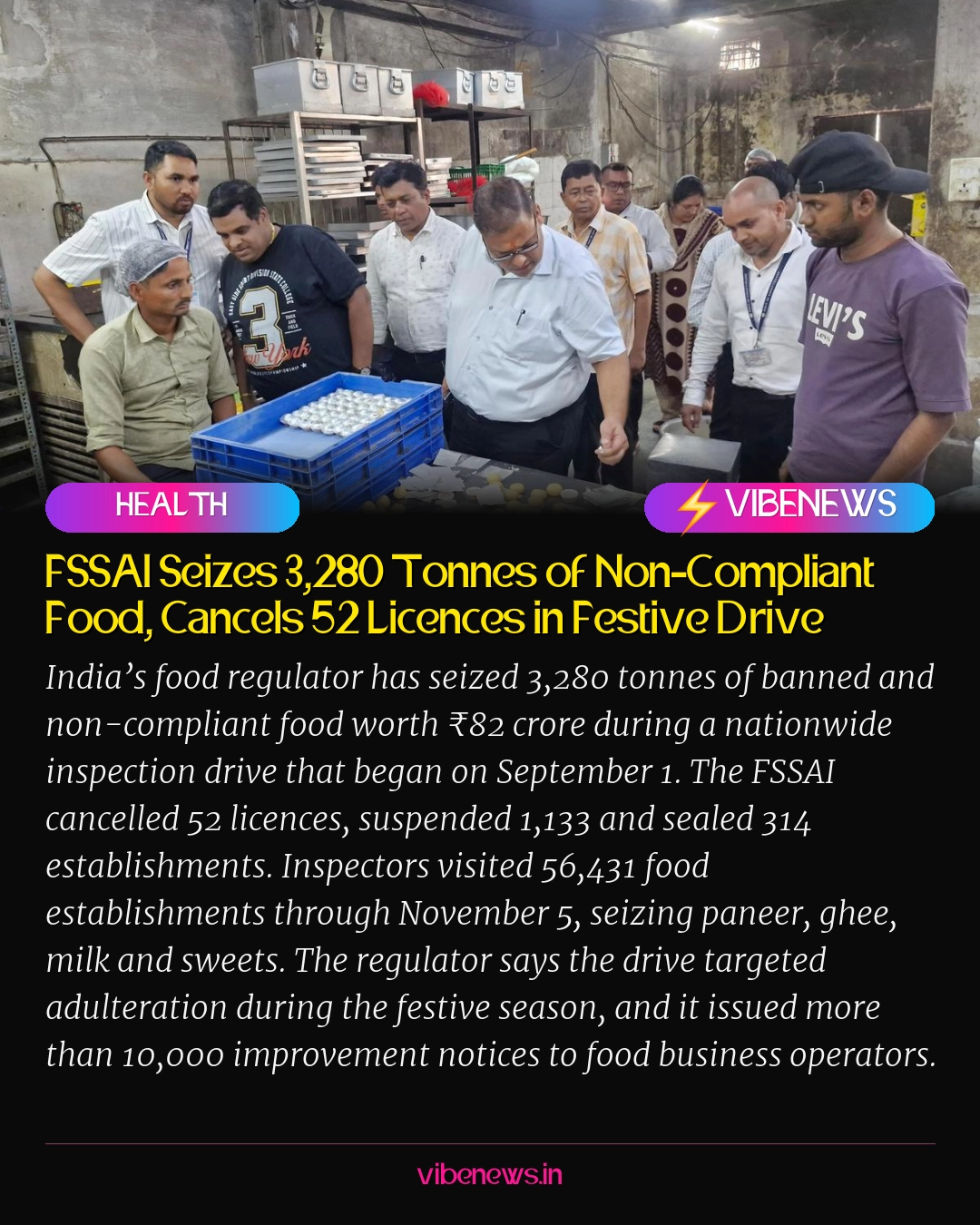
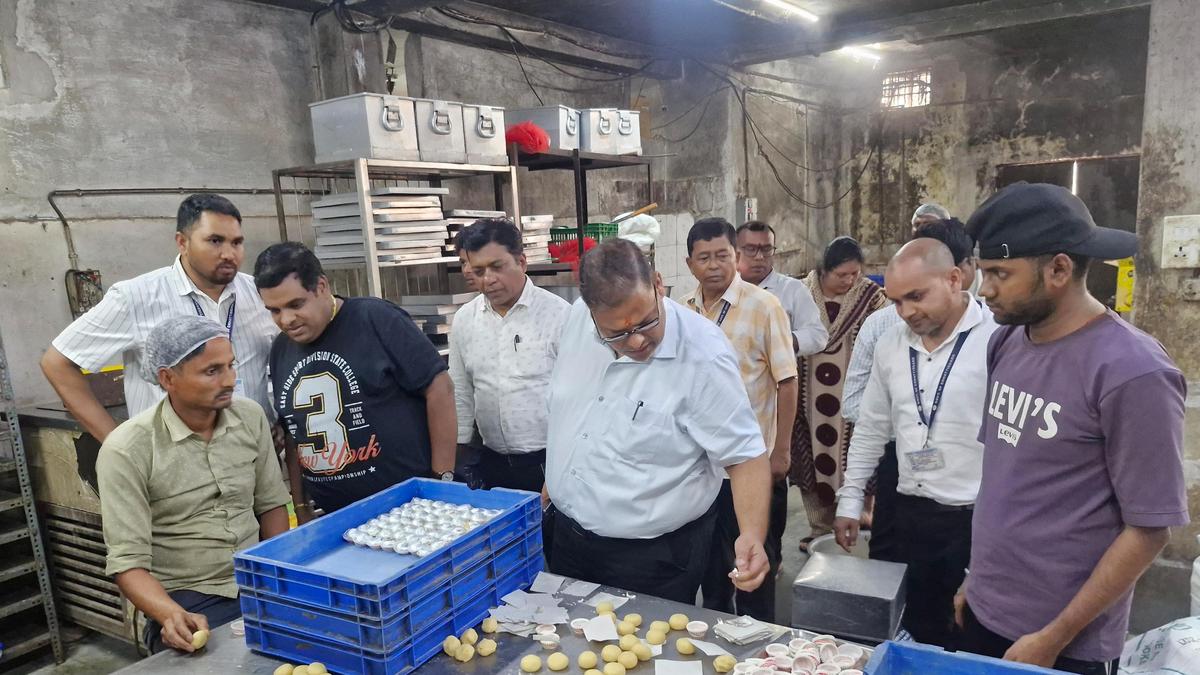
The article’s photo caption points to action on the ground in Chhattisgarh. The state’s Food Safety Department conducted raids at four locations in Raipur as part of the broader effort. The caption does not give details of what was found at those sites, so readers should not assume the Raipur raids produced the same seizures as the national totals.
What consumers should take from this
The figures are large, but they describe enforcement, not a finding about every product on the shelf. Still, the scale of seizures and sealed premises shows that regulators found enough violations to act in thousands of places over two months. Shoppers buying sweets, paneer, ghee or milk this season have a clear reason to check where their food comes from and whether the seller holds a valid licence.
TL;DR
- FSSAI seized 3,280 tonnes of banned and non-compliant food worth ₹82 crore in a nationwide drive.
- The regulator cancelled 52 licences, suspended 1,133 and sealed 314 establishments.
- Inspectors visited 56,431 food establishments between September 1 and November 5.
- Seized items included paneer, ghee, milk and sweets, mainly during the festive season.
- FSSAI issued 10,047 improvement notices to food business operators.
- The regulator said it has stepped up enforcement against e-commerce companies this year.