Uncontrolled diabetes can loosen teeth and, if left untreated, lead to tooth loss, according to a health feature written by Dr. Sukhabhogi Jagadeeshwar Rao and published on November 8, 2026.
Doctors usually warn that diabetes damages the kidneys, heart and other organs. The feature asks a less familiar question: how does the disease reach the teeth? The answer starts in the gums, not the enamel.
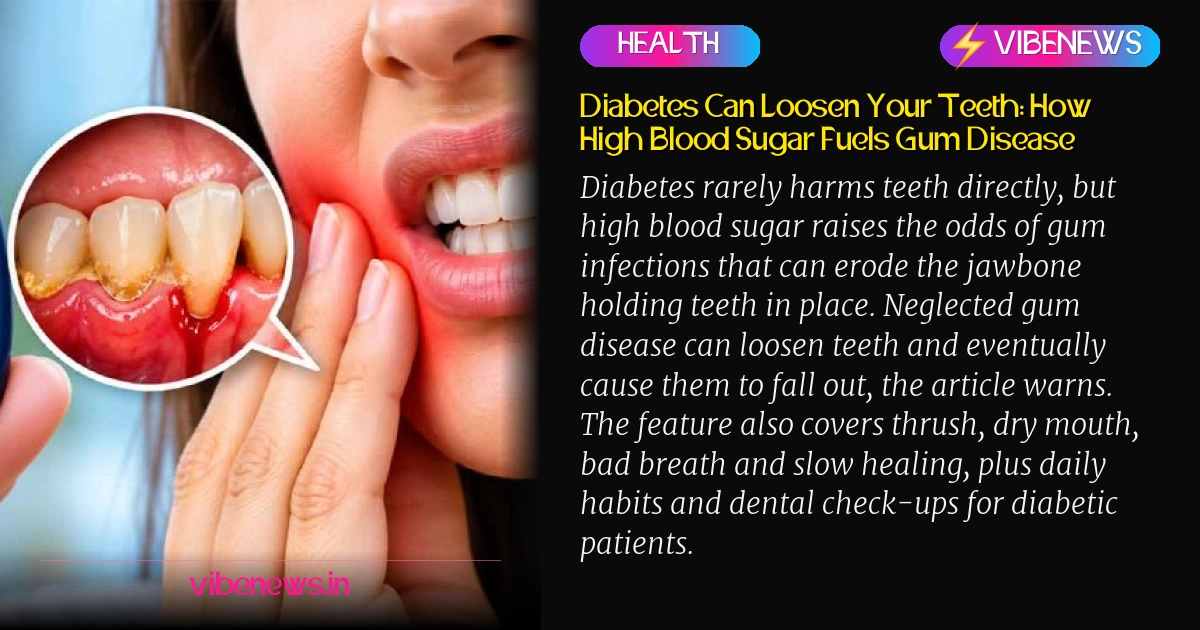
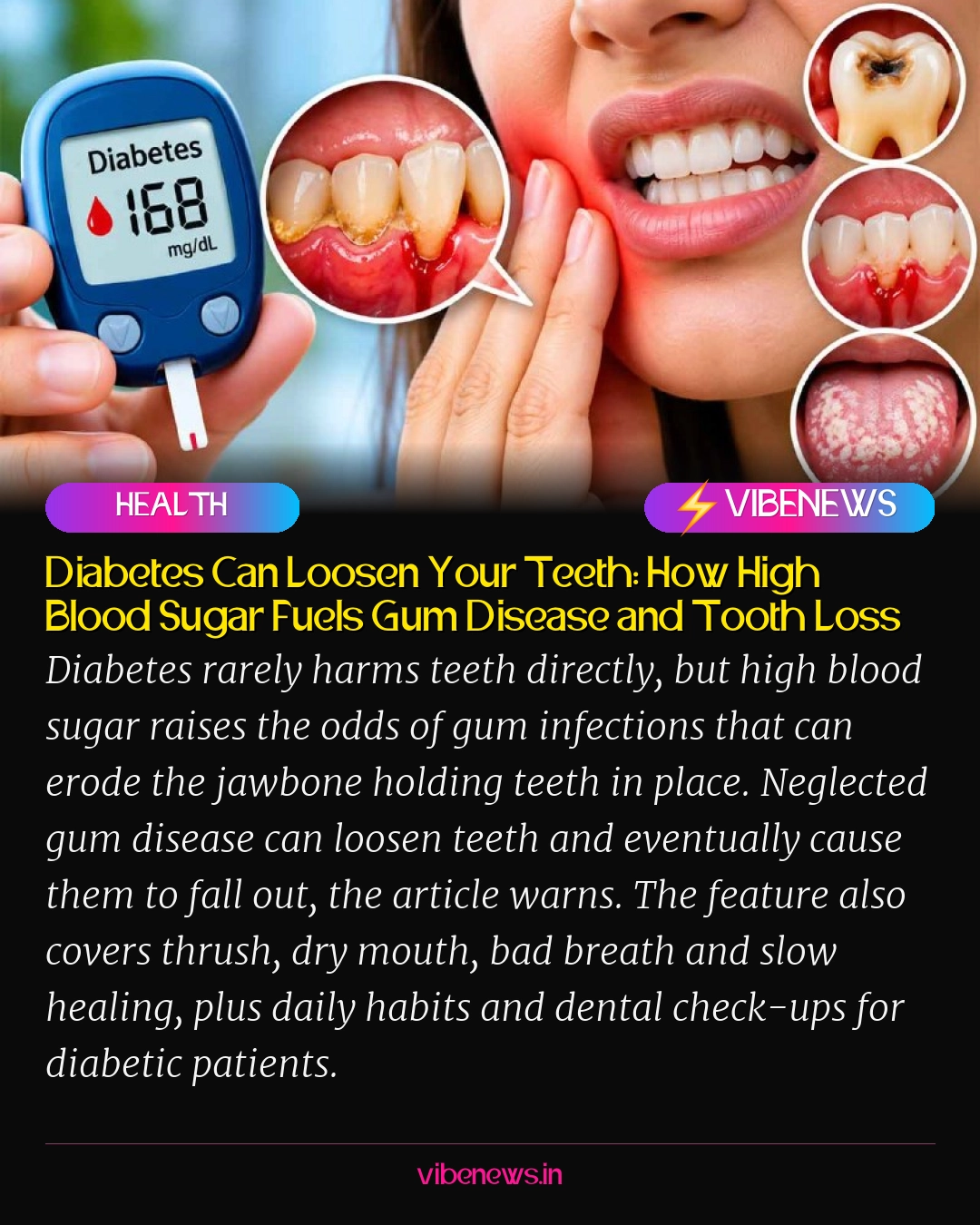
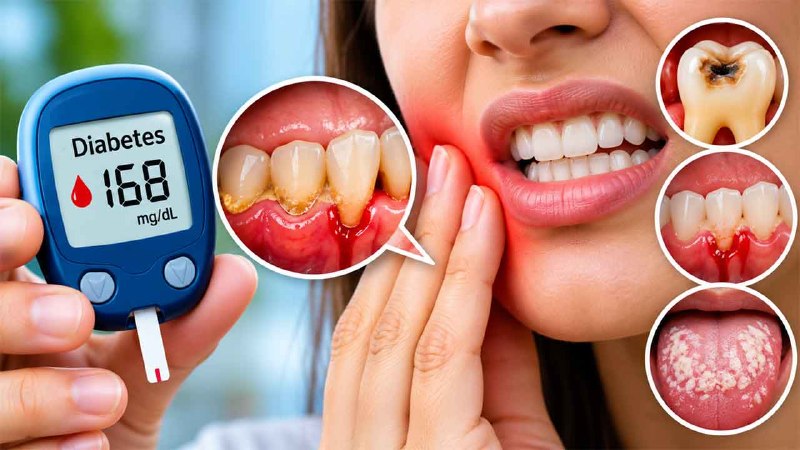
Sugar does not attack teeth directly. What it does is make gum infections far more likely. When the gums become infected, they swell. If that infection is ignored, it spreads, and the jawbone around the teeth starts to wear away. Once that bone weakens, the teeth lose their anchor. Over time, they loosen and eventually fall out.
A gum infection that is ignored keeps eating into the jawbone. Once that bone gives way, the teeth loosen and, after some time, drop out.
Type 1 and Type 2 both count. The feature explains that diabetes comes in two main forms. In Type 1, the body produces little or no insulin because of genetic factors. In juvenile diabetes, which begins in childhood, the molar teeth used for chewing can start to shake before the age of 20. According to the article, a person who loses four molars may be treated as a Type 1 patient.
In Type 2 diabetes, the body still makes insulin, but it cannot keep blood sugar levels under control. The article notes that Type 2 is far more common, and that both types affect the teeth.
Pregnancy is not a safe window. Hormonal changes during pregnancy can push blood sugar up in some women. This is called gestational diabetes. The feature says sugar levels return to normal in about 90 percent of women after delivery. Still, pregnant women with high sugar levels can face the same gum and tooth problems that affect other diabetic patients, and the article stresses that this should not be forgotten.
Six problems to watch for. The feature identifies six dental problems that appear most often in people with diabetes.
The first is tooth decay. Sugars and starches in food react with bacteria in the mouth and form a sticky film called plaque. The acids in that film attack the enamel and dentin, and cavities follow. The higher the blood sugar, the more plaque builds up, and the faster the damage moves.
The second is gum disease. Diabetes weakens the mouth’s ability to fight infection. Bacteria multiply, and the plaque hardens into tartar. Tartar irritates the gums, which swell, bleed and turn painful. Doctors call this early stage gingivitis, and the feature describes it as the first stage of gum disease.
The third is periodontitis, the stage where the damage reaches the bone. If gingivitis is not treated in time, it starts to eat the bone beneath the tooth. The teeth then shift or fall out. The feature says this problem is three times more common in people with diabetes than in the general population. It can also cause gum swelling and pus from the gums.
The fourth is thrush, a fungal infection on the tongue. It shows up as a white or red patch and can be painful. The article says doctors see thrush often in diabetic patients.
The fifth is dry mouth. Saliva cleans the mouth, neutralizes acids and keeps the environment less acidic. When saliva drops, acid levels rise, the mouth becomes unclean, and cavities become more likely.
The sixth is bad breath. The feature says it is especially common among diabetic patients and is usually caused by a bacterial infection in the mouth.
Treatment gets harder. A tooth problem in a diabetic patient is not as simple to treat as one in someone without the disease. Wounds heal slowly. Any dental surgery requires blood sugar to be fully under control first. Without that control, the article warns, treatment becomes difficult and risky.
A cycle that feeds itself. Diabetes lowers the body’s immune response, which means it becomes less effective at fighting bacteria. That allows bacteria to multiply in the mouth and slows the body’s ability to heal. The feature also notes that bacteria in the mouth can push blood sugar higher. In other words, a mouth infection can worsen diabetes, and worse diabetes can make the mouth infection worse. The article says the two conditions feed each other.
What patients should do. The feature lays out a daily routine. Brush twice a day, once in the morning and once before bed, using a soft-bristled brush and fluoride toothpaste. Brush gently and for at least two minutes. Replace the toothbrush every three months. Floss between the teeth every day. Avoid eating after the night brushing.
Diabetic patients should see a dentist every six months. People without diabetes should get a dental cleaning once a year. The article also urges patients to tell their dentist about their diabetes and to contact a doctor without delay if any mouth problem appears.
Other habits matter too. The feature advises diabetic patients not to smoke and to reduce the use of removable dentures. It recommends rinsing the mouth every day with rock salt dissolved in lukewarm water, which can help keep some infections in check. Patients should also rinse their mouths after eating sweets and after meals.
A broader call. The author argues that governments should take the lead, as some countries do, by offering free routine health checks every year. Blood pressure, sugar and thyroid tests, the feature says, would allow doctors to catch and control disease earlier. Until that happens, the message for individuals is simple. Do not ignore a sore or bleeding gum, because the damage it causes can end up in the jawbone.
TL;DR
- Diabetes does not usually attack teeth directly, but high blood sugar makes gum infections far more likely.
- Neglected gum infections can erode the jawbone, and once that bone weakens, teeth can loosen and fall out.
- Gum disease is three times more common in people with diabetes than in the general population, according to the feature.
- Type 1 juvenile diabetes can cause molar teeth to loosen before the age of 20.
- Brush twice daily, floss every day, and see a dentist every six months if you have diabetes.