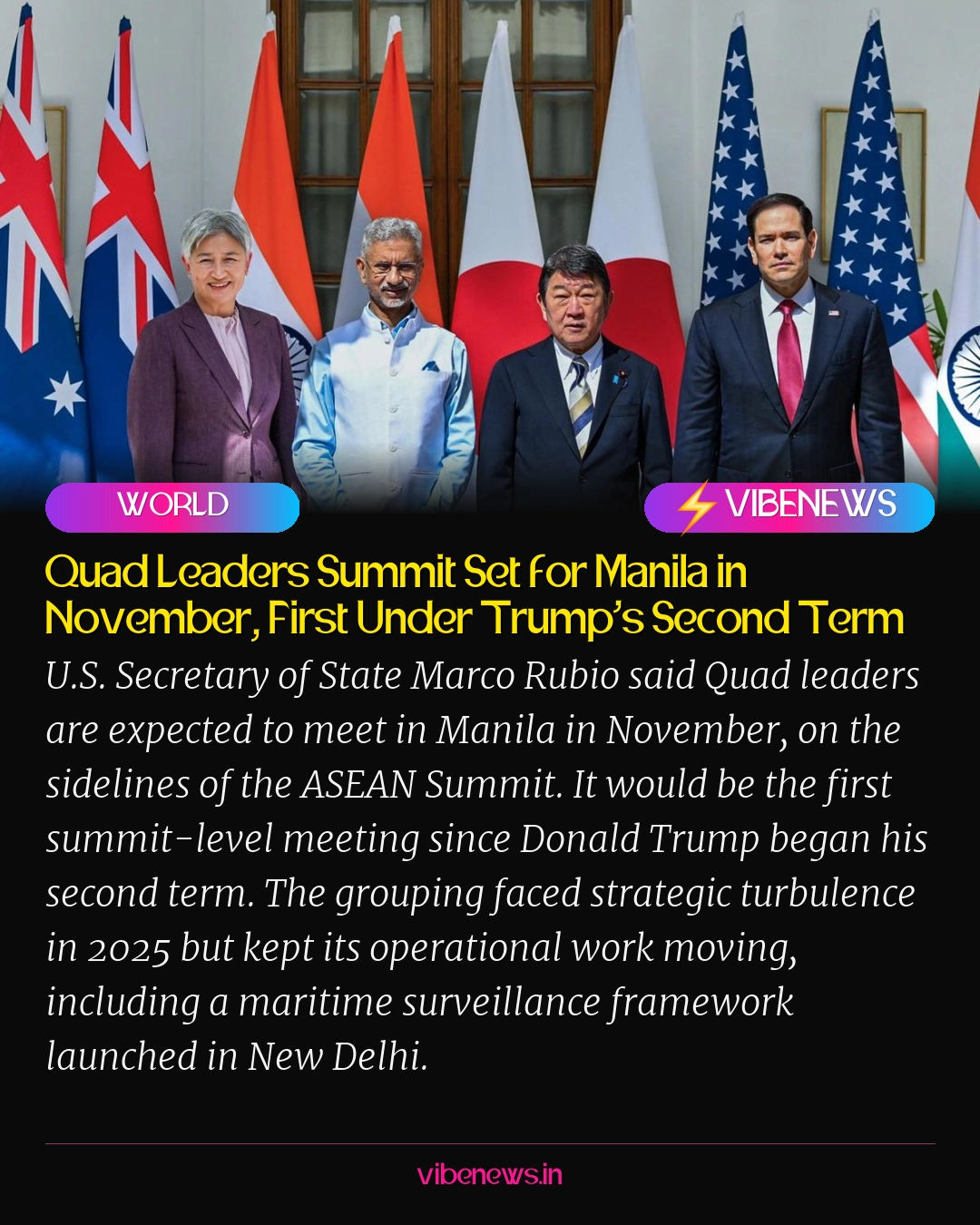
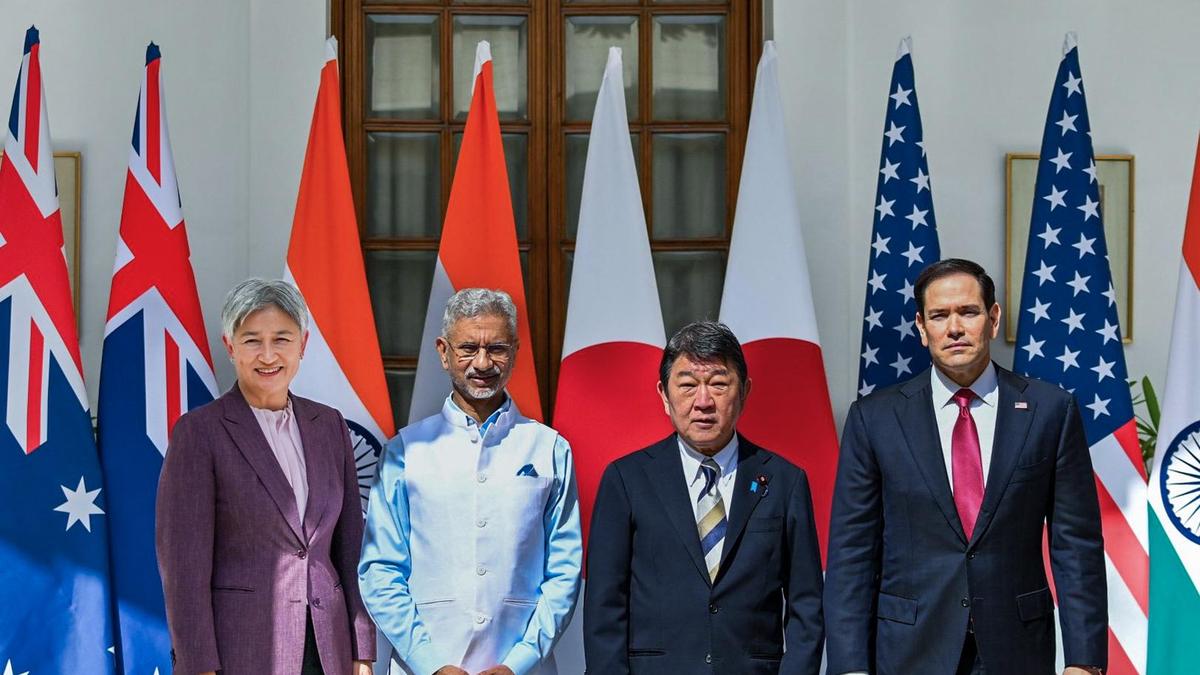
Leaders of the Quad are expected to meet in Manila in November, U.S. Secretary of State Marco Rubio announced on the sidelines of the G20 Foreign Ministers’ Meeting in Atlanta. The leaders of India, Australia, Japan and the United States would gather on the sidelines of the ASEAN Summit.
If the meeting happens, it will carry weight beyond the photo opportunity. It would be the first summit-level meeting of Quad leaders since Donald Trump began his second term as U.S. President. It would also be the first such summit attended by Japanese Prime Minister Sanae Takaichi, who has taken office recently.
A Long Gap Since the Last Summit
The last Quad Leaders’ Summit took place in Wilmington in 2024. Joe Biden was U.S. President then, and Fumio Kishida led Japan. India was widely expected to host the next leaders’ meeting, but that did not happen. The gap between the two summits now runs across two years, and the grouping has to restart its top-level diplomacy with a new set of faces in the room.
That gap was not simply a matter of scheduling. The source text describes 2025 as a period of intense strategic turbulence for the Quad. The cause, according to the article, was Washington’s shifting geopolitical priorities and changing political dynamics in its bilateral relations with Quad members, especially India. Those pressures pulled at the group from several directions at once.
Still, the group did not come apart. The article is direct on this point: the turbulence did not result in a complete collapse of the grouping.
The grouping underwent a period of intense strategic turbulence in 2025, but this did not result in complete collapse of the grouping.
The Work Kept Going Below the Leaders’ Level
While the leaders stayed apart, officials kept delivering. The clearest example is the Indo-Pacific Maritime Domain Awareness initiative. It was elevated into a new framework called the Indo-Pacific Maritime Surveillance Collaboration, which was launched in New Delhi in May 2026 following the Quad Foreign Ministers’ Meeting.
That detail matters for India in particular. A framework launched in New Delhi gives India a visible, practical stake in the group’s maritime work, not just a seat at a summit table. It is the kind of unglamorous cooperation that keeps a partnership functional when the headline diplomacy stalls.
The shift from awareness to surveillance collaboration also signals how the four countries want to work. The initiative moved from a broader idea to a named framework with a defined institutional label. The source does not spell out the operational details of that framework, so the reporting cannot go further than the upgrade itself.
Why Manila Could Be a Turning Point
The choice of venue is a sign of practicality. The leaders are expected to meet on the sidelines of the ASEAN Summit rather than in a standalone gathering. That means the Quad would be using a larger regional event as a platform, which can make the meeting easier to arrange, though the source does not explain the reasoning behind the decision.
The summit would also test how four governments with different priorities handle the same table. The United States, under Trump’s second term, is returning to the grouping at the leader level after a period of strain. Japan’s new Prime Minister is entering her first Quad summit. India, which had been expected to host, now watches the process from a different position. Each capital arrives with its own calculations.
Analysts often describe these groupings as fragile, and the source text supports that view. The Quad survived a rough 2025, but survival is a low bar. The real question is whether leaders can turn operational cooperation into political confidence that holds up across changes in government and shifts in bilateral relations.
What to Watch Next
The most important thing to watch is whether the Manila meeting actually takes place as announced. The source presents it as expected, not confirmed in its final form, and that difference matters. Plans that depend on multiple governments can move.
Watch also how the leaders talk about the maritime framework launched in New Delhi. If the Manila meeting builds on that work, it would show that the grouping is still moving forward on concrete projects. If the leaders skip over it, that silence would say something too.
For readers following the Indo-Pacific, the story is less about a single announcement and more about whether the Quad can keep its footing while its members sort out their priorities. The source makes clear that the group has absorbed real strain. The Manila meeting will show whether it can turn that resilience into a leaders-level agenda again.
TL;DR
- U.S. Secretary of State Marco Rubio says Quad leaders are expected to meet in Manila in November.
- The meeting would take place on the sidelines of the ASEAN Summit.
- It would be the first Quad leaders’ summit since Donald Trump began his second term as U.S. President.
- Japanese Prime Minister Sanae Takaichi would attend her first Quad summit since taking office.
- The last leaders’ summit was held in Wilmington in 2024, and India had been expected to host the next one.
- The grouping faced intense turbulence in 2025 but kept its operational work going, including a maritime framework launched in New Delhi in May 2026.