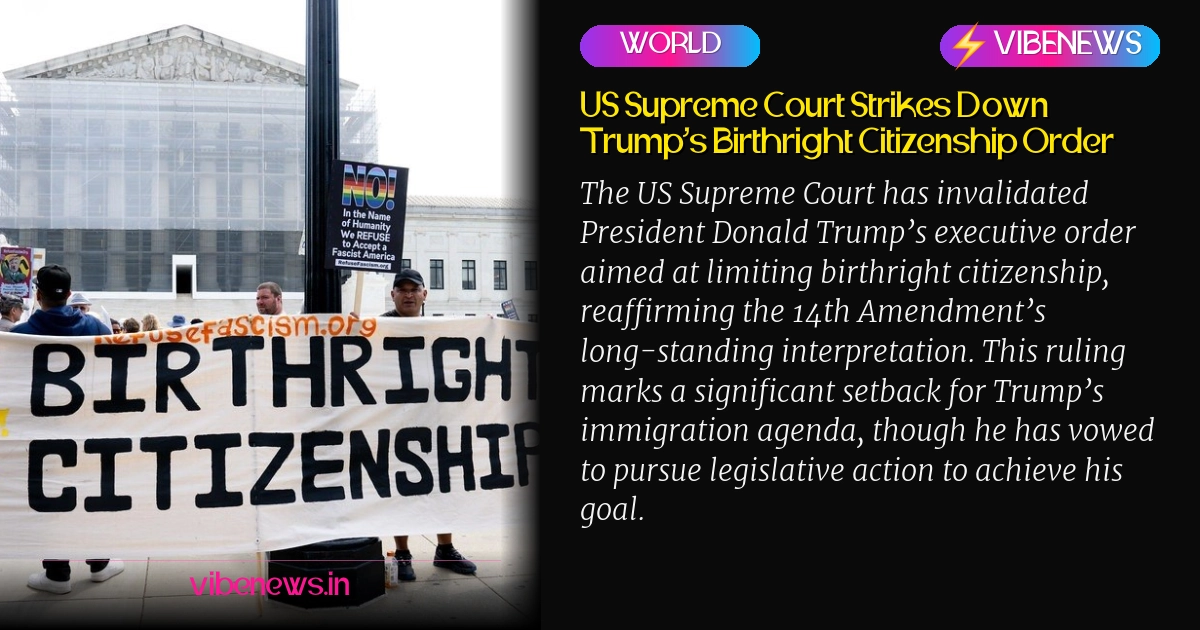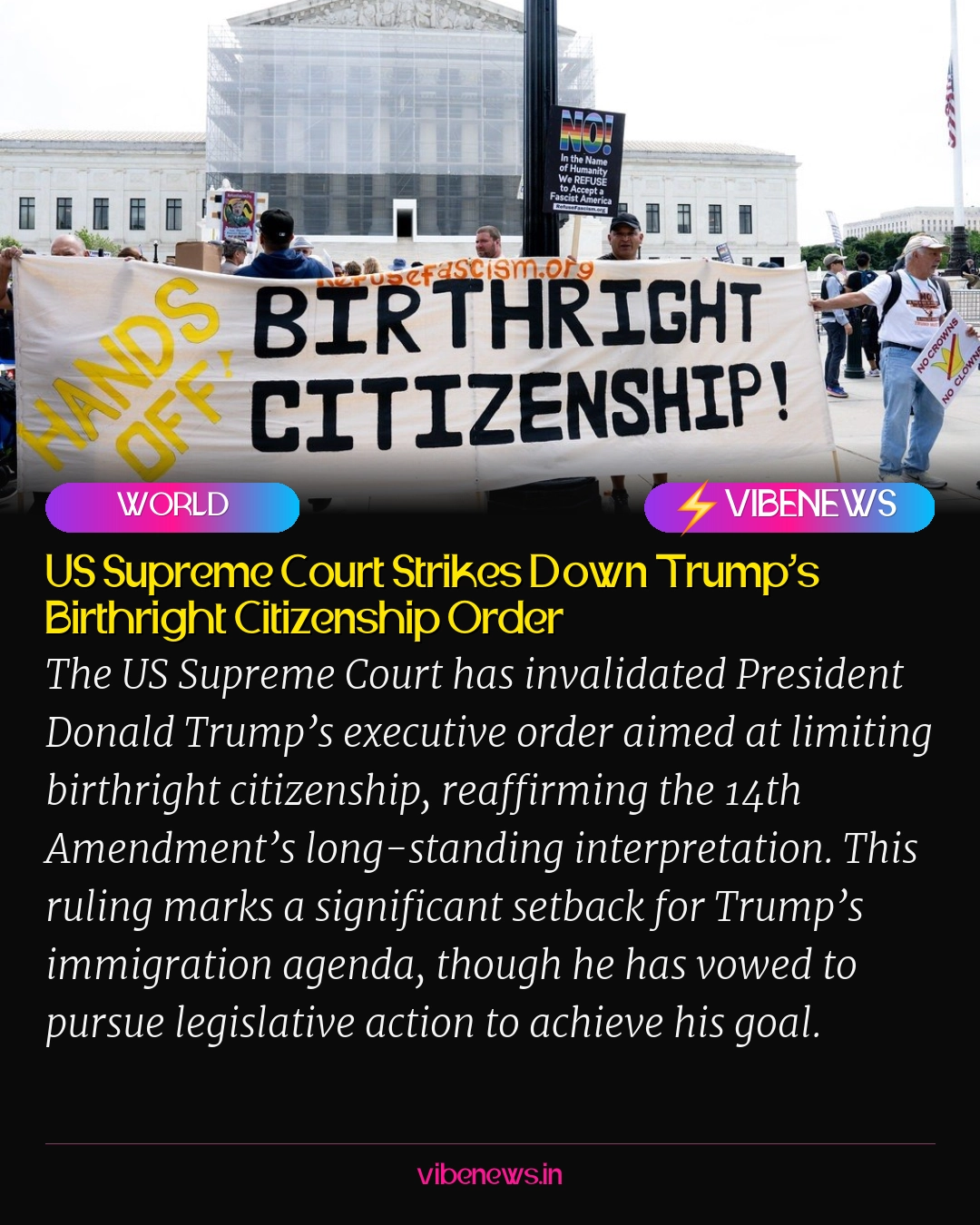
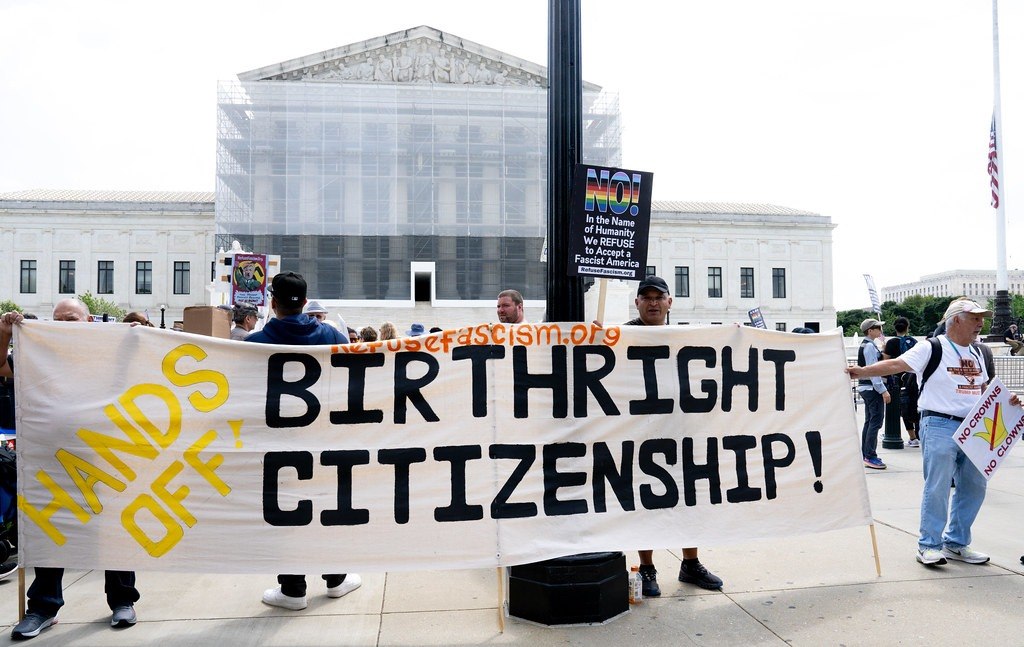
The United States Supreme Court has delivered a significant blow to President Donald Trump’s immigration agenda, striking down his executive order that sought to restrict birthright citizenship. In a landmark 6-3 ruling, the court reaffirmed the long-held interpretation of the 14th Amendment, which grants citizenship to nearly all children born on American soil, regardless of their parents’ immigration status.
Trump’s executive order, signed in January 2025, aimed to deny automatic citizenship to children born in the U.S. if their parents were either in the country illegally or present on temporary visas. This measure would have limited citizenship primarily to children with at least one parent who was a U.S. citizen or a lawful permanent resident, drastically altering over a century of legal precedent.
President Trump has consistently argued that the current interpretation of birthright citizenship encourages abuse of the immigration system. Conversely, critics have accused his administration of pursuing discriminatory immigration policies that undermine fundamental constitutional principles.
At the heart of the case was the Citizenship Clause of the 14th Amendment to the U.S. Constitution. This clause explicitly states, "All persons born or naturalised in the United States, and subject to the jurisdiction thereof, are citizens of the United States."
For more than 150 years, this provision has been widely understood to guarantee citizenship to children born in the United States, irrespective of their parents’ immigration status. Exceptions have been rare, typically limited to children of foreign diplomats or enemy occupying forces.
The Trump administration, however, contended that the phrase "subject to the jurisdiction thereof" should be interpreted more narrowly. They argued it should exclude children whose parents are in the country illegally or are residing temporarily on non-permanent visas, such as student or work permits.
Government lawyers maintained that citizenship should be reserved for children of individuals whose "primary allegiance" is to the United States, including citizens and lawful permanent residents. They asserted that such allegiance is established through lawful and permanent residence in the country.
During arguments before the Supreme Court, U.S. Solicitor General D. John Sauer defended the administration’s position. He argued that the Citizenship Clause was primarily intended to grant citizenship to formerly enslaved people and their descendants. Sauer also raised concerns about a perceived "birth tourism" industry, where foreign nationals allegedly travel to the U.S. specifically to secure citizenship for their children. However, when questioned by the justices, he acknowledged the absence of definitive data to quantify the scale of this practice.
Challengers to the executive order countered that the Constitution, along with longstanding legal precedent and over a century of judicial interpretation, overwhelmingly supports birthright citizenship. The lawsuit that brought the case before the Supreme Court originated in New Hampshire, filed by parents and children who argued their citizenship rights would be jeopardized if the executive order were allowed to take effect.
Following the court’s decision, President Trump quickly signaled his intention to pursue legislative avenues to restrict birthright citizenship, rather than seeking a constitutional amendment. In a post on Truth Social, he described the court’s ruling as "too bad for our Country" but insisted that Congress could still act. "No long and unwieldy Constitutional Amendment is necessary! Congress should start TODAY to work on ending expensive and unfair to our Country, Birthright Citizenship. They will have my Complete and Total Support!" he wrote.
Legal experts had previously warned that Trump’s directive could have had far-reaching consequences. Estimates suggested that as many as 250,000 babies born annually in the U.S. could have been affected, potentially requiring millions of families to prove the citizenship status of their newborn children. The case also garnered unusual attention when Trump became the first sitting U.S. president to attend Supreme Court oral arguments, though he departed before proceedings concluded.
This verdict represents a rare obstacle for Trump’s immigration agenda. Since his return to office, the Supreme Court’s conservative majority has largely sided with his administration on several immigration-related disputes. The ruling also marks the second time this year that the nation’s highest court has invalidated a major Trump policy initiative, following the striking down of his sweeping global tariffs in February. The focus now shifts to Congress, where the President hopes to garner support for legislative changes to birthright citizenship, setting the stage for a renewed political battle over a foundational aspect of American law.
TL;DR
- The US Supreme Court struck down President Donald Trump’s executive order limiting birthright citizenship, reaffirming the 14th Amendment’s interpretation.
- The executive order, signed in January 2025, aimed to deny automatic citizenship to children born in the US to undocumented parents or those on temporary visas.
- The 14th Amendment’s Citizenship Clause, stating "all persons born or naturalised in the United States, and subject to the jurisdiction thereof, are citizens," has been understood for over 150 years to guarantee birthright citizenship.
- The Trump administration argued for a narrower interpretation of "subject to the jurisdiction thereof," linking citizenship to parents’ "primary allegiance" to the US.
- US Solicitor General D. John Sauer cited the clause’s original intent for formerly enslaved people and concerns about "birth tourism," though without definitive data.
- President Trump vowed to pursue legislative action in Congress to restrict birthright citizenship, stating a constitutional amendment is unnecessary.
- Legal experts warned the order could have affected up to 250,000 babies annually and required millions of families to prove citizenship status.
- This ruling is a rare setback for Trump’s immigration agenda, following another major policy initiative (global tariffs) struck down earlier this year.