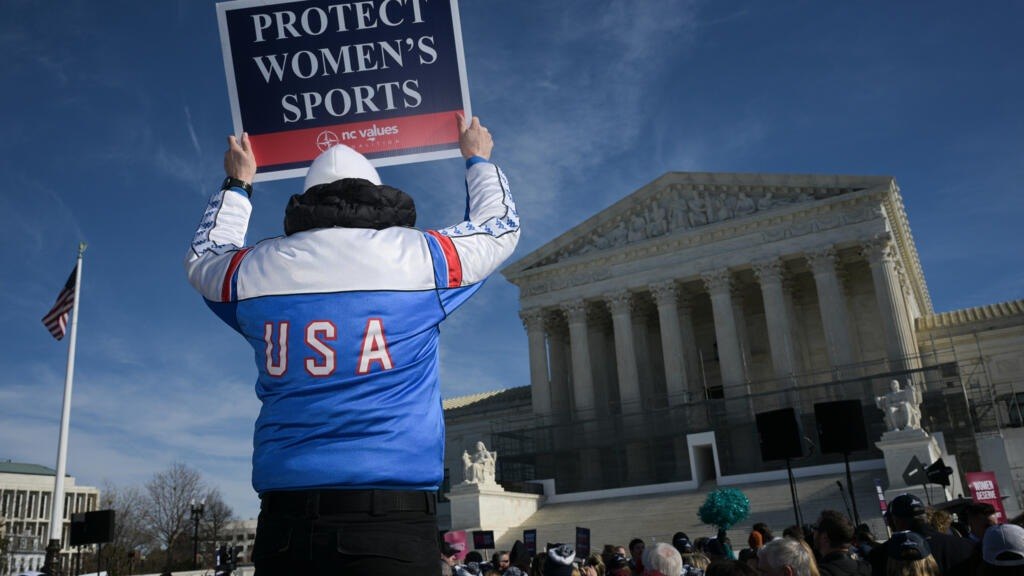
The United States Supreme Court has cleared the way for states to enforce restrictions on transgender student athletes, upholding laws in Idaho and West Virginia that bar transgender women and girls from competing on female sports teams in schools and colleges. This significant 6-3 ruling by the court’s conservative majority overturns previous lower-court decisions that had sided with transgender students challenging these measures.
The decision mandates that public school and university sports teams must be designated according to “biological sex,” effectively prohibiting students identified as male at birth from participating in female sports. This ruling carries substantial nationwide implications, as at least 25 other states have already enacted similar laws governing transgender participation in school and collegiate athletics, which can now be more confidently enforced.
Idaho and West Virginia officials argued that these restrictions are essential to ensure fair and safe competition for women and girls. Proponents of these laws often contend that inherent biological differences can provide competitive advantages in certain sports categories. Conversely, opponents assert that such measures are discriminatory against transgender students and represent a broader effort to roll back transgender rights across the United States.
Transgender students who challenged these laws argued that the restrictions violate the Equal Protection Clause of the US Constitution’s 14th Amendment. They also cited Title IX, the federal civil rights law that prohibits sex-based discrimination in education, as a basis for their challenge. The legal battle highlighted deep divisions over how to balance fairness in women’s sports with the rights of transgender individuals.
The Trump administration, during its current term, has actively supported the states in this litigation. President Donald Trump has issued a series of executive orders restricting transgender rights since returning to office in 2025, including measures directly related to sports participation. His administration has consistently backed efforts to limit transgender involvement in women’s and girls’ sports.
This ruling marks another significant victory for conservative-led initiatives aimed at restricting transgender rights. It follows a major Supreme Court decision last year that permitted states to ban certain gender-affirming medical treatments, such as puberty blockers and hormone therapies, for minors experiencing gender dysphoria. The court has also previously allowed Trump’s ban on transgender military service members and supported his administration’s passport policy.
However, the court has not always ruled against transgender rights. In a landmark 2020 decision, it held that federal workplace discrimination protections extend to transgender employees under Title VII of the Civil Rights Act, demonstrating a complex and evolving legal landscape surrounding gender identity.
The challenge to West Virginia’s law was initiated by high school student Becky Pepper-Jackson and her mother, Heather Jackson. In Idaho, the case was brought by Lindsay Hecox, a transgender student at Boise State University. Hecox later withdrew from participating in sports and sought dismissal of her case, citing fears of harassment and increasing hostility toward transgender people.
During arguments heard by the Supreme Court in January, several conservative justices questioned whether lower courts should impose a nationwide standard on this issue. They noted the ongoing debate about whether puberty blockers and gender-affirming hormone treatments fully eliminate physiological advantages that might affect athletic competition.
Issued on the final day of the Supreme Court’s current term, Tuesday’s ruling is expected to intensify the national debate over transgender rights, education policy, and participation in competitive sports. It also significantly strengthens the legal foundation for similar laws already in force across a substantial portion of the United States, indicating a clear direction for state-level legislation on this contentious issue.
TL;DR
- The US Supreme Court upheld state laws in Idaho and West Virginia banning transgender women and girls from female school and college sports teams.
- The 6-3 conservative majority decision overturns lower court rulings that had sided with transgender students.
- The ruling allows states to enforce measures requiring sports teams to be designated by "biological sex," prohibiting those classified male at birth from female sports.
- This decision has nationwide implications, strengthening the legal standing for similar laws enacted in at least 25 other states.
- Supporters argue the restrictions ensure fair and safe competition for women and girls, citing biological differences.
- Opponents contend the laws discriminate against transgender students and violate the Equal Protection Clause and Title IX.
- The Trump administration actively supported the states in the litigation, aligning with its broader efforts to limit transgender rights.
- The ruling is seen as another victory for conservative efforts to restrict transgender rights, following previous decisions on gender-affirming care.