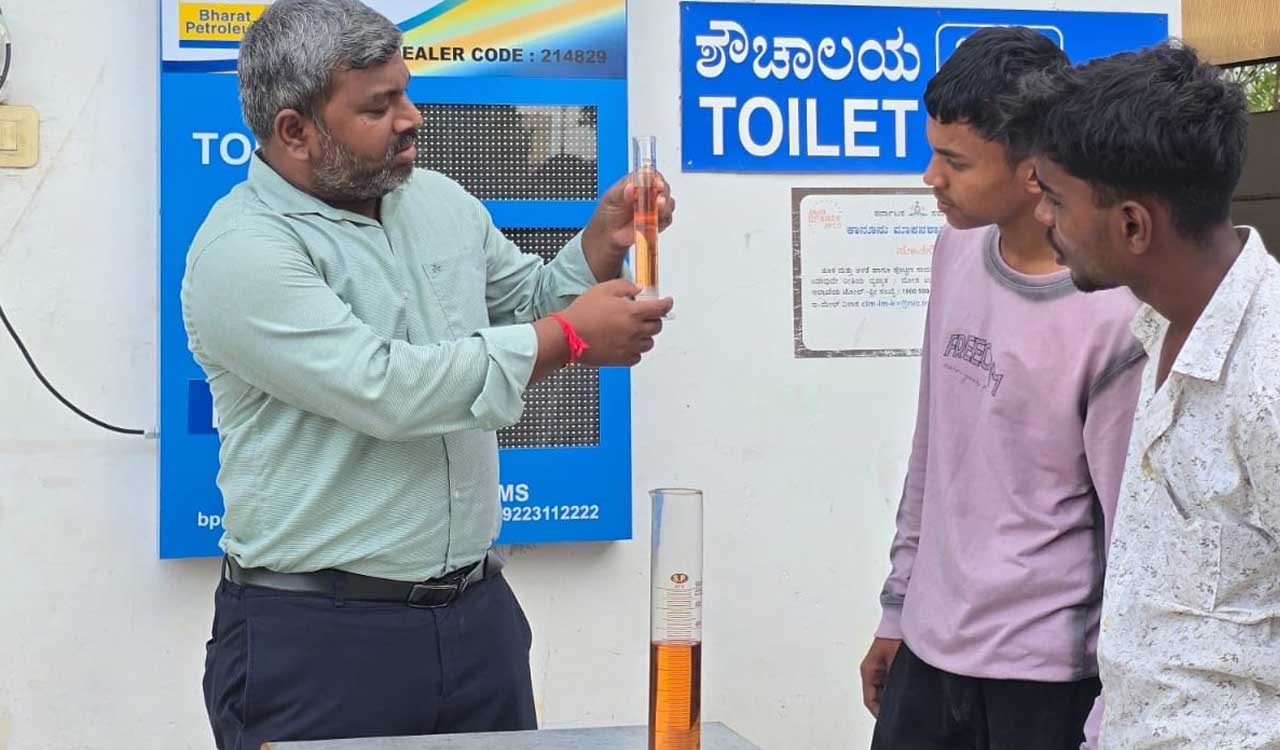
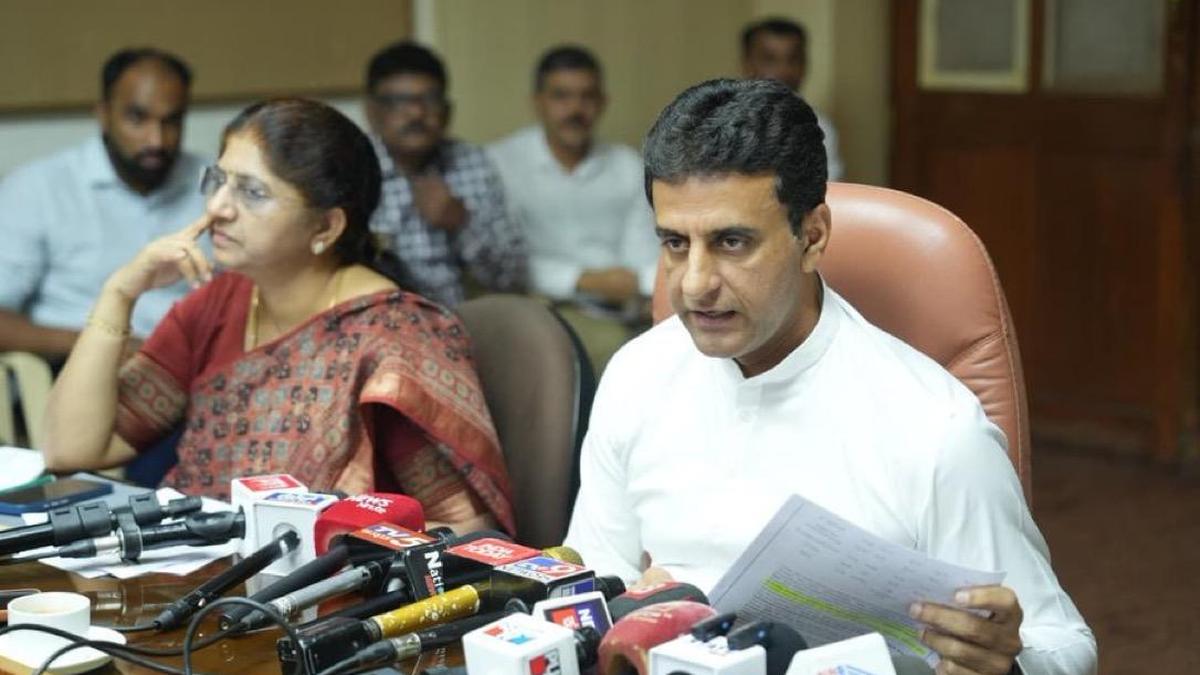
Karnataka’s Food, Civil Supplies and Consumer Affairs Minister Rizwan Arshad said on Monday that he stands by the petrol test reports he released on November 6, and he dismissed the oil companies’ response as a debate over technicalities. The reports covered 63 petrol samples collected from bunks across the state, and they have set off a sharp political fight with the Union government over how much ethanol is actually going into vehicle tanks.
Arshad said the tests were carried out under the prescribed procedure in laboratories recognised by the National Accreditation Board for Testing and Calibration Laboratories, a constituent board of the Quality Council of India. He was not willing to back down, and he made it clear he expected the Centre to answer for what he sees as a failure in the system.
The numbers that started the row
Of the 63 samples, those from Indian Oil Corporation Limited, Hindustan Petroleum Corporation Limited and Bharat Petroleum Corporation Limited showed ethanol-blending levels above 20%. The readings were 31.2%, 30.5% and 24.2% respectively. Under the E20 blend, the government’s target is 20% ethanol, so those figures are the reason the state is now pressing for answers.
Arshad said the trouble started with the companies’ own labs. The initial 63 samples went first to the OMCs’ laboratories at IOCL, BPCL and HPCL, and none of those reports stated the ethanol percentage. He pointed to IS 17021:2018, the standard the oil companies themselves cite, which sets out how ethanol content should be tested. “It was the OMC laboratories’ failure to provide the required result that raised suspicion,” he said. After that, the samples were sent to NABL-accredited and ISO-certified laboratories.
A dispute over who should answer
Arshad said he had expected an official reply from the Union government, but the Centre let the oil companies respond instead. He called the OMCs’ statement a matter of technicalities and said they had not explained how much ethanol is in the petrol sold at Karnataka pumps. That question, in his view, is still hanging in the air.
The minister also turned to the Union government’s call for a joint inspection of E20 blending. He said he had written to the Centre months ago seeking inspection and testing, and nobody responded. “Now, when the test reports are out, they are asking for a joint inspection. What is the point of conducting an inspection after setting the system right?” he asked.
Carmakers, insurers and the warranty question
Arshad built much of his case around vehicle owners. He said the Society of Indian Automobile Manufacturers wrote to the Union Petroleum Ministry on July 28, 2026, flagging chloride and sulphur in E20 fuel and the damage it was causing to vehicle parts. According to him, the letter was withdrawn within a week, amid pressure from the Centre.
He also cited an ACKO Insurance case, in which a customer was told that engine damage from “incorrect fuel usage” would not be covered. Hyundai, Toyota and other automobile manufacturers, he said, wrote in their manuals that using fuel other than E10 would void the warranty. These are the points that matter most to drivers who have no say in how fuel is blended and sold.
The minister said the report on the same subject by the Automotive Research Association of India remains hidden from the public. He added that the Attorney General had told the Supreme Court that E20 was still an experiment, but later issued a clarification. Arshad did not say what the clarification contained.
Where the blend is really decided
The oil companies argued that the problem appears only in samples collected from particular petrol pumps and not elsewhere. Arshad rejected that argument by quoting the OMCs’ own description of the process as “a controlled and automated process” carried out at their refineries and depots. If that is true, he argued, the blend in every litre is decided at the OMCs’ six terminals serving Karnataka, not at the pump.
“The excess ethanol found is a failure at the source, and the responsibility lies with the OMCs alone.”
By his reckoning, a dealer only sells what the tanker delivers and has no role in the blend. He also said the state’s exercise has created a sense of deterrence across the country, because it exposed gaps in the oil companies’ systems.
Testing outside the oil companies
Arshad said his department wants to meet the OMCs and tell them that the state government will conduct periodic tests of petrol samples. He was clear that those tests cannot run in the companies’ own laboratories. They have to go to third-party labs, he said, because the companies would issue reports “as per their convenience.”
“That is a clear conflict of interest. We will try to convince them, or else the matter will be escalated,” he said. The minister did not say what escalation would look like, but he made it plain that the state is not planning to drop the matter.
A clip, a question and a bigger fight
Later in the day, Arshad shared a clip from a press conference by Union Minister H.D. Kumaraswamy. In it, Kumaraswamy is heard saying, “Over the last three to four months, I have seen the Central government planning to raise ethanol blending from 20% to 30%.” Arshad used the clip to argue that the Centre is moving toward a higher blend.
He then asked the question that is likely to shape the next phase of the dispute. “Was this part of a larger plan to blend it unofficially?” The Karnataka government has not offered proof of such a plan, and the clip itself does not say how the increase would be carried out. What is clear is that the state government is now placing the blame for fuel quality squarely on the Centre and the oil companies, and it is not planning to step back.
TL;DR
- Karnataka minister Rizwan Arshad stood by his November 6 petrol test reports on Monday and blamed oil companies for failing to show how much ethanol is in pump fuel.
- Tests on 63 petrol samples found ethanol-blending levels above 20% in samples from IOCL, HPCL and BPCL, at 31.2%, 30.5% and 24.2%.
- The OMC laboratories did not report ethanol percentages in their initial test results, according to the minister.
- Arshad said the Society of Indian Automobile Manufacturers flagged chloride and sulphur in E20 fuel on July 28, 2026.
- He cited carmaker manuals warning that fuel other than E10 would void the warranty.
- Arshad demanded that petrol testing be carried out by third-party labs, not oil company laboratories.