State-run oil marketing companies BPCL and HPCL on Monday defended the quality of E20 petrol in Karnataka, rejecting allegations that some retail outlets are selling fuel with too much ethanol.
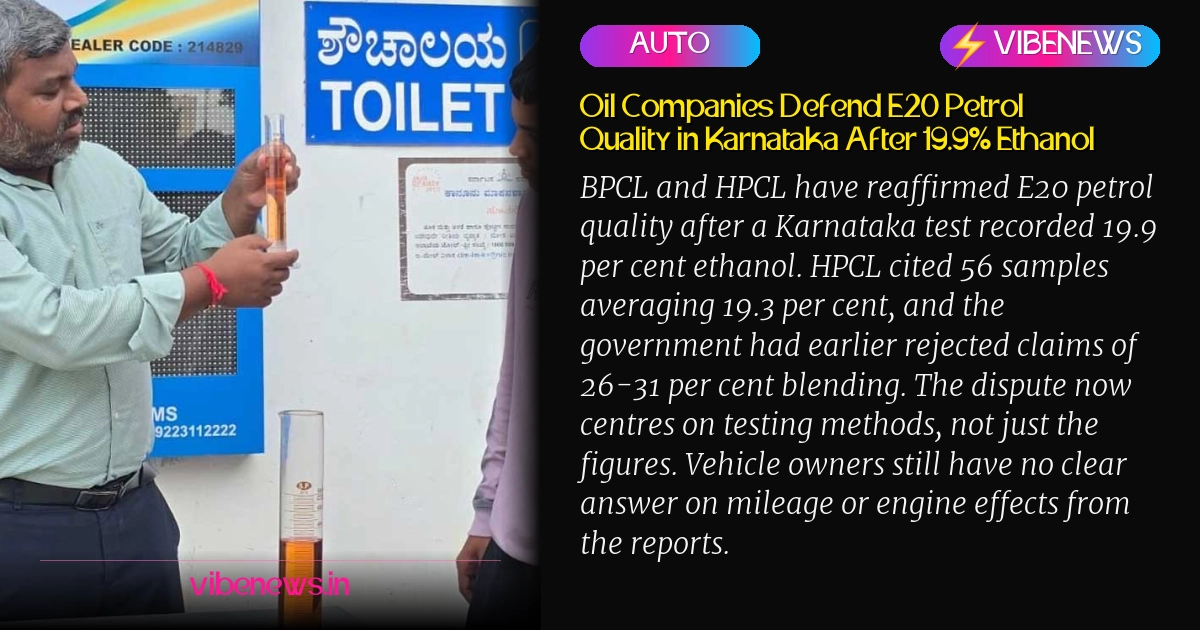
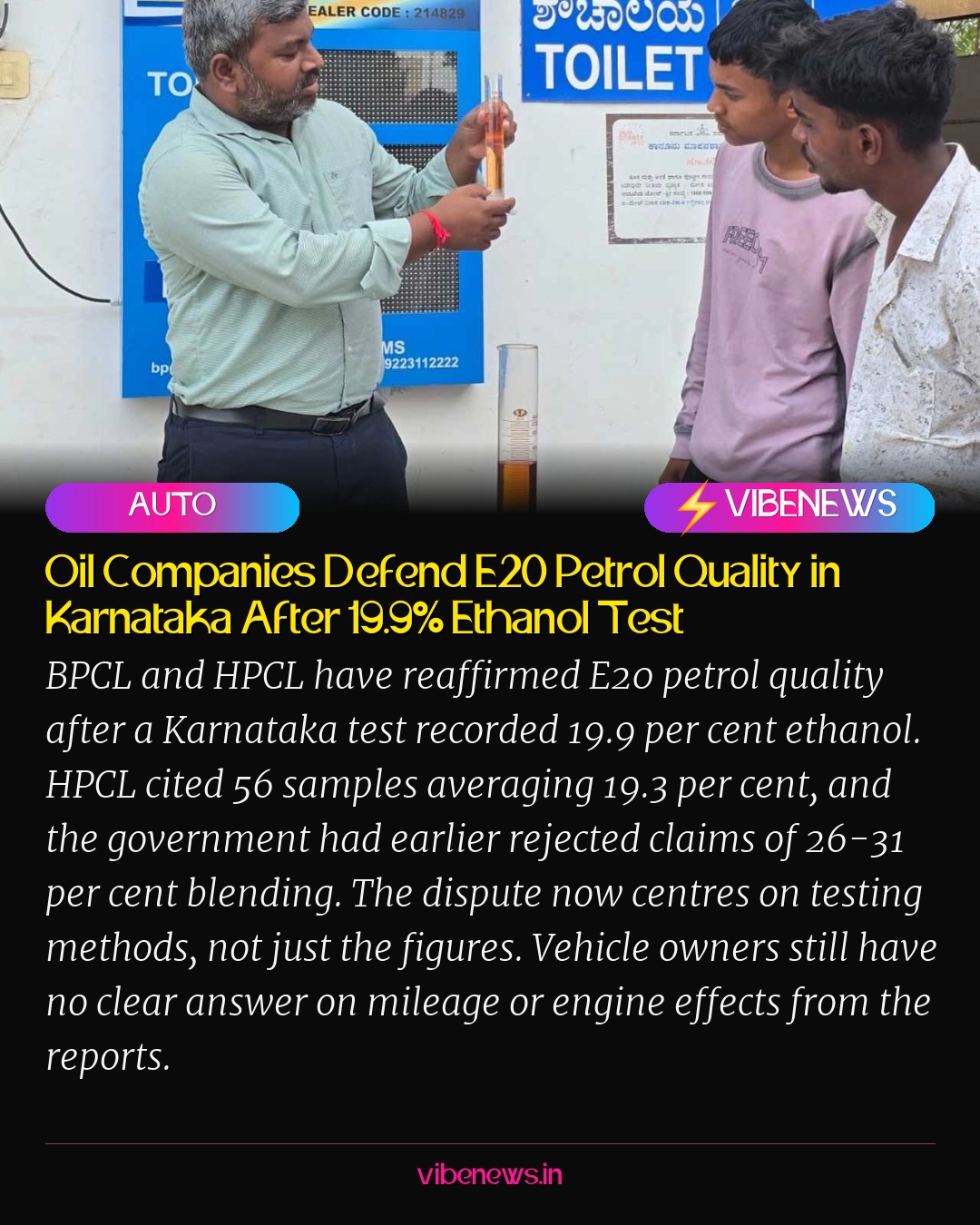
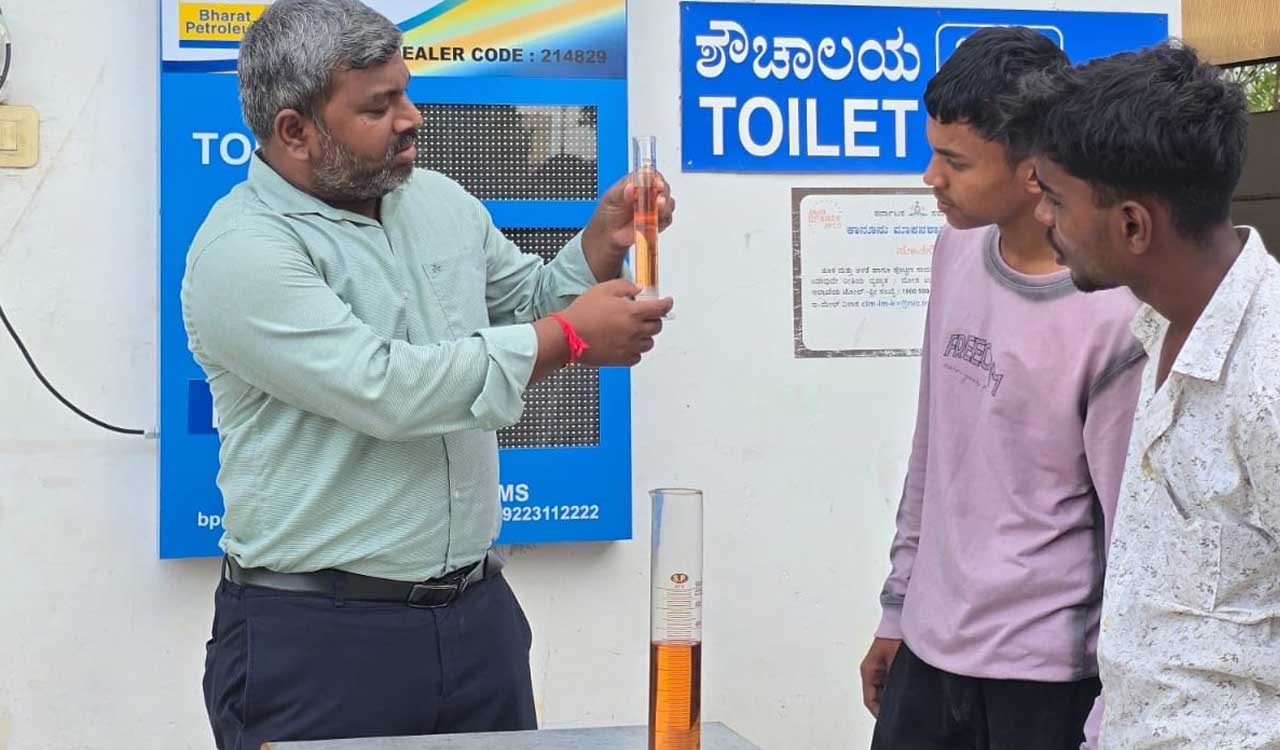
The companies were responding to a test carried out in the presence of customers, which recorded 19.9 per cent ethanol in a petrol sample. BPCL posted on X that the test reaffirmed its commitment to transparent testing and assured customers of fuel quality. “Facts verified, confidence reinforced,” the company said.
HPCL took a different route. Instead of focusing on a single sample, it pointed to a wider set of results. Public sector oil companies tested 56 samples in Karnataka, and the average ethanol content across them came to 19.3 per cent. “When claims make headlines, facts deserve the final word,” HPCL said in its post.
The company also argued that a single number tells only part of the story. Reliable results, it said, depend on the scientific methodology as much as the figures, and specifically on prescribed testing methods and certified reference materials. That point sits at the heart of this fight.
The controversy did not start this week. Earlier this month, the government rejected claims that petrol at certain retail outlets in Karnataka contained excessive ethanol. According to the ministry, all 56 samples tested in the state under a nationwide quality monitoring exercise met the prescribed E20 specifications, with ethanol content between 19 and 20 per cent.
The ministry also went after the sampling itself. It questioned the methodology used in an October exercise in Karnataka, where reported claims put ethanol blending at 26 to 31 per cent. In the government’s view, those figures were not backed by tests carried out under prescribed statutory and technical procedures.
Behind that argument is a set of rules. The ministry said E20 petrol supplied by Indian Oil Corporation, BPCL and HPCL across the country, including Karnataka, conforms to IS 17021, the Bureau of Indian Standards specification for ethanol-blended motor gasoline. IS 17021 is the benchmark against which the fuel is measured.
The ministry pointed to another framework as well. Sampling, retention, testing and communication of results are governed by the Motor Spirit and High Speed Diesel (Regulation of Supply, Distribution and Prevention of Malpractices) Order, 2005, read with the Marketing Discipline Guidelines 2024. The order lays out a defined process for each step, and the government says that process was not followed in the October exercise.
This is where the government’s complaint gets sharper. It said the OMCs were never given the corresponding retention samples, complete outlet-wise details or laboratory reports from the October exercise. The oil companies had asked for them through the State Level Coordinator, but did not receive them, according to the ministry.
Put that next to the national numbers and the picture shifts. The government said all 893 E20 samples collected from 27 states and Union Territories under the nationwide quality monitoring exercise were found to contain ethanol within the prescribed 19 to 21 per cent range. Karnataka’s results fall inside that same band, according to the companies and the ministry.
So why does a 19.9 per cent reading draw so much attention? Because the numbers sit close to the edge of what the standard allows, and the gap between a few samples and a few hundred becomes the whole argument. Each side is leaning on a different slice of the data, and neither has convinced the other.
For the average driver, the practical question is simpler. E20 means a blend of 20 per cent ethanol with petrol, and the companies say the fuel being sold meets the standard. The reports, however, do not address what that blend means for mileage, engine performance or long-term maintenance. Those are the questions most vehicle owners and enthusiasts are likely to ask next, and the current statements do not answer them.
What the record does show is a clear split over method. The oil companies are standing behind their own test results and the scientific process behind them. The government is standing behind the statutory procedure and questioning whether the October exercise followed it. Until the outlet-wise details and laboratory reports that the ministry says it never received are made public, the two sides are unlikely to meet in the middle.
“When claims make headlines, facts deserve the final word.”
For now, the official position is firm. Oil companies say the fuel is within specification, the government says the sampling was flawed, and the disputed Karnataka figure remains a single reading that both sides are interpreting differently.
TL;DR
- BPCL and HPCL say E20 petrol in Karnataka meets prescribed specifications.
- A test conducted in front of customers recorded 19.9 per cent ethanol in one sample.
- HPCL says 56 samples tested in Karnataka averaged 19.3 per cent ethanol.
- The government earlier rejected claims of 26-31 per cent ethanol blending in the state.
- The reports focus on testing methods and do not address mileage or engine performance.