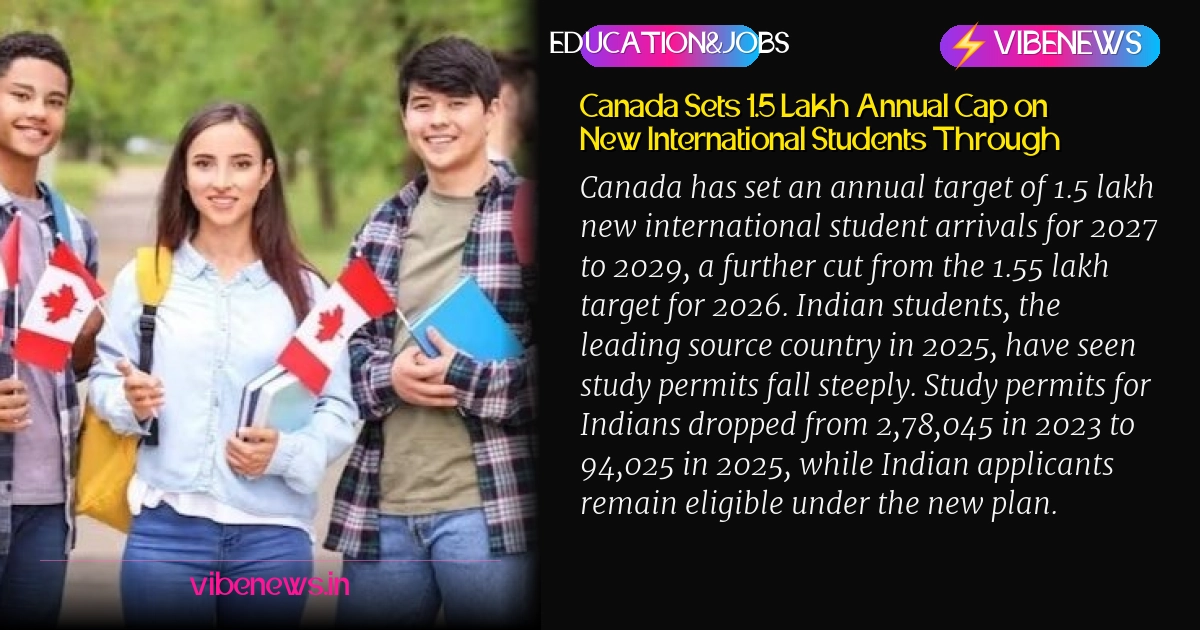

Canada has set an annual target of 1.5 lakh new international student arrivals for each of the next three years, from 2027 to 2029. The figure appears in the new Immigration Levels Plan released by Immigration, Refugees and Citizenship Canada (IRCC) under Prime Minister Mark Carney’s government. Indian applicants can still apply, but the door is narrower than it was two years ago.
The student cap is one part of a wider squeeze on temporary residents. Canada is following similar measures introduced by the United States, the United Kingdom and Australia. The government says the goal is to ease pressure on housing, public services and infrastructure, and the restrictions are not limited to students. Temporary foreign workers and other temporary residents are also affected.
Under the plan, Canada proposes 3.7 lakh new temporary resident arrivals a year over the three-year period. International students are expected to make up about 40 per cent of that intake. Temporary foreign workers will account for the remaining 60 per cent. The 1.5 lakh student target is a step down from the 1.55 lakh target set for 2026, which suggests Ottawa does not plan to return to the higher admission levels seen in earlier years.
For Indian students, the numbers are the real story. India was Canada’s leading source country for international students in 2025, accounting for 24.6 per cent of study permits that became effective during the year. Yet the number of Indian study permit holders whose permits became effective has fallen sharply. It dropped from 2,78,045 in 2023 to 1,88,465 in 2024, and then to 94,025 in 2025. That is a decline of more than 65 per cent across two years.
The slide began after Canada introduced a national cap on international student admissions in 2024. The government also tightened requirements for verifying study permit applications at the same time. The reported data links those changes with a steep fall in arrivals, not only from India but across all countries.
IRCC data shows Canada recorded 65,240 new international student arrivals of all nationalities between January and August 2026. In the same period of 2024, the figure was 2,21,680. That works out to a fall of roughly 71 per cent over two years. The report makes clear that the decline has hit Indian students particularly hard, even though the revised national targets apply equally to applicants from every source country.
The revised figure indicates that the Canadian government intends to maintain tighter control over the number of students entering the country rather than return to the higher admission levels witnessed in previous years.
The student allocation is only part of the arrivals plan. Temporary workers will take 2.2 lakh of the 3.7 lakh annual slots. That includes 1.7 lakh arrivals under the International Mobility Program and 50,000 under the Temporary Foreign Worker Program. Canada has also kept its annual target of 3.8 lakh permanent resident admissions unchanged for all three years. So the government is still bringing in permanent immigrants, but it wants a firmer grip on people arriving on temporary permits.
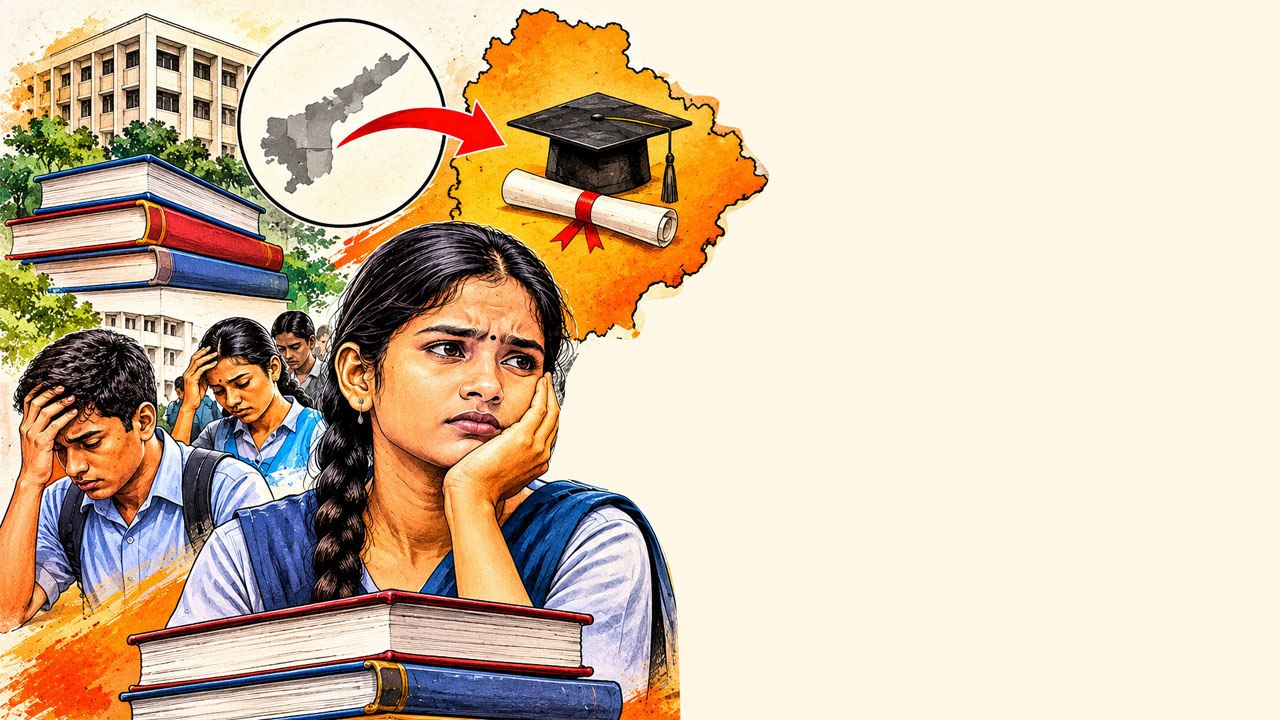
What does this mean for a student from Delhi, Hyderabad or Chandigarh who has been dreaming of a Canadian campus? The plan does not shut the door. Indian applicants will remain eligible to apply for Canadian study permits, subject to the prevailing admission, documentation and immigration requirements. The competition for a limited number of places is what changes. A student applying in 2027 will be entering a system with a fixed national ceiling, and that ceiling applies to everyone.
The report does not spell out every new documentation rule or how the cap will be divided among universities and colleges. Those details will matter as much as the headline figure. Students who are already in the pipeline, or planning to apply in the next admission cycle, will need to watch how the targets are implemented. Canada’s decisions in the coming years will show whether the 1.5 lakh figure stays a ceiling or becomes the starting point for a longer decline.
TL;DR
- Canada has capped new international student arrivals at 1.5 lakh a year for 2027 to 2029.
- Indian study permit holders fell from 2,78,045 in 2023 to 94,025 in 2025.
- India remained Canada’s top source country in 2025, with 24.6 per cent of effective study permits.
- New international student arrivals fell about 71 per cent between 2024 and January-August 2026.
- Indian applicants remain eligible, subject to admission and documentation requirements.