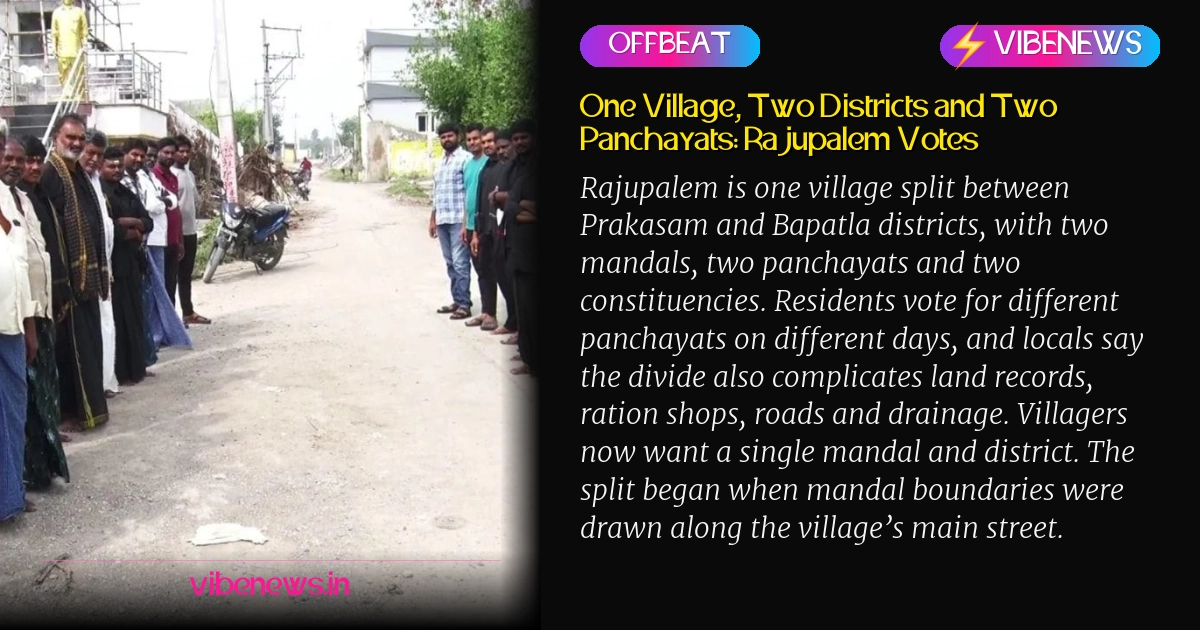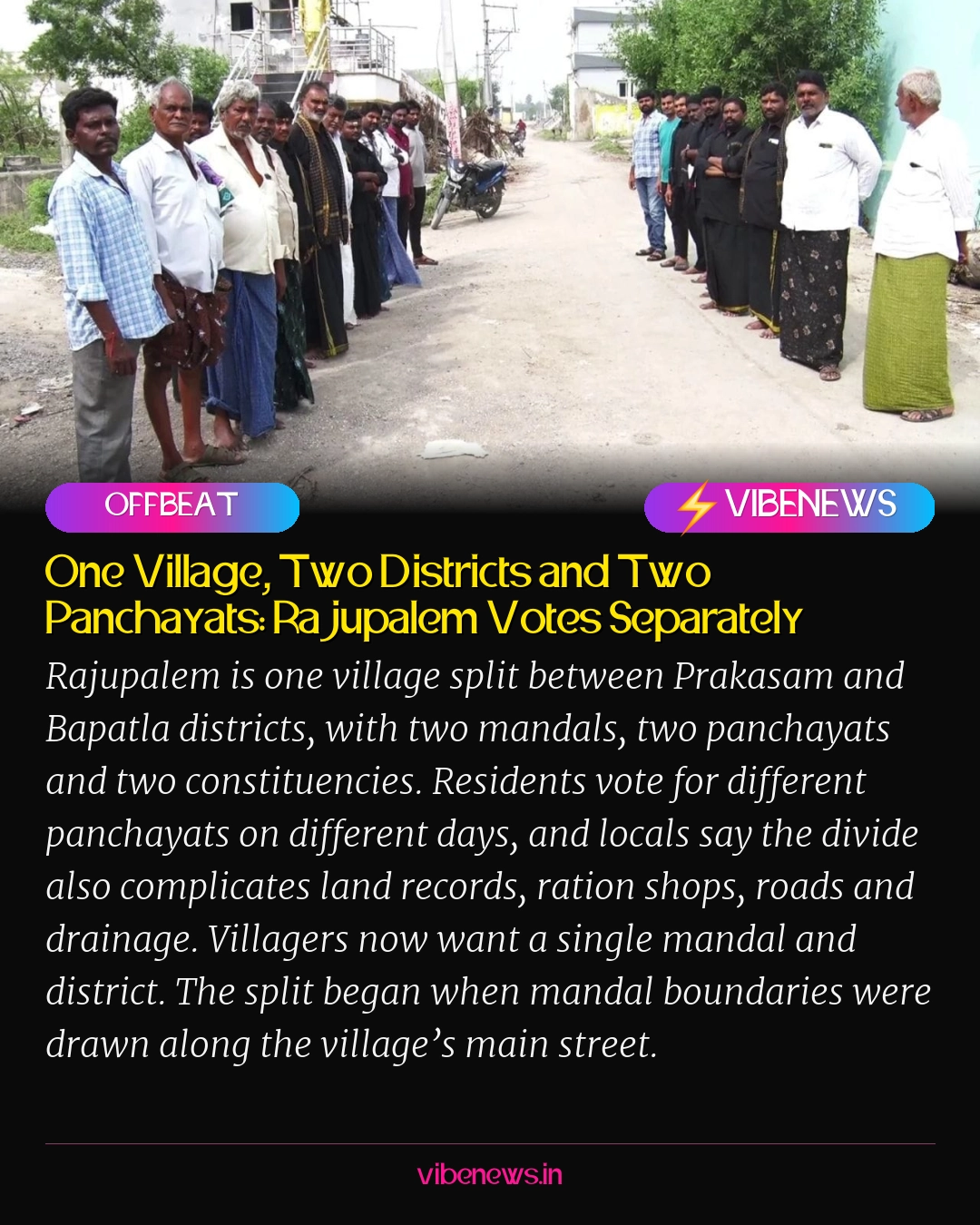
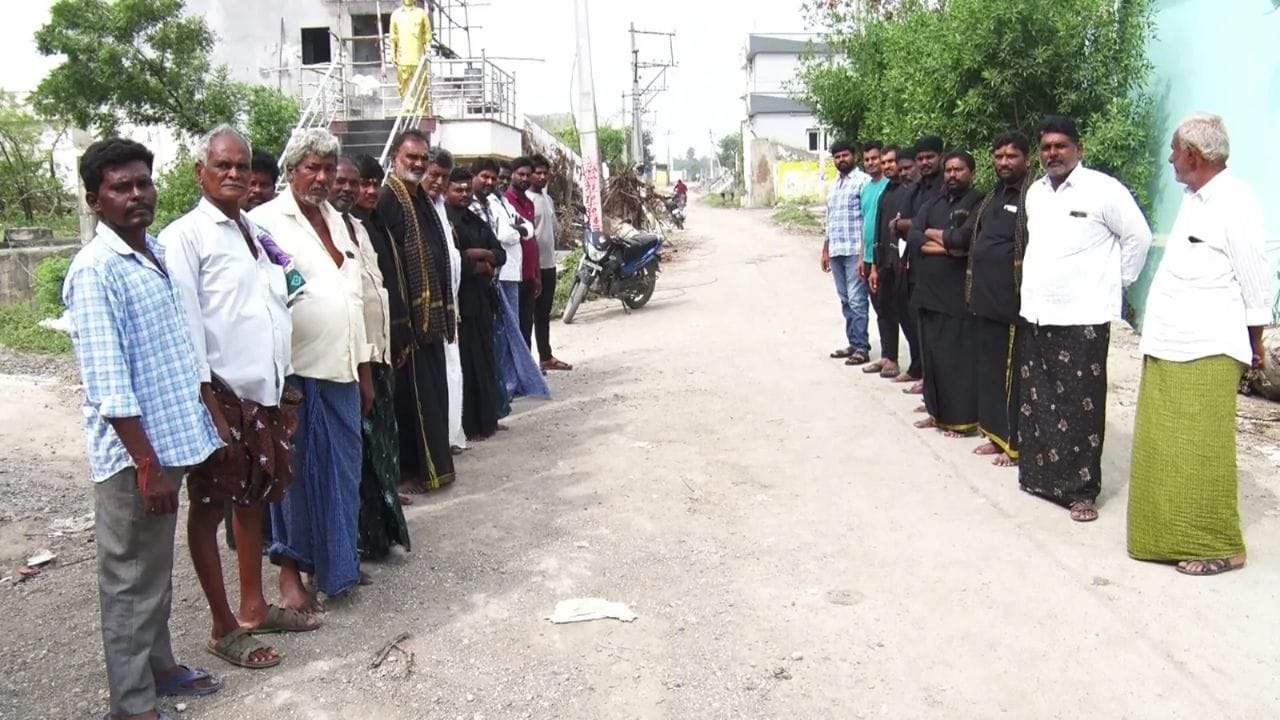
Rajupalem, a village in Andhra Pradesh, is split between two districts, two mandals, two gram panchayats and two constituencies. Its residents will vote for different local bodies in separate polling phases this month, with the Bapatla district part of the village going to the polls on the 26th and the Prakasam district part on the 29th.
The divide is not a river or a hill. It is the main street. One side of that street falls under Prakasam district and the other under Bapatla. Before mandals were formed, the whole area was a single village. When the new mandal boundaries were drawn, officials picked the village’s main street as the dividing line, and the village ended up under two tehsildar jurisdictions. What had been one community became two administrative units, each with its own mandal, panchayat and constituency.
Two separate Rajupalems, one shared street
The first Rajupalem sits in Martur mandal of Bapatla district, under the Parchur constituency. The second, known as K. Rajupalem, is in Ballikurava mandal of Prakasam district and falls under the Addanki constituency. Both sides of the street are residents of the same village, yet they vote for different panchayats. Polling in the Bapatla part is set for the 26th of this month, and the K. Rajupalem part votes on the 29th.
Locals say the sense of being one village only resurfaces at election time. Outside of polling season, they describe themselves as one community that mixes freely. Politics, however, is handled separately, and each side backs its own candidates. As one resident’s account puts it in the reporting, people remember they belong to two different villages only when the elections come around.
Only during elections do we remember that we are two separate villages. The rest of the time, everyone lives together as one village.
The shared life of the village shows up most clearly in its temples and festivals. One panchayat has a Rama temple, while the other has a shrine to Lord Anjaneya. Even though the village runs on two panchayats, residents gather together for festivals and celebrations of the deities. Politics may be divided, but tradition is not.
The split also creates everyday headaches that have nothing to do with ballots. Some families live in houses in the Martur mandal part of the village but own farmland under the Prakasam district panchayat. That means dealing with two sets of revenue offices for land matters, and the problems pop up from time to time. Neighbouring houses can end up with different ration shops and different panchayat offices. Anyone who needs government schemes or revenue services can end up travelling several kilometres to the right office.
Development has run into the same wall. The main street serves as the boundary between the two panchayats, and that has created arguments over who is responsible for road work there. Residents say leaders from the two constituencies keep pointing at each other, insisting the road is not in their area. The result, villagers say, is that basic infrastructure such as roads and drainage has not improved as much as it should have.
Election scheduling adds another twist. Because the two parts of the village vote on different days, the polling calendar itself reflects the administrative split. Residents already live with these inconveniences, and the staggered voting only adds to the confusion.
Residents of K. Rajupalem have made a clear request. They want their village brought under a single mandal and a single district, in line with what the Rajupalem residents on the other side are seeking. Villagers argue that as long as the two panchayats remain separate, revenue matters, government schemes and road and drainage projects will keep running into trouble. They say a shared mandal and district would be the way to settle those issues permanently.
Rajupalem is not the only case of this kind in the region. In Addanki mandal, Vipparlavaripalem and Boddavanipalem in Korisapadu mandal sit side by side, separated only by a small stream, yet they fall under different panchayats and mandals. Nearby, Elesvaravaripalem in Addanki mandal’s Mailavaram panchayat and Velamavaripalem in Ballikurava mandal share just one road between them but belong to separate administrative units. The pattern suggests that mandal boundaries drawn along natural features or roads can leave neighbouring communities on different administrative tracks.
The reporting does not say whether any authority has moved to merge the divided villages, and no timeline for a permanent fix has been announced. For now, the people of Rajupalem will head to two separate polling booths on two separate days, with one village’s worth of shared festivals, shared history and shared frustrations behind them.
TL;DR
- Rajupalem is one village split between Prakasam and Bapatla districts, with two mandals and two panchayats.
- The dividing line is the village’s main street, which was chosen when mandals were formed.
- Bapatla’s Rajupalem votes on the 26th of this month, while K. Rajupalem in Prakasam votes on the 29th.
- Residents say they share temples and festivals but face separate revenue offices, ration shops and panchayat offices.
- Villagers want the divided village placed under one mandal and one district to end the confusion.