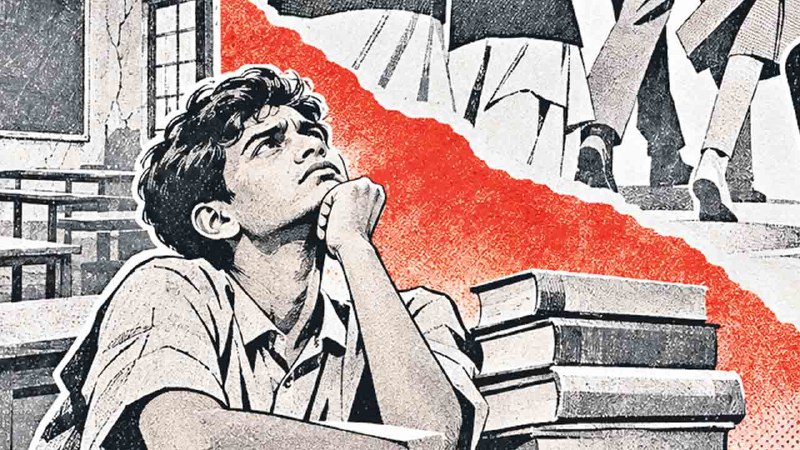
The Telangana government has announced that intermediate education will end from the next academic year, and Classes 11 and 12 will be conducted as part of school education. The system has run since 1969, and the state says the change is meant to serve students’ interests and prepare them for modern needs.
The decision was first announced at the end of last academic year. It did not take effect this year because of technical obstacles. Now the government has set the next academic year as the start point, and the questions are piling up faster than the answers.
An education analyst, K Venugopal, writes in an opinion column published on NT News that the government has a long record of announcements that outpace action. He points to the State Skill University, the Young India Residential International Schools, a sports university, and pre-primary education in government schools as examples of promises made after the current government took office.
Announcements are grand, but implementation has been nil.
The column also points to a plan to reduce 26,000 government schools into 4,000 Telangana Public Schools, which appears in the same list of announcements. The state formed the Telangana Education Commission under Akunuri Murali, followed by the Keshava Rao committee. The columnist says the recommendations of both reports have not been seriously debated before the intermediate abolition announcement came out.
The infrastructure question
The most immediate challenge is physical space. Government, district parishad and mandal parishad schools, along with six kinds of residential gurukul schools, model schools, Kasturba Gandhi Balika Vidyalayas for girls and tribal welfare schools, already exist across the state. Some of these schools have already started intermediate classes.
If intermediate education ends, those schools will need extra classrooms, laboratories and facilities for Classes 11 and 12. The column asks what happens if every school starts intermediate classes. Will every stream open everywhere? And where will the extra teaching staff come from?
The columnist also asks where the junior college faculty will be posted if their institutions are merged into schools. Without clear answers, the risk is that students in smaller towns and rural areas could face the least options.
Who pays for it
The government says it plans to convert model schools into Telangana Public Schools using a loan of Rs 787 crore from financial institutions, with the state’s share coming from CSR funds. The column notes that not a single rupee of the funding comes from the state budget. The writer calls that gap a clear sign of the difference between what the government says about education and what it actually does.
The column also raises a broader question about whether education development will depend on loans from financial institutions. It points out that the Young India International Schools are moving forward under the same model.
What happens to private schools and lecturers
The column raises another unanswered point. It is unclear whether the changes will apply only to government schools or also to private schools, where the writer says 65 percent of students study.
On staff, the chief minister has said that lecturers and non-teaching staff in junior colleges will not face any trouble with service and retirement benefits if the colleges merge into school education. The column says service rule disputes between government teachers and district parishad teachers have already stalled promotions for MEO, Deputy EO and DEO posts. The writer asks how new service rules for junior college lecturers will be framed and what steps will prevent fresh legal battles.
Standards and the bigger picture
The column says various surveys show standards among government school students are declining. It asks whether the chief minister is aware that standards will not rise while posts such as deputy educational officers and mandal educational officers remain unfilled.
The writer also links the reform to the new National Education Policy. He argues that the state government should oppose a policy that he says takes away state rights and increases centralisation and privatisation, rather than adopting its elements through the back door. The column demands that the state allocate 15 percent of its budget to education, as it had promised, and hold a DSC recruitment every year.
For parents and students, the core question is simple. Will the change bring better classrooms, qualified teachers and stronger results, or will it add another round of announcements without enough money behind them? The answer will shape the futures of students who finish school in Telangana over the next few years.
TL;DR
- Telangana will end intermediate education from the next academic year, and Classes 11 and 12 will move into school education.
- The state says the change serves students and modern needs, but critics say key details are still missing.
- Schools that already run intermediate classes will need extra classrooms, labs and staff to handle Classes 11 and 12.
- A columnist questions where junior college lecturers will be posted and how their service rules will be handled.
- The model schools conversion depends on a Rs 787 crore loan and CSR funds, with no state budget money, according to the column.
- The government first announced the change last year, but it was not implemented this year due to technical issues.