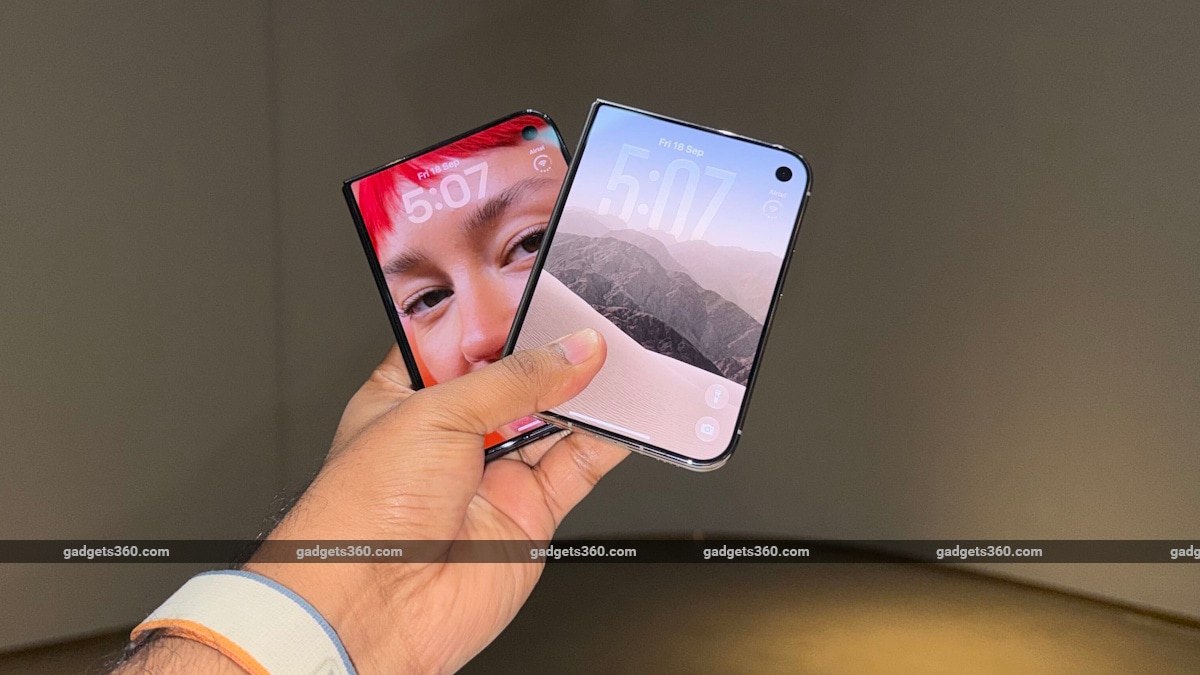
Apple has officially released its first-ever foldable smartphone, the iPhone Duo, in India and global markets, sporting a massive inner display that is fifty percent larger than the iPhone 18 Pro Max. As early adopters get their hands on the device, tech enthusiasts are eager to see how the Cupertino-based company managed the engineering hurdles of a folding handset. A detailed teardown conducted by the YouTube channel Kingmi Mobile has blown the lid off the device’s internal architecture, offering an unfiltered look at its dual-battery layout, delicate ribbon cables, and the secret behind its remarkably smooth screen presentation.
The focal point of the teardown centers on the inner display’s surface. Peeling away the top protective layer exposes a glossy folding screen underneath, which bears a striking resemblance to competitors like the Samsung Galaxy Z Fold 8. However, without the factory-applied treatment, the central display crease becomes significantly more prominent. Apple relies on a specialized nano-textured matte cover layer specifically designed to cut down glare and optically disguise the folding crease.
Once the protective layer is peeled away, the folding screen underneath has a glossy finish, similar to the inner display on the Samsung Galaxy Z Fold 8. The crease, however, becomes more prominent without the matte surface.
Apple hardware engineering chief Kate Bergeron previously noted that this outer film was engineered to be replaceable over time as normal wear and tear sets in. While customers are strongly advised against removing the film themselves, official replacements for the cover layer are priced at Rs. 5,900 in India. Beyond the screen, the teardown confirms that the iPhone Duo houses a split battery configuration, placing a power cell in each half of the foldable body to balance weight and power delivery.
Accessing those internal power cells, however, requires navigating a maze of tightly packed components. Technicians must remove both the rear panel and the secondary outer screen just to reach the batteries, making repairs far more intricate than traditional slab smartphones. Thin, folded ribbon cables linking the selfie cameras and mainboard also demand extreme precision during disassembly to avoid permanent damage.
While individual components like the dual rear cameras and mainboard can be swapped out modularly, the hinge mechanism and inner folding display remain deeply integrated and notoriously difficult to service. In India, replacing the inner display carries a staggering cost of Rs. 1,49,900, while general out-of-warranty damage can climb as high as Rs. 2,24,900. With the top-tier 2TB configuration priced at Rs. 4.5 lakh, protecting the investment through optional plans like AppleCare—costing Rs. 51,900—becomes a major consideration for buyers.
Tech enthusiasts across regional hubs in Andhra Pradesh and Telangana are closely tracking these hardware breakdowns as luxury foldables gain traction among urban early adopters in Hyderabad and Vijayawada. Local service queries have spiked following the official sales rollout, with consumers weighing the visual benefits of Apple’s crease-hiding tech against the daunting cost of out-of-warranty component replacements.
TL;DR
- Early teardown of the iPhone Duo reveals a glossy folding screen hidden beneath a protective matte layer.
- Apple uses a nano-textured cover layer to actively reduce glare and minimize the visibility of the inner display crease.
- The foldable device houses a separate battery in each half of its body, complicating standard cell replacements.
- Replacing the inner display in India costs Rs. 1,49,900, while an official cover layer damage replacement is priced at Rs. 5,900.
- The top-end 2TB configuration of Apple’s first foldable smartphone is priced at Rs. 4.5 lakh in India.