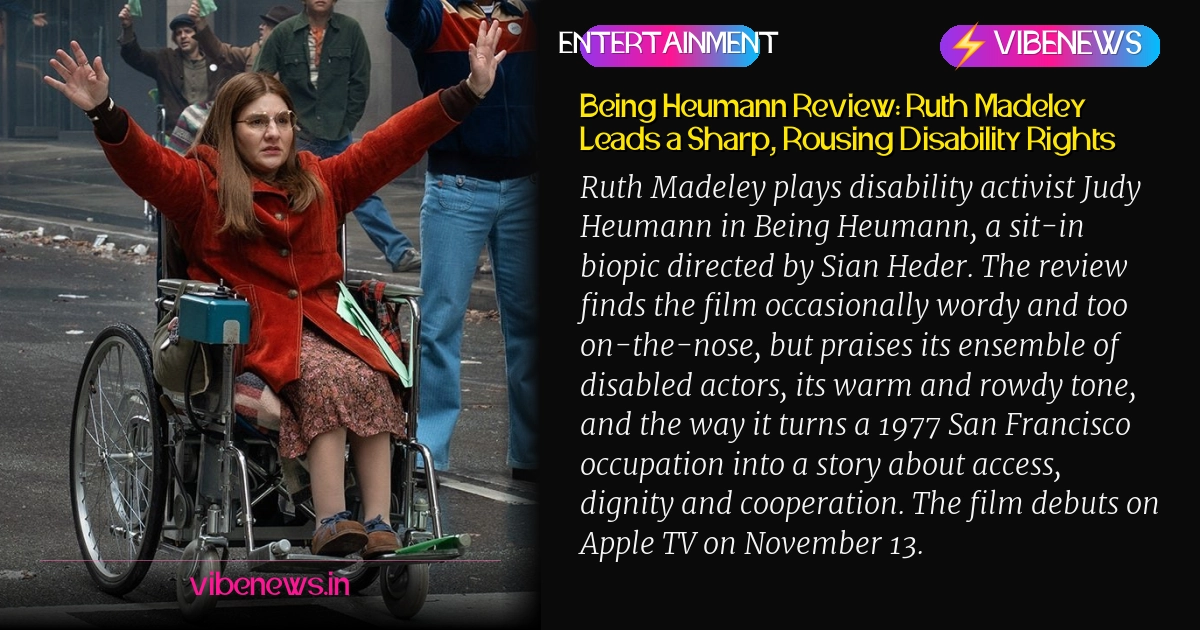
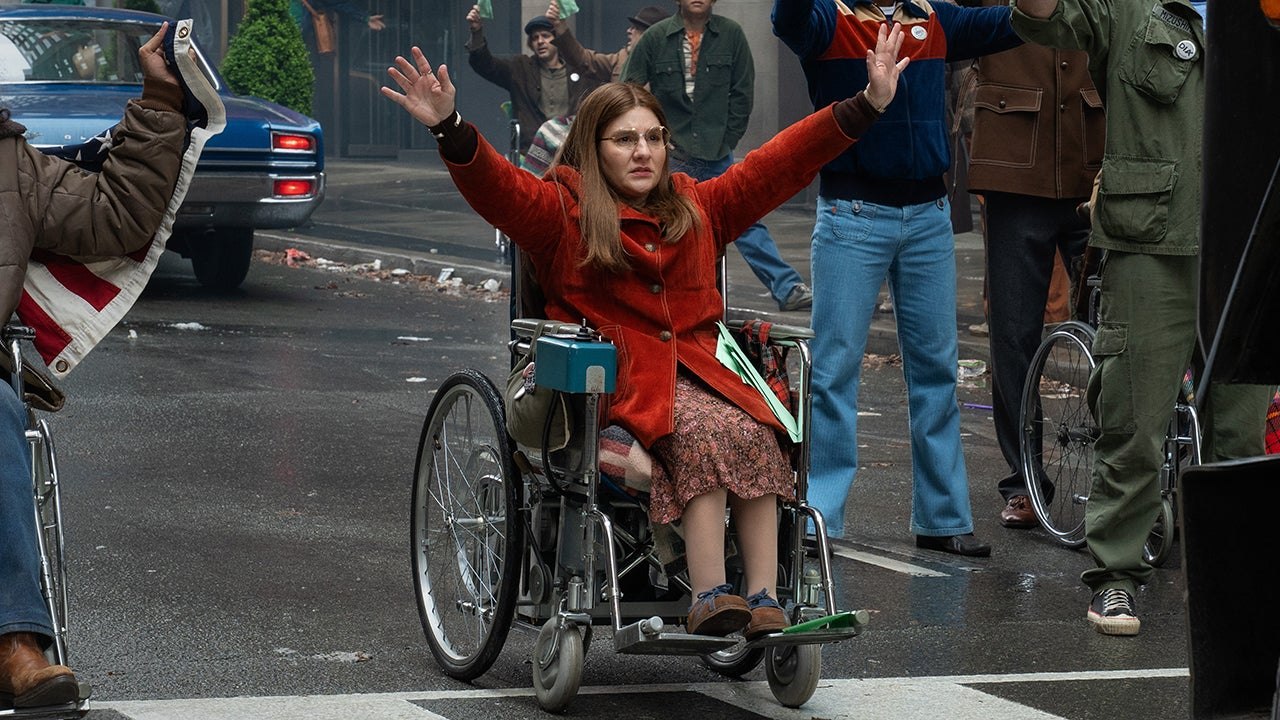
Being Heumann, the biopic about disability activist Judith Heumann, is in theaters now and arrives on Apple TV on November 13. Sian Heder, the director of CODA, adapts Heumann’s memoir into a political sit-in drama that is straightforward, sometimes wordy and often rousing.
The story opens with a failed streetside protest in 1972, then jumps ahead to 1977. Judy, played by Ruth Madeley, who uses a wheelchair herself, is among a group of protesters furious with Joseph Califano Jr., played by Mark Ruffalo, the secretary of the Department of Health, Education, and Welfare. Califano has refused to sign a vital equality act into law. Judy wants the group to occupy the HEW offices in San Francisco until he signs what the film calls Section 504.
There is a catch, and it is a small one with big consequences. Judy packed a toothbrush. She always planned to stay overnight inside the building, and she never told her fellow protesters. That choice makes her a compelling, prickly lead, and the film lets her flaws sit in plain view.
Madeley gives Judy a fearsome, acerbic and headstrong edge. Over the course of the occupation, that armor begins to slip. Fellow advocates push back on her methods, including soft-spoken organization newcomer Kitty Cone, played by Madeline Delp. Those clashes produce some of the film’s sharpest moments, and the cracks in Judy’s confidence start to show.
The review describes the tone as shifting between challenging, comedic and broadly uplifting. Much of the film is spent on debates inside the group while the activists wait for officials to respond. Those scenes can run long. Characters often stop to explain their views in detail, and the review calls that approach prescriptive and verbose. It also argues the talk is the point, since Heder wants the crisscrossing debates about disability activism out in the open.
The strongest argument for the movie may be its ensemble. Andrew Pilkington plays Hale Zukas, a nonverbal activist with cerebral palsy who communicates with a helmet-mounted pointer and a board full of letters. Zukas spells out every word slowly, but the delay does not blunt his sarcasm. One of the film’s best lines arrives this way, as a fellow protester reads it aloud to the larger group:
“Disability is not a tragedy. It is a tremendous hassle.”
The protest itself was real, and it lasted nearly four weeks. Heder details the practical challenges along the way. Able-bodied allies are part of the story too. Dylan O’Brien plays news reporter Evan White, and Ray Fisher plays Panther member Chuck Jackson. Both embed themselves with the group to assist and observe. Congressman George Miller, played by Rob Delaney, supports the sit-in from outside. Relatively well-known actors give up screen time to a central cast of relative unknowns, and the review reads that choice as a form of allyship in its own right.
Casting disabled actors serves two purposes, according to the review. The first is realism. Freed from having to perform disability, the actors bring a personable, lived-in authenticity to their roles. The second is equity. Section 504 covers ramps, readers for the blind and interpreters for the Deaf, and Califano himself calls the cost a burden. But the law’s real goal is equal access to jobs and education. Nearly every character in the HEW building was denied those opportunities because of a disability. Judy, for instance, was denied her teaching license. The review says giving these roles to disabled performers, rather than to able-bodied peers who have had more chances to build their résumés, puts the film’s money where its mouth is.
Heder also makes small changes to the visual language. Her eye-level medium and group shots sit closer to the ground to suit a cast that uses wheelchairs, and the frame widens sideways to hold them. The review calls these adjustments minor but meaningful. It also compares the film to CODA, which cast real Deaf adults and edited to the rhythm of their signed dialogue. Being Heumann does not shy away from the sex lives of its disabled characters either, and that candor makes the sit-in feel surprisingly lively.
Not every choice lands. The review points to a few beats that feel too obvious, including the use of the Ramones’ “Judy is a Punk” over slow-motion wheelchair rolling. Still, the reviewer calls the film a crowd-pleasing delight, the kind of movie Heder clearly knows how to make.
The verdict is mixed in the most generous sense. Being Heumann may not deepen a viewer’s grasp of the complicated details of disability legislation. What it does offer is a portrait of a minority often pushed to the margins, along with a broad plea to understand the limits placed on their lives. Much of its power comes from performers like Ruth Madeley, who have waited a long time for roles this substantial.
TL;DR
- Being Heumann is in theaters now and debuts on Apple TV on November 13.
- Ruth Madeley plays Judy Heumann, whose 1977 sit-in against HEW is the film’s central event.
- The review praises the ensemble of disabled actors and calls their casting an act of equity.
- The film is described as a crowd-pleaser, though some scenes feel wordy and too on-the-nose.
- The real sit-in lasted nearly four weeks, and the film details its many challenges.