Kangana Ranaut’s Past Attire Ignites Fresh Debate
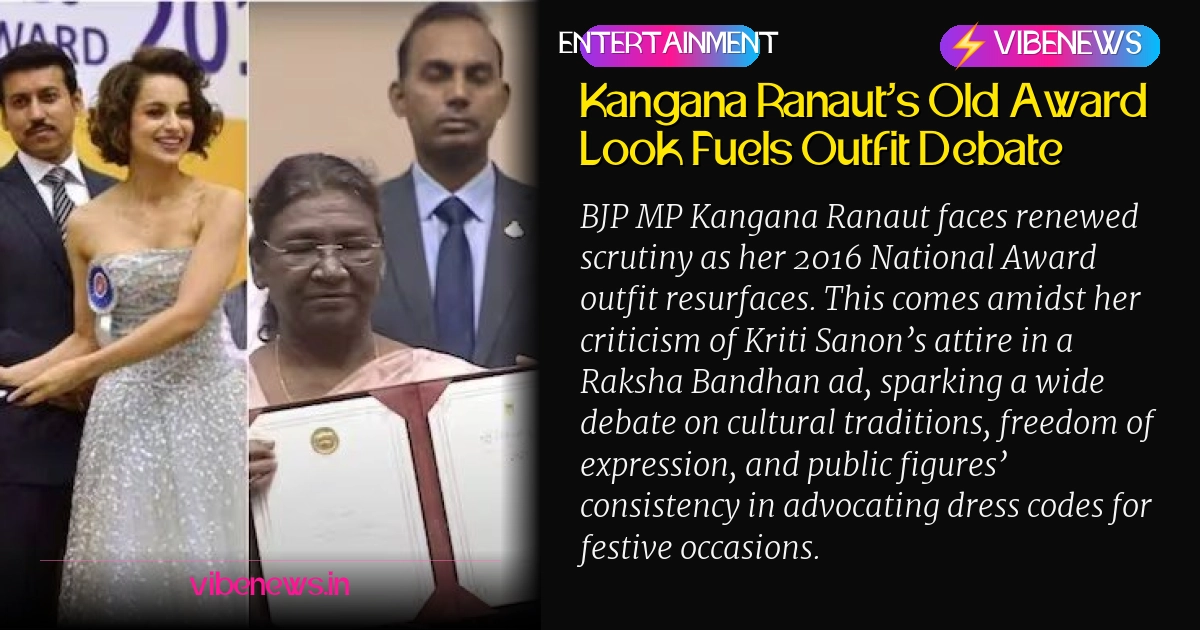
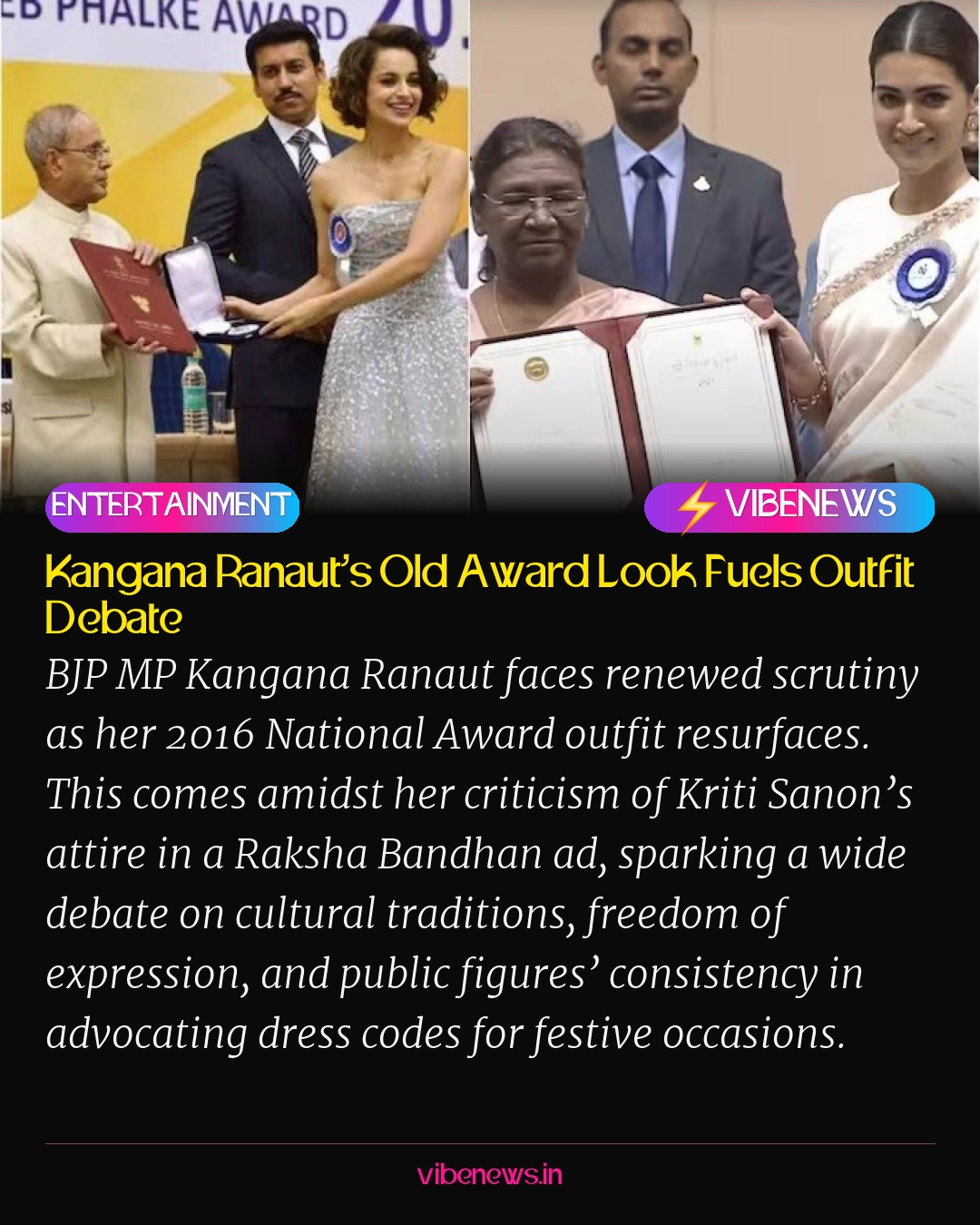
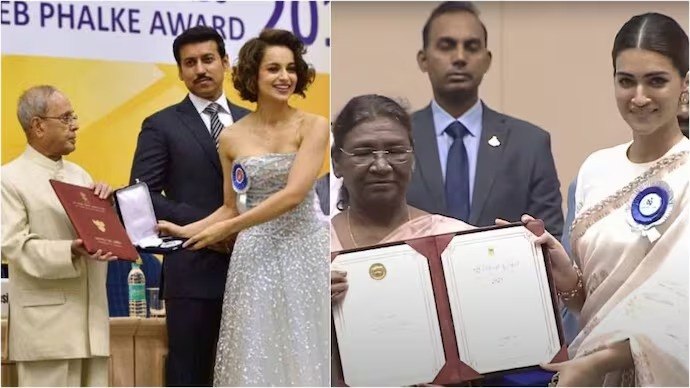
A resurfaced video of actor and BJP MP Kangana Ranaut receiving a National Film Award in 2016 has ignited a fresh wave of scrutiny regarding her views on women’s clothing and cultural traditions. The visuals, showing Ranaut in an off-shoulder gown, have gone viral, drawing comparisons with Kriti Sanon’s more traditional attire at her own National Award ceremony. This development unfolds just days after Ranaut publicly criticised Sanon’s styling in a controversial Raksha Bandhan advertisement, which has since been withdrawn.
The online debate now questions the consistency of Ranaut’s own public appearances with the sartorial standards she advocates for culturally significant occasions. Social media users are actively juxtaposing her past fashion choices against her recent pronouncements, adding a complex layer to the ongoing discourse about celebrity influence and cultural policing.
The Raksha Bandhan Advertisement Controversy
The genesis of the current controversy lies in Kangana Ranaut’s strong criticism of a GIVA Raksha Bandhan advertisement featuring Kriti Sanon. Ranaut specifically took issue with Sanon wearing a bralette-style blouse while tying a rakhi to her brother, questioning the choice of attire for a festival deeply rooted in religious and cultural traditions. She argued that women should opt for more traditional outfits when participating in such events, emphasising the sanctity and specific aesthetics associated with Indian festivals.
Ranaut’s comments sparked a significant debate across social media platforms, with many defending Sanon’s freedom to choose her attire, including Congress leader Rahul Gandhi. The advertisement was eventually pulled by GIVA, highlighting the sensitivity surrounding the portrayal of Indian festivals in commercial campaigns and the intense public scrutiny faced by celebrities and brands alike.
A Look Back at the 63rd National Film Awards
The resurfaced visuals date back to the 63rd National Film Awards ceremony in 2016, where Kangana Ranaut was honoured with the Best Actress award for her performance in ‘Tanu Weds Manu Returns’. At the prestigious event, she received the accolade from then-President Pranab Mukherjee. Her choice of attire for the occasion was a pastel pink off-shoulder gown, designed by the Beirut-based Lebanese designer Georges Chakra.
The National Film Awards are among the most prominent film honours in India, celebrating artistic and technical excellence across various languages. The ceremony is a formal affair, often attended by dignitaries and cultural figures, making the choice of attire a subject of public interest and sometimes, cultural commentary. Ranaut’s gown, while a high-fashion statement, stands in contrast to the traditional Indian wear often chosen by many recipients for such ceremonies.
Public Scrutiny and Comparisons
Following Ranaut’s critique of Kriti Sanon’s ad, social media platforms became a battleground for comparisons. Users widely shared side-by-side images of Ranaut and Sanon receiving their respective National Awards, pointing out Sanon’s choice of a saree versus Ranaut’s gown. Several posts highlighted a perceived double standard, with one user remarking, “The self-proclaimed goddess of wisdom on culture and attire, Kangana Ranaut, needs to look inward first.”
Further comparisons emerged, featuring a montage of other prominent actresses like Rani Mukerji, Alia Bhatt, and Keerthy Suresh, all of whom wore sarees while accepting their National Awards. These comparisons intensified the narrative that Ranaut, despite her strong opinions on traditional dress, had not always adhered to such standards herself. This public scrutiny underscores the increasing demand for consistency from public figures who engage in cultural commentary.
Kangana’s Stance on Cultural Expression
In response to the backlash, Kangana Ranaut clarified her position in a recent interview, stating that her comments were not directed at Kriti Sanon personally. Instead, she asserted that her critique was aimed at the broader cultural context and the manner in which festivals are presented in modern media. Ranaut argued that the aesthetic expression of any civilisation is intrinsically linked to its festivals, and therefore, clothing choices for such occasions cannot be entirely separated from their cultural significance.
She specifically highlighted Raksha Bandhan as a religious and civilisational expression with its own traditions and cultural boundaries, akin to rules for worship. Ranaut maintained that the bralette in the advertisement was a minor detail within a larger issue concerning the absence of traditional elements and the overall portrayal of cultural events. It is also worth noting that Ranaut herself has worn a saree for a National Award ceremony in the past, specifically at the 67th National Film Awards for ‘Manikarnika: The Queen of Jhansi’, a point some social media users highlighted to defend her.
The Evolving Landscape of Public Discourse
This entire episode reflects the evolving and often contentious landscape of public discourse in India, particularly concerning culture, tradition, and individual freedom. Celebrities, as influential figures, often find their personal and professional choices under intense scrutiny, especially when they venture into cultural commentary. The debate surrounding Ranaut and Sanon transcends mere fashion; it delves into deeper questions about authenticity, cultural appropriation, and the role of advertising in shaping societal norms.
The swift withdrawal of the GIVA advertisement following public outcry also demonstrates the power of collective online sentiment and the increasing accountability demanded from brands. This incident serves as a potent reminder that in the age of instant information and social media, public figures are constantly navigating a complex web of expectations, where past actions can quickly resurface to challenge present pronouncements.
Editorial Context: Beyond the Fashion Statement
This ongoing debate, sparked by Kangana Ranaut’s comments and the subsequent resurfacing of her past attire, is more than just a celebrity fashion controversy. It highlights a significant cultural tension in contemporary India: the balance between preserving traditional values and embracing modern individual freedoms. As India navigates its identity in a globalised world, discussions around attire for religious and cultural festivals become proxies for larger conversations about cultural authenticity, societal expectations, and personal expression.
For Vibe News, this development underscores the critical role of media and public figures in shaping cultural narratives. It prompts a deeper examination of how traditional events are represented in popular culture and advertising, and the responsibility that comes with influencing public opinion on such sensitive matters. Over the long term, these debates contribute to the continuous redefinition of what constitutes ‘tradition’ and ‘modernity’ in Indian society, influencing everything from consumer behaviour to political discourse and the very fabric of cultural identity.
TL;DR
- Kangana Ranaut’s 2016 National Award appearance in an off-shoulder gown resurfaced online.
- This occurred amidst her criticism of Kriti Sanon’s bralette-style attire in a Raksha Bandhan advertisement.
- Social media users questioned Ranaut’s consistency, comparing her past fashion choices with her advocacy for traditional dress.
- Ranaut clarified her comments were about the ‘larger cultural context’ and ‘aesthetic expression of civilisation’ for festivals, not a personal attack on Sanon.
- She had previously worn a saree for a different National Award ceremony, a point highlighted by some users.
- The controversial GIVA Raksha Bandhan advertisement featuring Kriti Sanon was ultimately withdrawn.