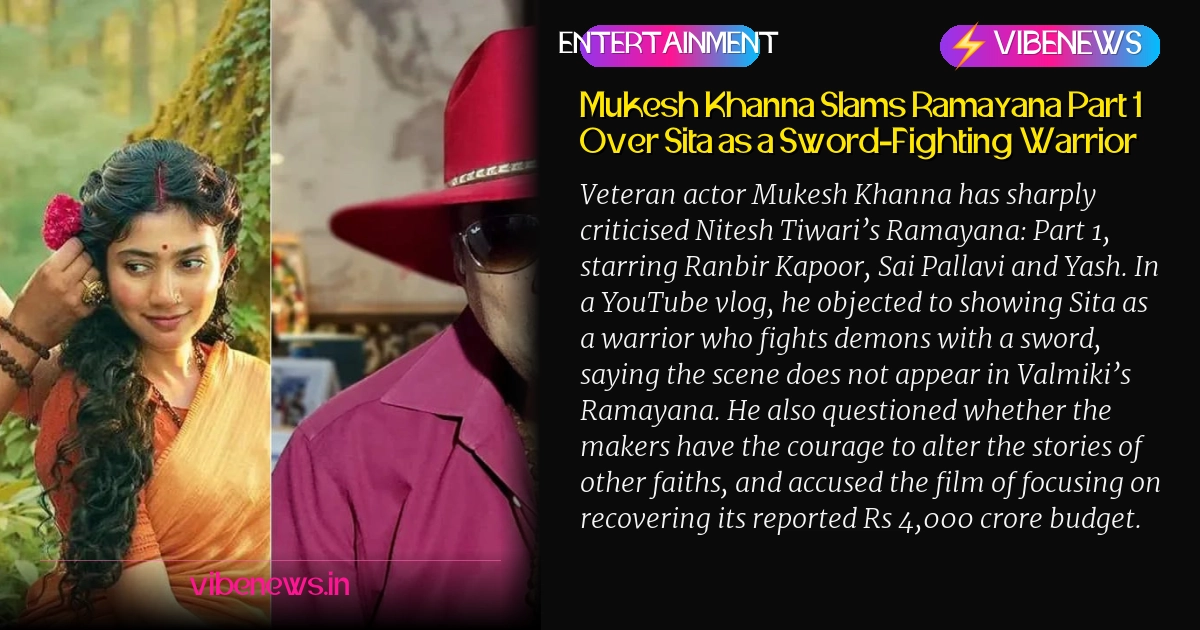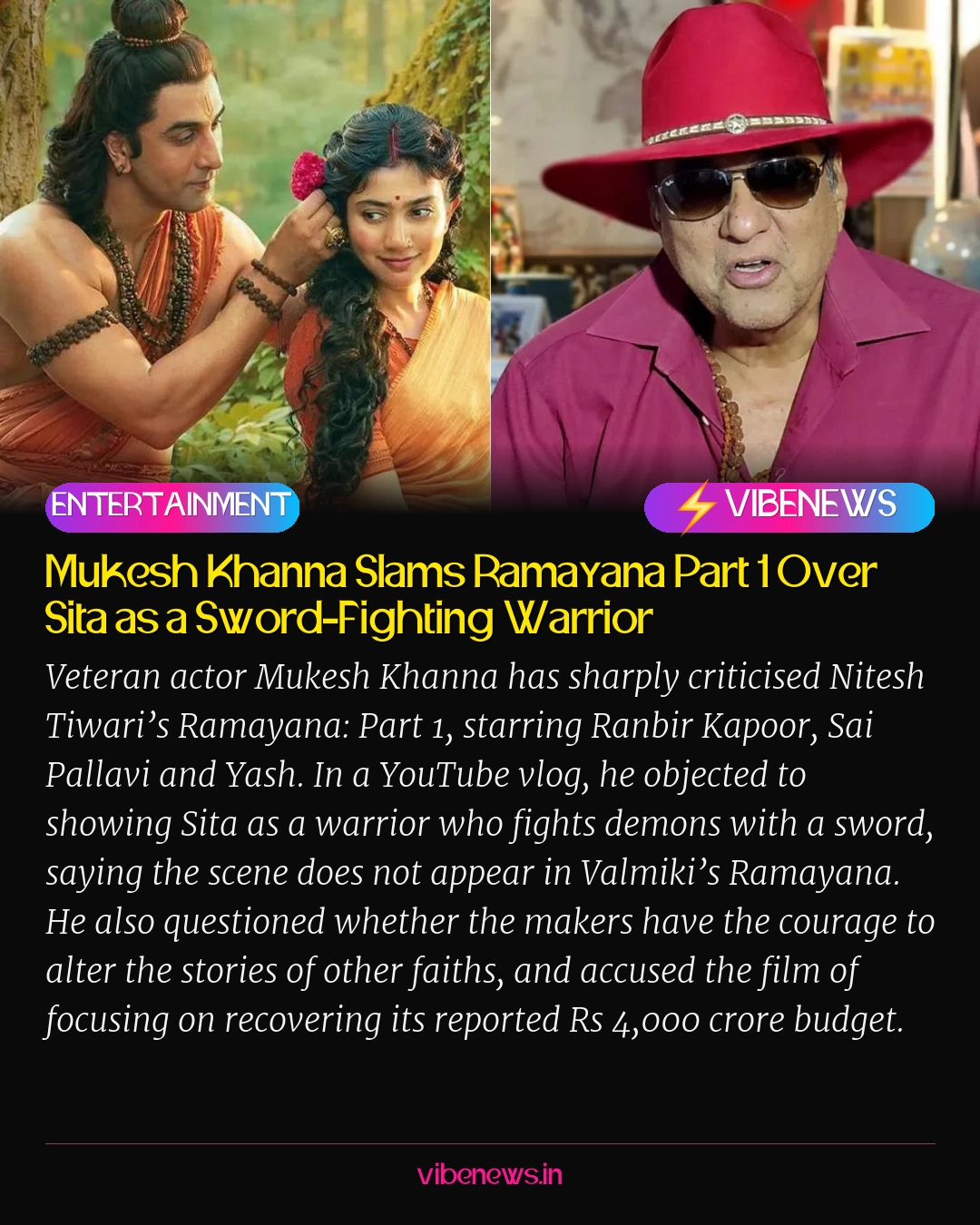
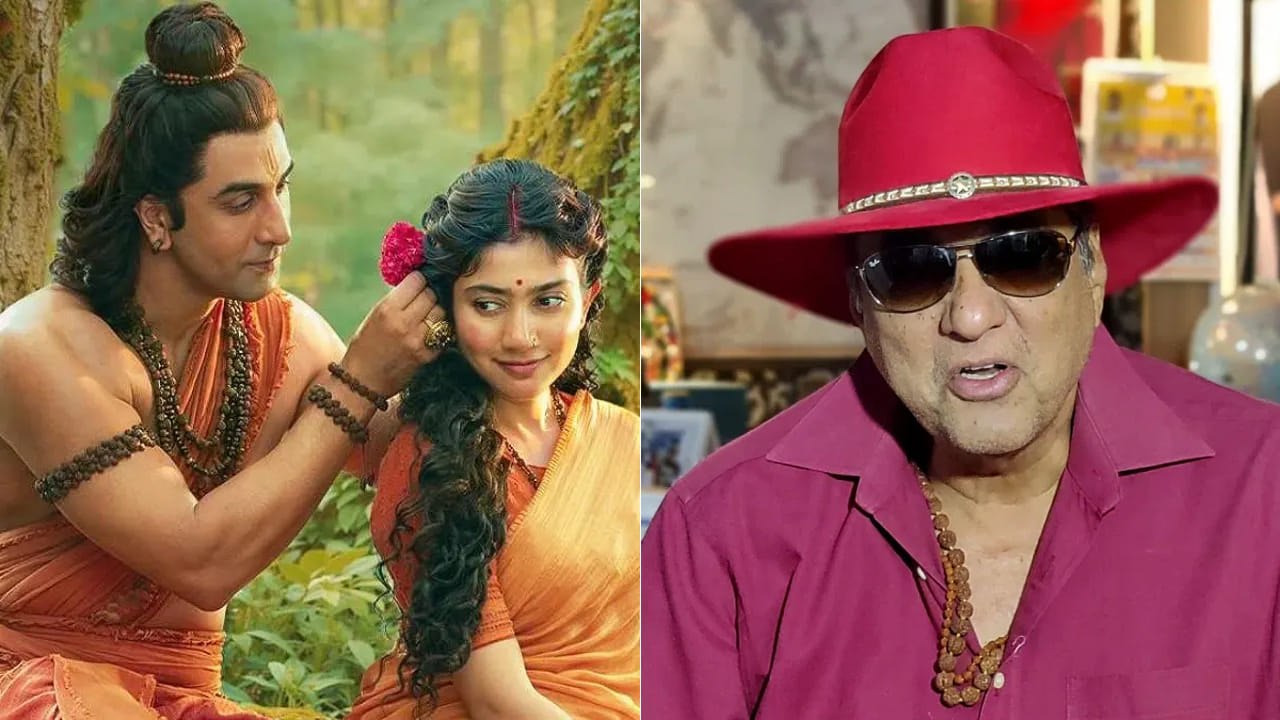
Actor Mukesh Khanna has publicly attacked Nitesh Tiwari’s Ramayana: Part 1, accusing its makers of distorting Valmiki’s epic to suit their own imagination. In a YouTube vlog, the Shaktimaan star took aim at the film, which stars Ranbir Kapoor, Sai Pallavi and Yash and is still pulling in big numbers at the box office.
The criticism is not a passing remark. Khanna, who played Bhishma in B.R. Chopra’s Mahabharat, has been one of the more senior voices in the public conversation around the film, and his objections go straight to the way the story has been told.
The scene that angered him shows Sita, played by Sai Pallavi, as a warrior who takes on two or three demons with a sword. Khanna said he found the portrayal hard to accept. Speaking in his vlog, he pointed to the reaction he believed the audience was having and made clear where he stood.
A question for the Hindi film industry
Khanna framed his objection as a direct challenge to the filmmakers. He said he wanted to ask the producers and directors of the Hindi film industry whether it was right to twist the facts of the Valmiki Ramayana and bend them to fit personal fantasies. He added that the debate on the internet had started the moment the film came out.
He went further, saying the makers seemed less interested in telling the Ramayana honestly than in getting back the Rs 4,000 crore budget they had invested. In his words, the main agenda appeared to be recovering that money rather than the story itself.
On the Sita sequence, Khanna said he had gone back to the Valmiki Ramayana and found no mention of anything similar. As far as he knew, Sita never fought in battle. He reasoned that if she had been a warrior, she would have fought Ravana when he came to abduct her. His question was simple and pointed: how could Ravana have carried her off so easily?
The makers’ explanation
The filmmakers have addressed the matter, and Khanna responded to what he described as their explanation. According to his remarks, the team said the sequence was drawn not from Valmiki’s Ramayana but from a book called Adbhut Ramayana. Khanna said he was surprised by that answer.
His reply was blunt. The original Ramayana, he argued, is the one written by Valmiki, and no one has the authority to go two steps beyond it. He then turned the argument around and asked whether the producers would have the nerve to change the story of the Quran or the Bible. If not, he asked, how dare they tamper with the Ramayana?
That line has become the sharpest part of his criticism, and it is the one that has been picked up most widely. Khanna’s comments are circulating heavily online, and the exchange has pulled the film’s storytelling choices into a far larger argument about faith, cultural memory and the limits of creative liberty.
Why the debate matters
Mythological films in India have always walked a fine line. The Ramayana is not just a story for many viewers. It is a text that families grew up with, read aloud and passed down. When a big-budget adaptation changes a key character’s nature, audiences who hold the original close tend to notice, and some take offence.
Khanna’s remarks land at that point of tension. He is not a critic writing for a film magazine. He is a figure who portrayed one of the most revered characters in Indian television, and his objection carries weight among the audiences who grew up with that kind of storytelling.
The film’s commercial performance has so far been strong, and the controversy has not slowed the box office, at least according to the reports available. That gap between the crowds in theatres and the anger on social media is part of why the argument has grown so loud.
What is still unclear
Several things remain open. The sources do not detail how the producers or the director responded beyond the explanation Khanna referred to, and there is no further statement from the filmmakers in the reporting available. Nor is there any official word on whether the sequence will be revised.
What is certain is that a veteran actor, speaking in his own voice, has set out a clear case against the film’s treatment of its central figure. Whether the makers reply in detail, or let the noise settle, will shape how the debate moves from here.
For now, the exchange stands as one of the most pointed reactions the film has drawn. Khanna has put the question to the industry directly, and the industry has not yet answered it in full.
TL;DR
- Mukesh Khanna says Ramayana: Part 1 shows Sita as a sword-fighting warrior, which he says has no basis in Valmiki’s text.
- Khanna, who played Bhishma in B.R. Chopra’s Mahabharat, made the criticism in a YouTube vlog.
- He accused the makers of focusing on recovering the reported Rs 4,000 crore budget rather than telling the story honestly.
- The filmmakers reportedly said the sequence came from the book Adbhut Ramayana, which Khanna called unacceptable.
- Khanna asked whether the producers would dare alter the Quran or the Bible, saying no one can go beyond Valmiki’s Ramayana.
- The film, starring Ranbir Kapoor, Sai Pallavi and Yash, is still earning heavy box office collections.