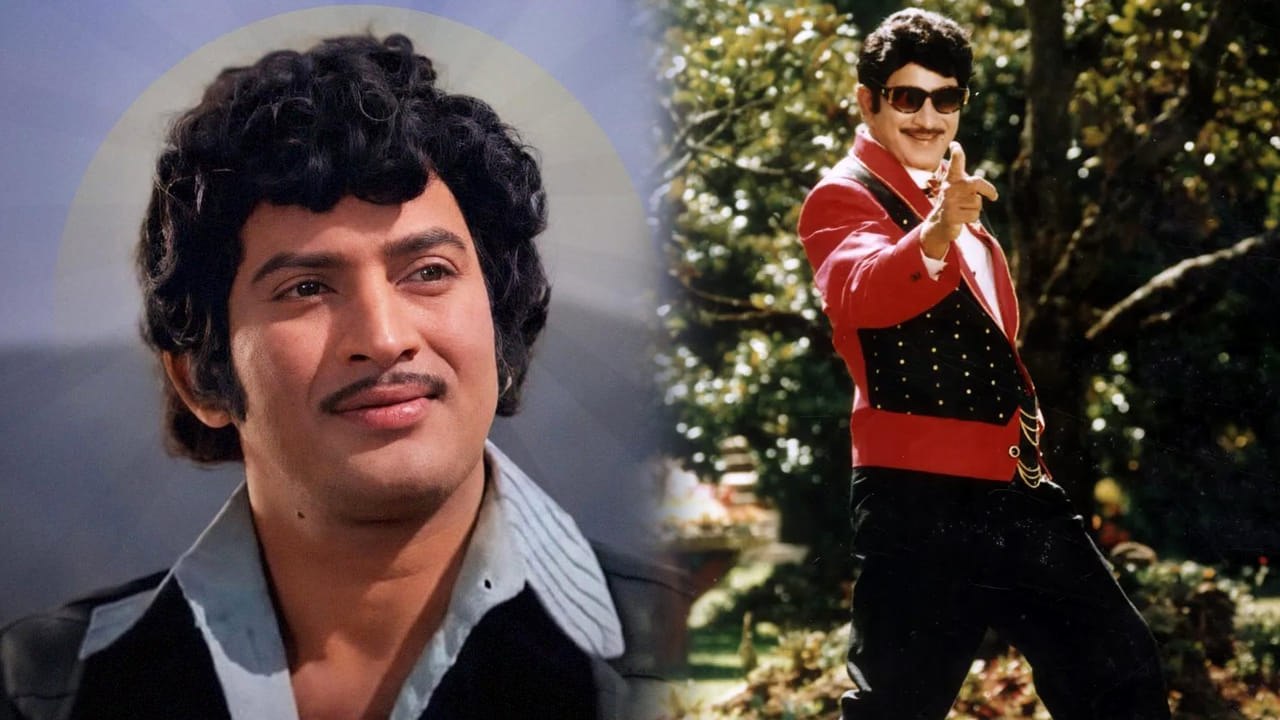
Superstar Krishna received Rs 2,000 as his first remuneration for the film Thene Manasulu, according to his wife Vijaya Nirmala, who shared the detail in an earlier interview. The figure is a small fraction of what some actors command today, and her account of his early career reads like a lesson in patience.
Vijaya Nirmala pointed to a clear generational gap. Today’s young heroes lose confidence when one or two films fail to work at the box office. A newer star can demand crores after a single hit. Krishna, by her account, kept working through a long dry spell without losing his footing.
An audition, a newspaper ad and a Rs 2,000 cheque
After finishing his studies, Krishna wanted to settle into the film industry. He spotted an advertisement in a newspaper and sent in his photographs. He was called for an interview and a screen test, and he was selected for Thene Manasulu.
Krishna later recalled how nervous he was while waiting to hear whether the chance would come through. The film’s director, Subba Rao, reportedly liked him the moment he walked in. After the test, Subba Rao booked him and told him he would be the hero of the film. Vijaya Nirmala added that several well-known names, including Jayalalithaa, Hema Malini and Krishnam Raju, also took part in the same test, but none of them were selected.
That first film paid Rs 2,000, a sum that was considered very large in those days. The contrast with today’s market is hard to miss, and Vijaya Nirmala made the comparison herself.
Actors today demand crores for a single hit, but Krishna worked in 30 to 40 films at Rs 5,000 a film, even after giving many hits.
That remark, paraphrased from her recollections, is the sharpest part of her interview. It shows how far the industry’s money has moved, and how differently a major star once approached his fees.
Fourteen flops and a comeback he financed himself
Krishna’s career was not a straight run of hits. Vijaya Nirmala noted that 14 films in a row did not succeed at the box office. During that stretch, producers stopped booking him. Many actors would have stepped back at that point.
Krishna did not. He produced Padipantalu himself and the film became a big success. That single hit put his career back on track, and it showed that his persistence and self-belief had a practical payoff. Vijaya Nirmala credited his confidence and his devotion as the forces that kept him moving forward.
Roles that made audiences believe
Vijaya Nirmala described what set Krishna apart on screen. His looks, dialogue delivery, dance and fight sequences all drew praise. More than those, she said, he had a rare ability to disappear into a character. When he played Alluri Sitarama Raju, audiences felt they were watching the real Alluri. His portrayal of Jesus drew similar praise for the way he inhabited the role.
A producer’s actor
Off screen, Vijaya Nirmala said, Krishna treated producers with care. He did not harass them or insist on payment before he would dub his lines. When he had free time, he would call producers himself and tell them he was available to dub and that they could schedule it. Vijaya Nirmala said she was surprised at how few people in the industry show that kind of consideration today.
She also recalled a more playful side. She wanted to buy Krishna a Benz, but she knew he would refuse. So she planned for a month, then surprised him on his birthday with a decorated car as a gift.
Diwali brought another small story. Krishna did not enjoy setting off firecrackers. To please her, he agreed to stay for a while anyway. He also laughed as he admitted that Vijaya Nirmala was the one who spent the household money and made the decisions at home.
Soft-spoken, but not to be provoked
Krishna came across as gentle and soft-spoken, Vijaya Nirmala said, but he could become very angry. When that happened, she added, he did not care who was in front of him.
She also addressed rumours about his co-stars. She said she never felt insecure when he acted opposite other heroines. On set, she only saw herself as the director. She stressed that Krishna always respected women in the industry.
Her memories of his film songs were equally warm. Whenever she thinks of him, she remembers the song ‘Vastadu Naa Raju’, which she called a superhit in her life. Krishna loved the songs of Sakshi, especially ‘Amma Kadupu Challaga’, and both of them acted in it with a natural ease. Director Bapu, she said, encouraged that kind of performance.
What the numbers say about a star’s start
The story of Krishna’s early pay is a snapshot of how far the film economy has moved. A Rs 2,000 debut, a Rs 5,000 fee after many hits, and a self-financed hit that rescued a stalled career together make a striking arc. Vijaya Nirmala’s interview offers the human side of that arc: a man who valued producers, worked through failures and kept his feet on the ground.
TL;DR
- Superstar Krishna’s first remuneration for Thene Manasulu was Rs 2,000, says wife Vijaya Nirmala.
- Krishna worked in 30 to 40 films at Rs 5,000 per film even after many hits, she recalled.
- He went through 14 films in a row without a hit before producing Padipantalu himself.
- Padipantalu became a big success and put his career back on track.
- Vijaya Nirmala said Krishna never harassed producers and often called them to offer dubbing dates.
- Her interview offers a rare look at the early career of one of Telugu cinema’s biggest names.