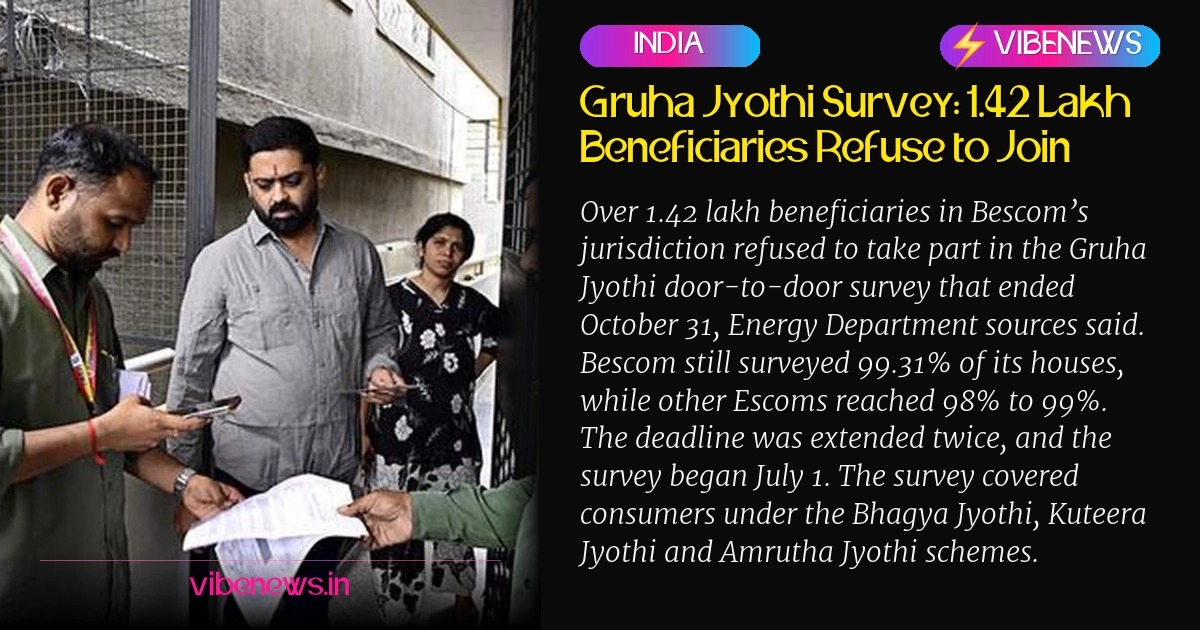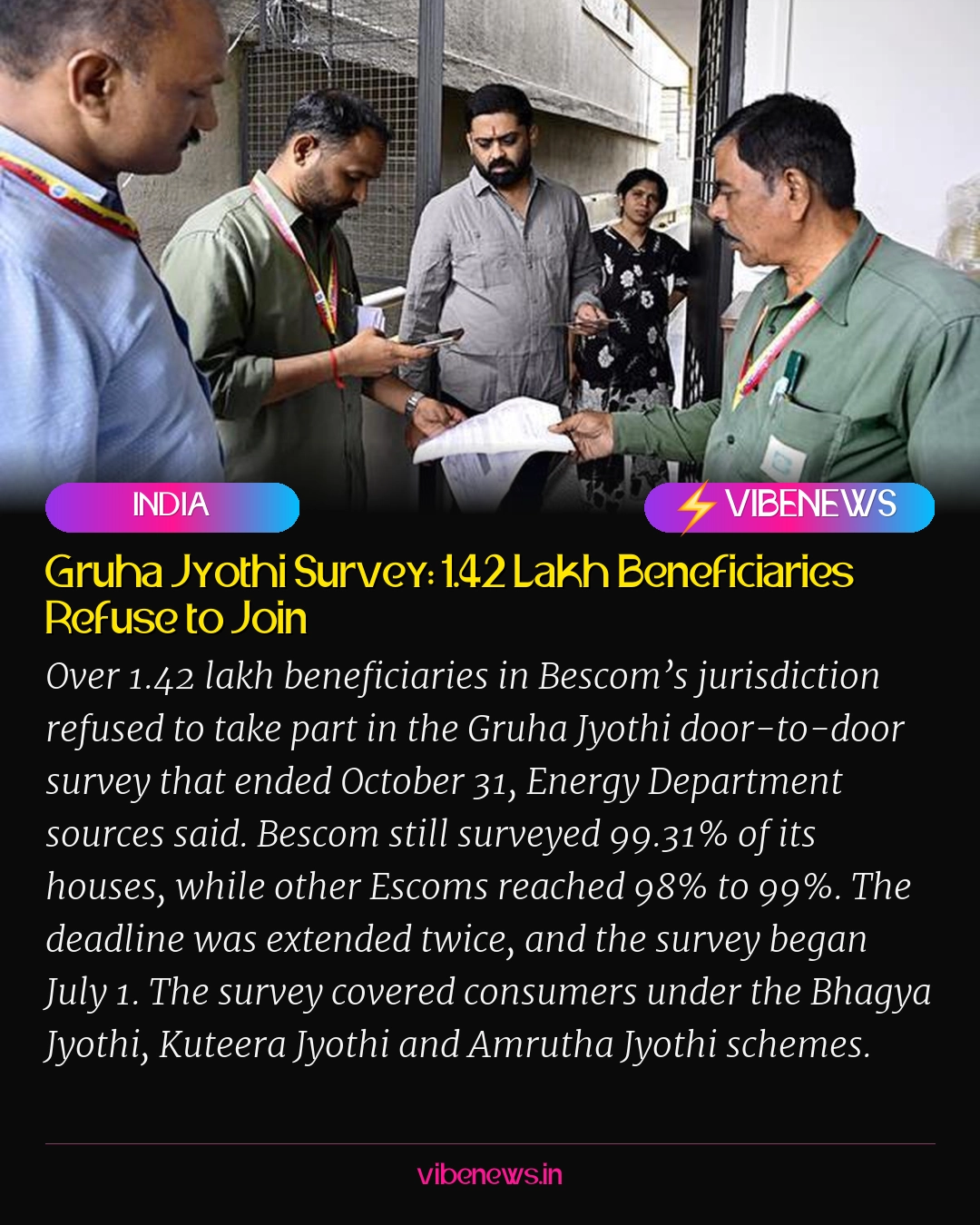
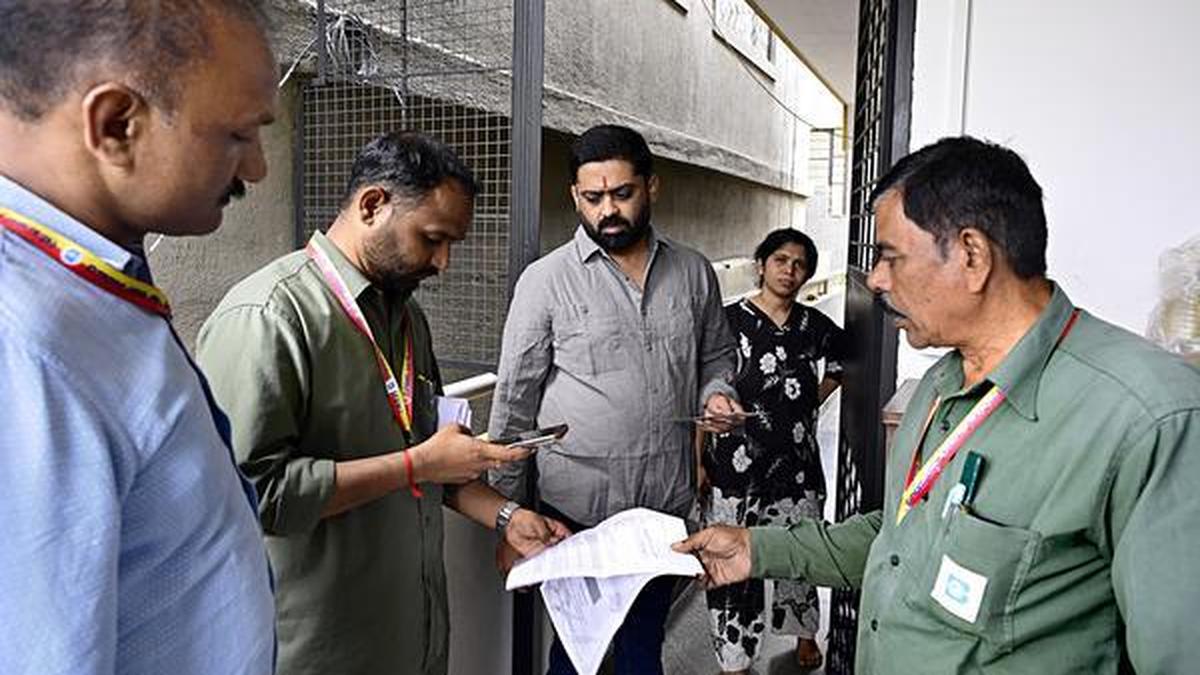
More than 1.42 lakh beneficiaries in the Bangalore Electricity Supply Company Limited (Bescom) jurisdiction refused to take part in the Gruha Jyothi door-to-door survey, which wrapped up on October 31, according to sources in the Energy Department.
The refusals are a striking number in a survey that otherwise came close to full coverage. Of the 74,29,773 houses in the Bescom area, 73,78,352 were surveyed. That works out to 99.31% of the total, leaving the vast majority of households inside the process.
The gap sits in the consumers who declined to engage. Sources told the Energy Department that the beneficiaries had refused to provide the documents required for the survey. The department’s sources did not describe any further reasons in the material available, and the account stops at the refusal itself.
The survey was not limited to one group of power consumers. It covered those under the Bhagya Jyothi, Kuteera Jyothi and Amrutha Jyothi schemes, which means the exercise reached households across several electricity programmes rather than a single category.
How the other power companies fared
Bescom was not the only distribution company running the exercise. The other electricity supply companies, known as Escoms, include Hescom, Gescom, Mescom and CESC. Each of them surveyed between 98% and 99% of its beneficiaries.
Those figures place Bescom’s 99.31% at the top of the range, even with the refusals counted. The comparison shows that the resistance was concentrated in one part of the state’s power network rather than spread evenly across all of it, though the source does not break down refusals by company beyond the Bescom figure.
A timeline that kept slipping
The survey began on July 1. It was originally scheduled to conclude in August, which means the exercise was planned to run for roughly a month and a half before the first deadline arrived.
That deadline did not hold. The survey’s completion date was extended twice, once in September and again in October, before the door-to-door work ended on October 31. Each extension gave field teams more time to reach households that had not yet been surveyed.
The repeated extensions matter because they show that the timeline was adjusted to get the coverage numbers up. Even with two rounds of extra time, more than one lakh beneficiaries in Bescom’s area still declined to take part, according to the figures reported.
Sources in the Energy Department said beneficiaries had refused to provide the documents required for the survey.
That single line carries the core of the story. The survey was designed to collect documents from beneficiaries, and a large group chose not to hand them over. The source material does not say how many of those refusals were tied to specific documents, or whether the households will be contacted again.
What the numbers do and do not say
The reported figures are clear on three points. About 1,42,978 beneficiaries in the Bescom jurisdiction refused to participate. Bescom surveyed 73,78,352 of its 74,29,773 houses. The other Escoms surveyed 98% to 99% of their beneficiaries.
What the figures do not show is equally important. The material does not explain how the refusal count relates to the number of houses that went unsurveyed in Bescom’s area, and it does not provide an official statement on the reasons behind the refusals. Readers are left with the numbers and the account from Energy Department sources, without a formal explanation from the department on the record in the report.
That gap is where the next questions will come from. Whether the refusals will affect how the scheme is administered, or whether beneficiaries who did not provide documents will face any change in status, are points the report does not address.
For now, the headline finding is simple and hard to ignore. A survey that reached more than 99% of Bescom’s houses still left more than one lakh beneficiaries outside the process, after the deadline was pushed back twice and the work ran from July into the end of October.
TL;DR
- More than 1.42 lakh Bescom beneficiaries refused to take part in the Gruha Jyothi survey.
- The door-to-door survey ended on October 31, after two deadline extensions.
- Bescom surveyed 73,78,352 of 74,29,773 houses, which is 99.31% of the total.
- Energy Department sources said beneficiaries refused to provide the documents the survey required.
- Other Escoms, including Hescom, Gescom, Mescom and CESC, surveyed 98% to 99% of beneficiaries.
- The survey began July 1 and was originally scheduled to conclude in August.