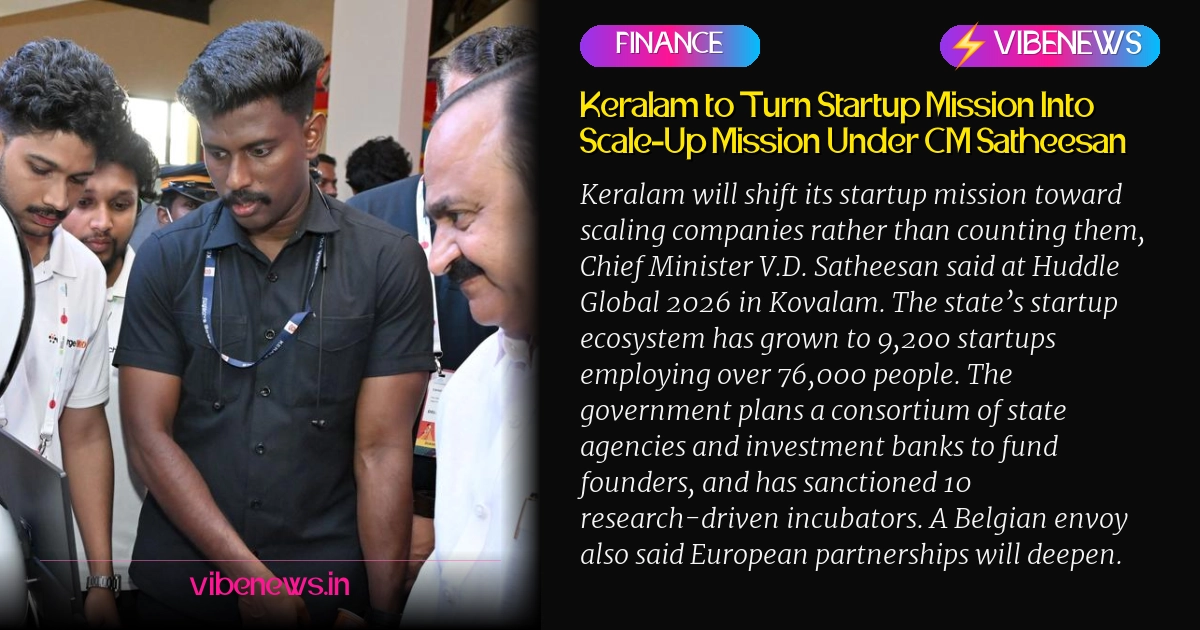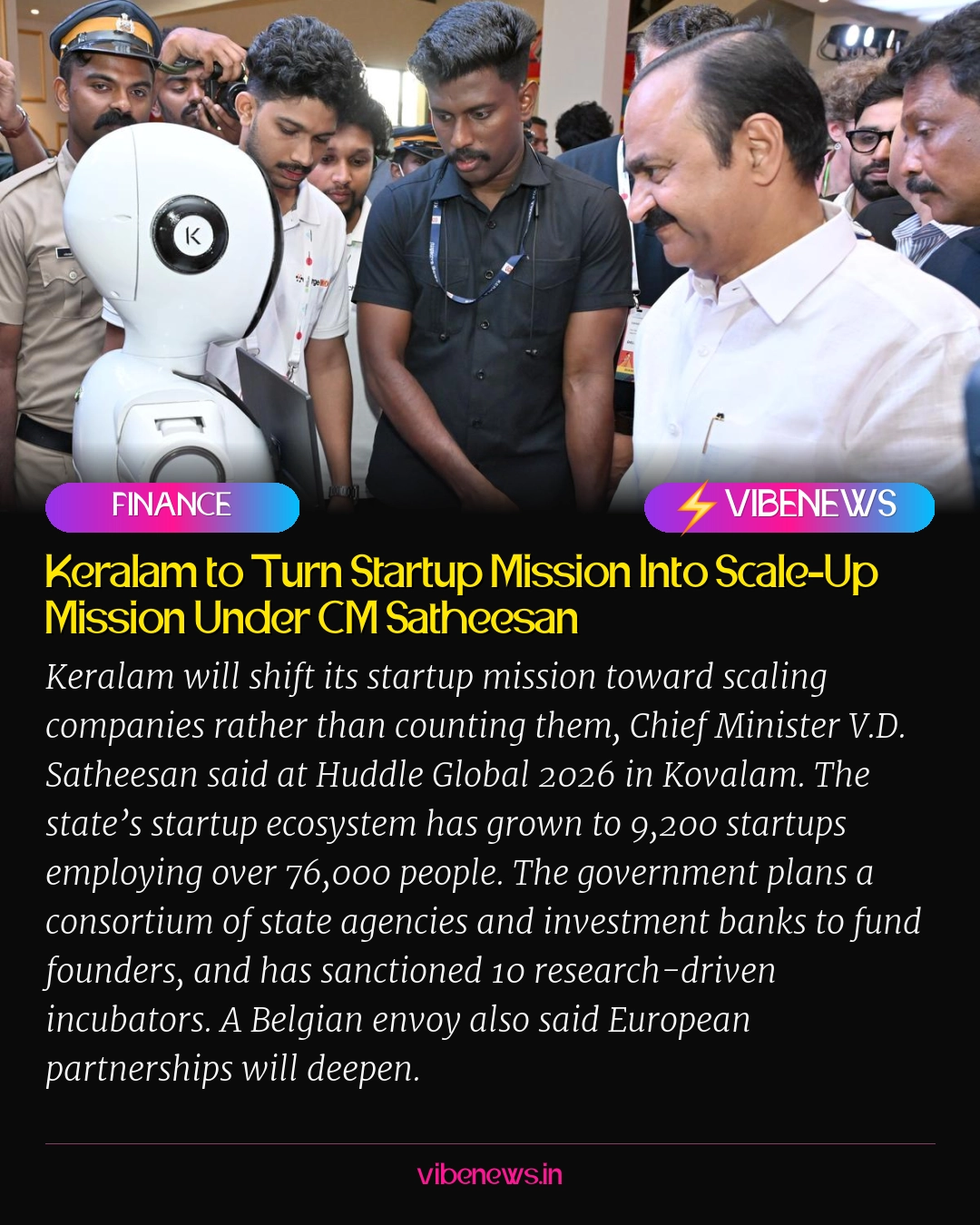
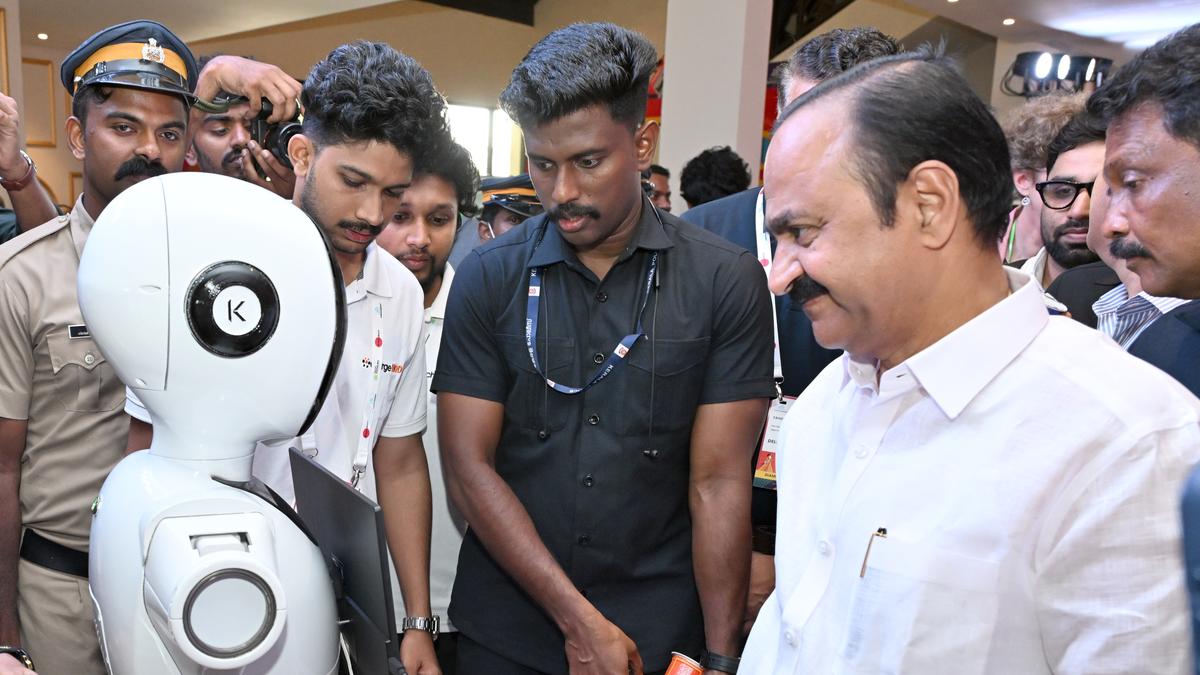
Keralam will transform its start-up mission into a scale-up mission, Chief Minister V.D. Satheesan said on Thursday while inaugurating the eighth edition of Huddle Global 2026 in Kovalam, Thiruvananthapuram. The three-day event is organised by the Kerala State Startup Mission (KSUM), and the government’s message was clear: the state wants fewer headline numbers and more companies that actually grow.
The state has a track record to build on. Keralam became the first State in India to adopt a structured approach to technology entrepreneurship through its technology start-up policy of 2014. Satheesan said the fire lit by that policy has spread, with the start-up ecosystem now growing to 9,200 start-ups employing over 76,000 people.
From counting startups to counting winners
The Chief Minister was direct about where he wants the state to go next. Starting companies is no longer the main measure of success, he argued. Survival and growth are.
"The world does not judge an ecosystem by how many start-ups it has, but by how many succeed."
Satheesan said the state has spent recent years encouraging more innovators to become entrepreneurs. The next phase, he said, will focus on giving those founders deeper support so they can actually succeed. He framed that support in three parts: sufficient funding, mentorship and institutional support.
He also set a concrete benchmark. Keralam needs more than 100 start-ups reaching ₹100 crore in revenue, he said. Such success stories, in his view, will motivate more entrepreneurs to take the leap.
A funding consortium aimed at scaling
The most specific policy announcement was a plan to build a consortium of State agencies. Satheesan said the government will set up a group that includes the Kerala Financial Corporation (KFC), the Kerala State Industrial Development Corporation (KSIDC) and investment banks. The goal is to make sure startups can get the money they need to turn ideas into products and then scale them on a global level.
The source material does not say how the consortium will be funded, how it will be structured in detail, or when it will begin operating. Those details will matter to founders and investors deciding whether the plan changes the picture on the ground.
Satheesan also linked the startup push to other state initiatives. He said the government’s transformative programmes, Mission Samudra and the Silver Economy, could be correlated with the innovation ecosystem. In his telling, those sectors open plenty of opportunities for startups to build products and businesses.
Incubators built around existing strengths
On incubation, Satheesan said the government has already sanctioned 10 research-driven incubators through the Translational Research and Innovation Centre-Kerala (TRIC-K). He said the aim is to strengthen the incubation network across the State.
His description of the design was specific. "We will create world-class incubators each in an institution that already leads in one technology," he said. The approach ties each incubator to an institution’s existing technical depth, rather than spreading resources thinly across every field.
For founders, that means access to research strengths in particular areas. For investors, it offers a clearer map of where technical expertise sits and where early-stage companies may emerge.
A pitch to outside investors
The event also carried a message aimed beyond Keralam’s borders. P.K. Kunhalikutty, Minister for Industries, IT, Future Technology and Start-ups, delivered the keynote address at the opening session. He said the government’s vision is to develop Keralam into a global destination for investment and entrepreneurship.
That ambition was echoed in a special address by Sophie Karlshausen, Ambassador at the Embassy of Belgium. She said the partnership between Keralam’s start-up ecosystem and the European innovation zone is bound to grow further. Keralam-based startups, she added, are well suited, on account of their ideas and talent, to benefit from various European projects.
For global investors and tech professionals, the combination is the signal to watch. A state government is publicly tying its startup policy to revenue targets, a dedicated funding consortium, a network of incubators, and international partnerships. Whether those commitments turn into capital, customers and companies that reach the ₹100 crore mark will be the real test.
TL;DR
- Keralam aims to shift its startup mission toward scaling companies, not just counting them.
- The state’s startup ecosystem has grown to 9,200 start-ups, employing over 76,000 people.
- The government will set up a consortium of KFC, KSIDC and investment banks to fund startups.
- CM Satheesan wants more than 100 start-ups reaching ₹100 crore in revenue.
- 10 research-driven incubators have been sanctioned through TRIC-K.
- A European partnership push was flagged by Belgium’s ambassador at Huddle Global 2026.