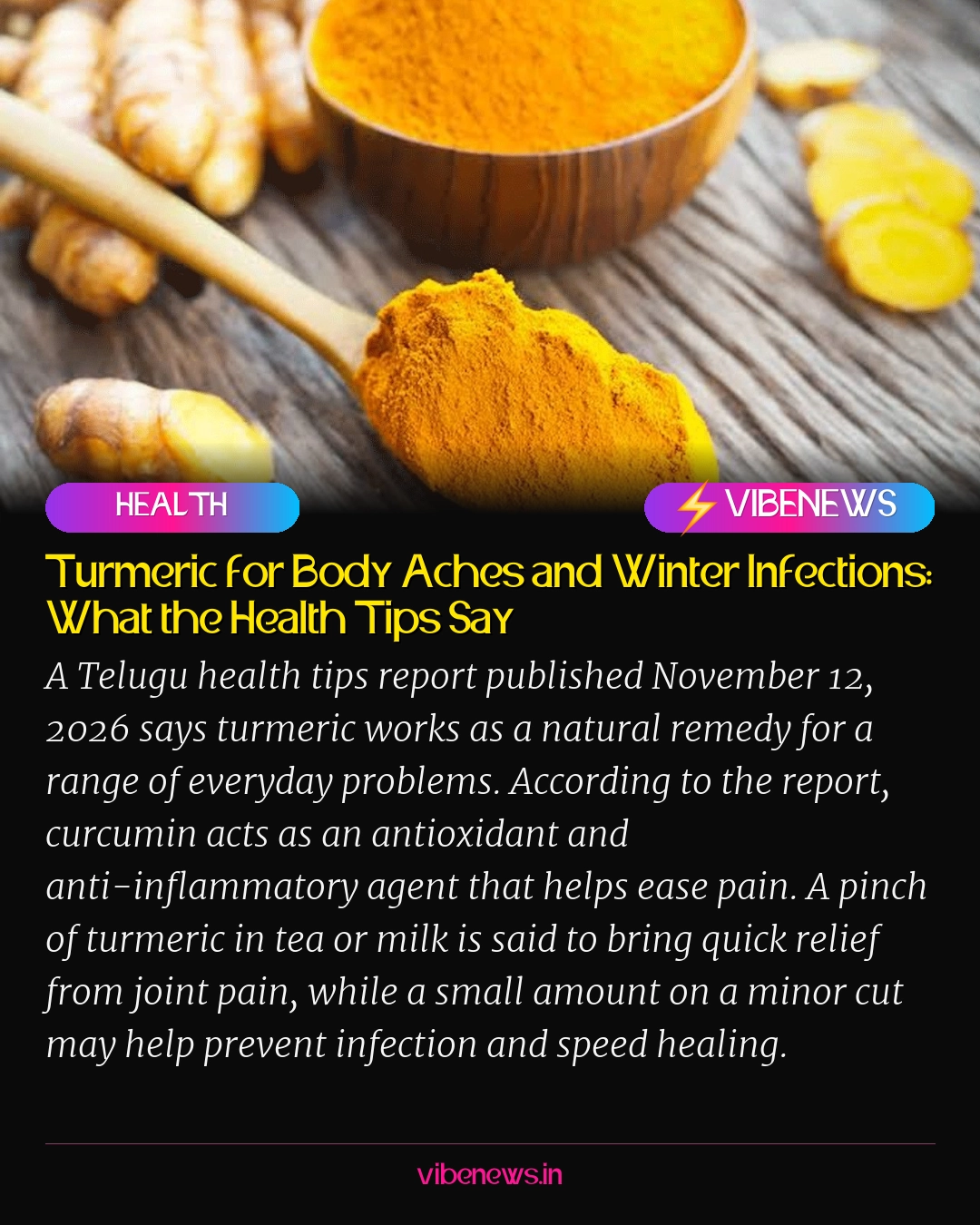

Turmeric works as a natural remedy for body aches, minor infections, joint pain and winter illnesses, according to a Telugu health tips report published on November 12, 2026. The piece presents the yellow spice as a household fix that can be used for several common complaints, and it makes its case one problem at a time.
The report opens with a habit that many families already know. A small pinch of turmeric placed on a minor wound is said to keep it from turning septic and help it heal faster. The article then argues that the spice is especially useful in winter, when seasonal illnesses tend to show up.
Turmeric works like a natural medicine to solve various health problems.
That line sets the tone for the whole piece. The text is written in Telugu, and the sentence above is a translation of the original.
What the report says is inside turmeric
The main active ingredient the article names is curcumin. The report describes it as both an antioxidant and an anti-inflammatory agent. According to the piece, these properties help the body deal with pain, which is the basis for most of the claims that follow.
The article does not go into how curcumin works at a chemical level. It simply presents the compound as the reason turmeric is useful, and it leaves readers to accept that link on the strength of the claim.
Joint pain and everyday aches
Joint pain gets one of the most direct promises in the report. The article says that adding a pinch of turmeric to tea or milk can bring immediate relief from joint pain. It uses the phrase immediate relief, which is a strong claim, but it does not describe how quickly the effect appears or how long it lasts.
Body aches are treated as a related problem. Because the report ties the spice to pain relief in general, it implies that the same kitchen habit could help with soreness across the body. The piece does not separate those cases from joint pain, so readers should treat them as part of the same claim rather than as separate findings.
Infections, cuts and the winter season
The report links turmeric to infection prevention in two ways. On minor wounds, a pinch of the spice is said to stop septic and help the injury close faster. On a broader level, the article describes turmeric as an antiseptic that works well against cold, flu and other seasonal illnesses that become common in winter.
This is where the piece leans most heavily on the season. Winter is framed as the time when turmeric matters most, and the report presents the spice as a practical answer to illnesses that many people deal with in the cold months. The article does not name specific viruses or explain how turmeric would affect them.
Immunity, body heat and the liver
The report also says turmeric produces heat, and it links that quality to better cell function. According to the article, this helps cells work the way they should and strengthens the body’s ability to resist disease. Immunity is the broadest promise in the piece, and it appears alongside the claims about winter illnesses.
The liver is the last major area covered. The report says turmeric’s strong antioxidants can break down toxins, and it describes the spice as helpful in keeping the liver free of poisons. This is one of the boldest claims in the article, and the report presents it without naming a study, a researcher or a clinical setting.
What the article leaves out
The most important thing to notice about this report is what it does not include. It does not cite any clinical trial, medical journal or named expert. It does not mention possible side effects, interactions with medicines, or who should avoid taking turmeric. It also gives no dosage beyond a pinch added to tea, milk or a wound.
Those gaps matter because the article covers a wide set of health problems in one short piece. Body aches, joint pain, infections, winter illnesses, immunity and liver health are all placed under one remedy. Readers who want to try the advice should understand that the report describes what turmeric is said to do, not what medical research has confirmed.
The article is also written in Telugu, which makes it directly relevant to readers in Andhra Pradesh and Telangana who look for health guidance in their own language. Families in both states often rely on kitchen remedies alongside advice from doctors, so the report speaks to a familiar habit. That is exactly why readers should check any health change with a qualified doctor before acting on it, especially for ongoing joint pain, persistent infections or liver concerns.
How to read the claims
For ordinary readers, the simplest way to approach the report is to separate the household use from the medical promise. Adding turmeric to food or drink is a common habit in many homes. Using it as a treatment for an infection, a joint condition or a liver problem is a different matter, and the article does not offer evidence that would settle that question.
The report is useful as a snapshot of how turmeric is talked about in everyday health advice. It shows why the spice has such a strong reputation, and it captures the way many families describe its benefits. Still, the article is a set of claims and folk wisdom presented in a single feature, so it should be read as a starting point rather than a verdict.
Readers curious about turmeric can keep the core facts in mind: the report names curcumin as the key compound, it ties the spice to pain relief and winter health, and it makes strong claims about infections, immunity and the liver without citing any research behind them.
TL;DR
- Telugu health tips report, published November 12, 2026, says turmeric helps with body aches, joint pain and infections.
- The report names curcumin as the key compound, describing it as an antioxidant and anti-inflammatory agent.
- A pinch of turmeric on a minor wound is said to prevent septic and speed healing.
- The article says turmeric helps against winter colds and flu and supports immunity.
- The report claims turmeric helps the liver remove toxins, but cites no studies or experts.
- It gives no dosage guidance or side effect warnings, so readers should consult a doctor first.