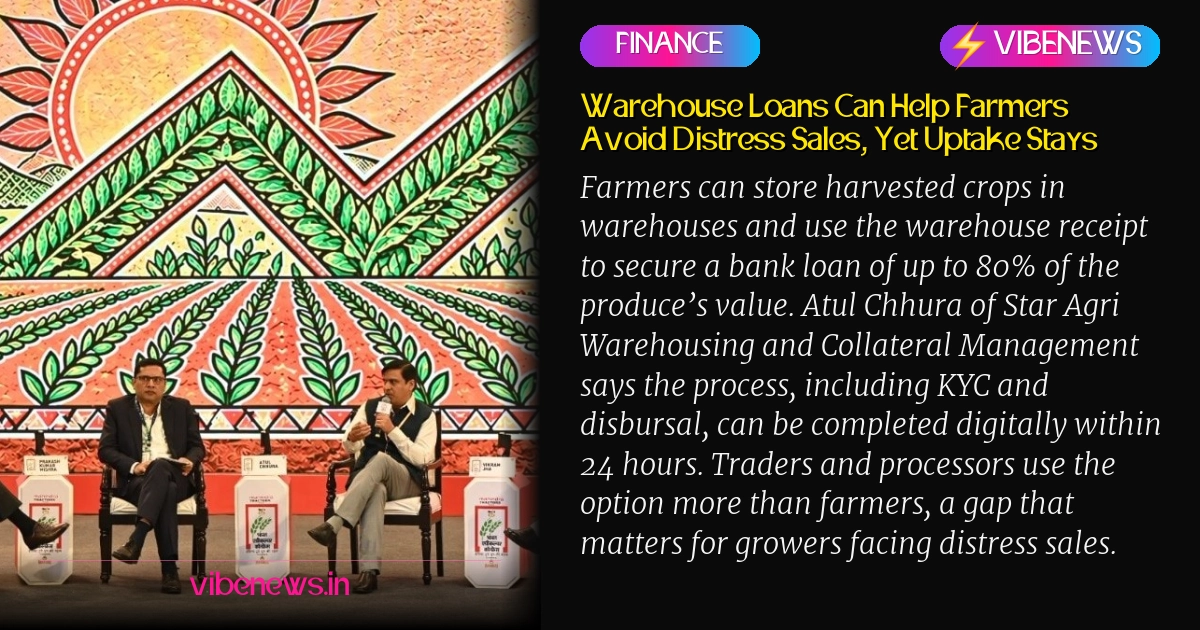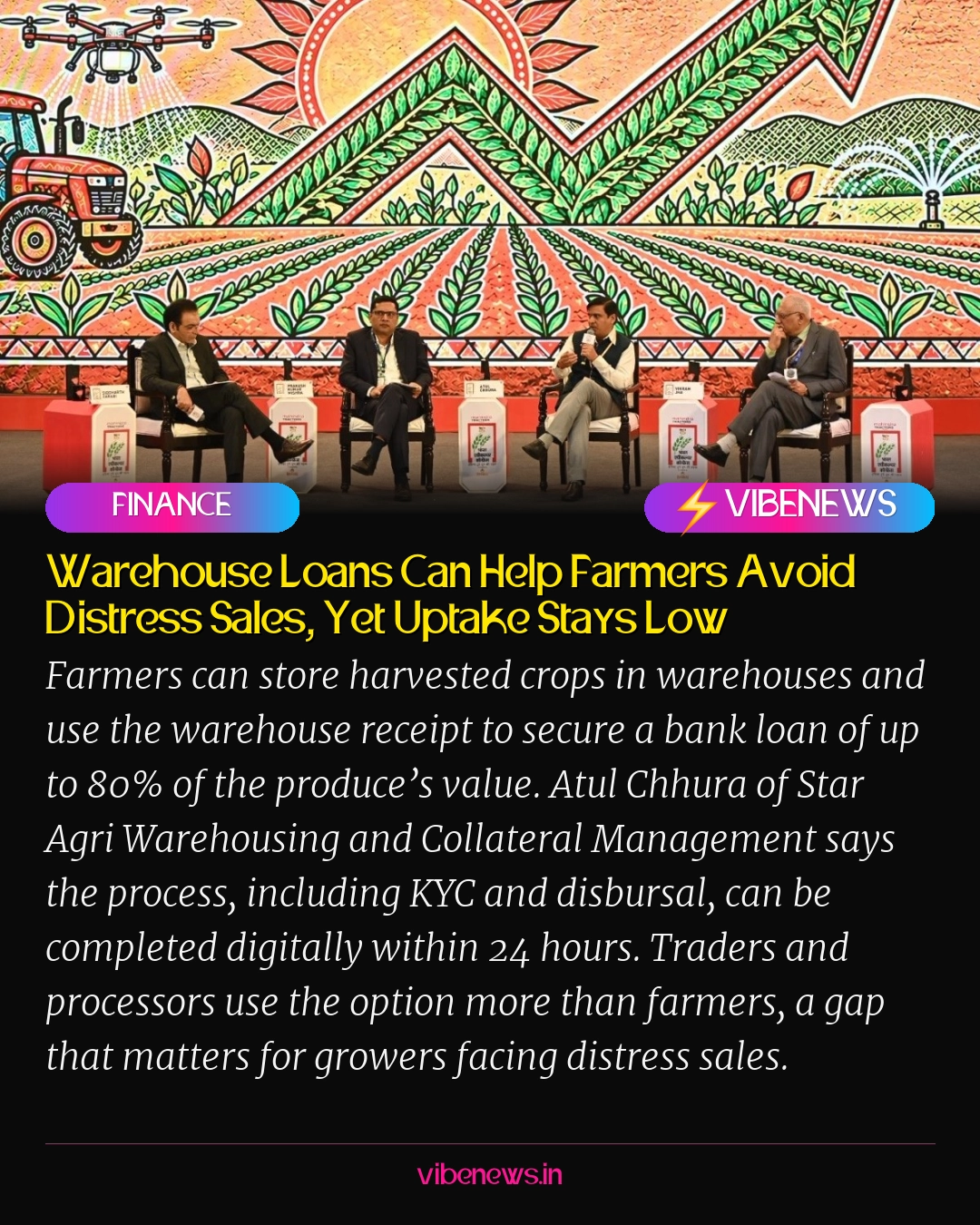

Farmers who need cash after harvest may not have to sell their crops the moment they are cut. They can store produce in a warehouse, use the warehouse receipt to secure a bank loan, and access funds while they wait for better terms to sell. Atul Chhura of Star Agri Warehousing and Collateral Management laid out the process at the India Today Kisan Tak Conclave 2026, and his core message was simple: the option exists, but the people it was designed to help are not using it much.
The lending figure is the number that changes the math for a grower. Chhura said banks can lend up to 80% of the value of the stored produce against warehouse receipts. A farmer holding harvested crops can therefore borrow against a large share of their worth without handing over the stock at the point of harvest, when prices and cash pressure often push sellers into quick deals.
Speed is the other selling point. According to Chhura, the entire process, covering farmer KYC, opening a loan account and disbursal, can be completed digitally within 24 hours. For a family facing an urgent bill or an input cost that cannot wait, a timeline measured in hours rather than weeks changes the decision about when to sell. Money in hand gives a farmer room to negotiate instead of accepting the first offer.
That is the practical meaning of avoiding distress sales. A distress sale happens when a farmer must sell because cash is needed now, not because the price is right. Warehouse receipt financing, as Chhura described it, offers another route to credit after harvest. The crop can stay in storage, and the sale can wait. The tool does not remove market risk, but it separates the need for cash from the need to sell the same day.
The catch is who is actually using it. Chhura pointed out that traders and processors use this financing option more than farmers. The source material does not put a figure on that gap, so the observation carries the weight here rather than a measured percentage. Still, when the businesses that buy and process crops are the main borrowers, the facility is working for the middle of the chain more than for the person who grew the harvest.
Traders and processors use this financing option more than farmers.
That imbalance is what makes the gap worth attention. The same warehouse receipt that lets a trader finance stock could also let a farmer hold back produce and borrow against it. Chhura’s point was not that the product is unsuitable for farmers. It was that the financing exists, can be arranged quickly, and still sits largely outside the hands of the growers who might need it most during the post-harvest period.
The conclave framing matters too. Chhura’s remarks came at an event focused on farmers, and his warning about low uptake was aimed squarely at that audience. The message for growers is practical: ask whether storage and warehouse receipts are available to you, and whether a bank will lend against stored produce, before deciding to sell at harvest. For policymakers and lenders, the question is why a process that can be completed digitally in a day has not yet reached the people it was meant to serve.
The video this story is based on is a business segment from India Today, so the full discussion may contain details beyond the points summarised here. What is clear from the available material is the core tension. The credit tool is in place, the lending limit is high, and the process is fast. What is missing is wider adoption among farmers, and that gap is where the next chapter of this story will likely be written.
TL;DR
- Banks can lend up to 80% of the value of stored produce against warehouse receipts, letting farmers avoid selling at harvest.
- Atul Chhura of Star Agri Warehousing said the full loan process can be completed digitally within 24 hours.
- Farmer KYC, loan account opening and disbursal are all part of the digital process described at the conclave.
- Chhura pointed out that traders and processors use this financing option more than farmers do.
- The adoption gap matters because warehouse receipt financing gives farmers another route to credit after harvest.