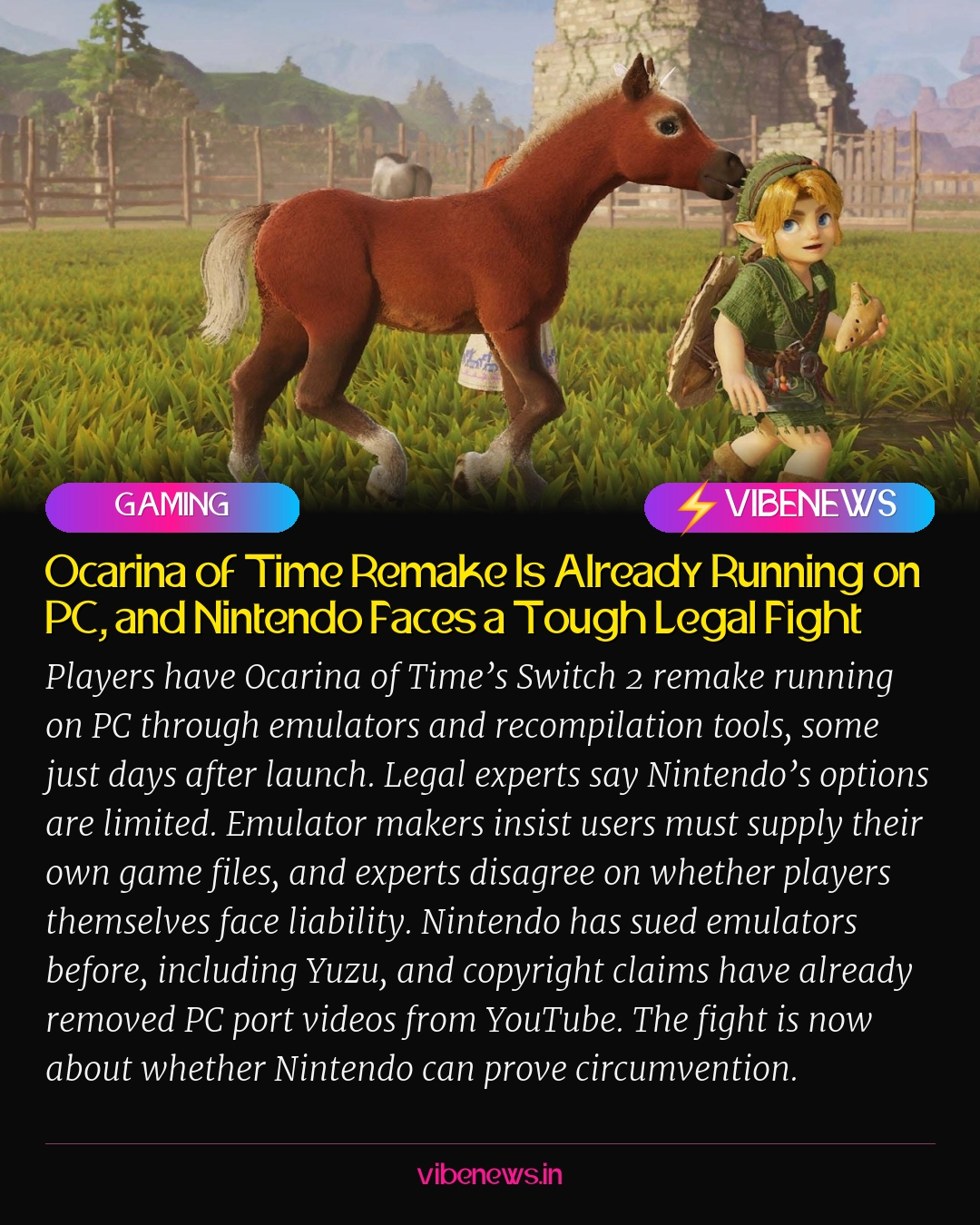
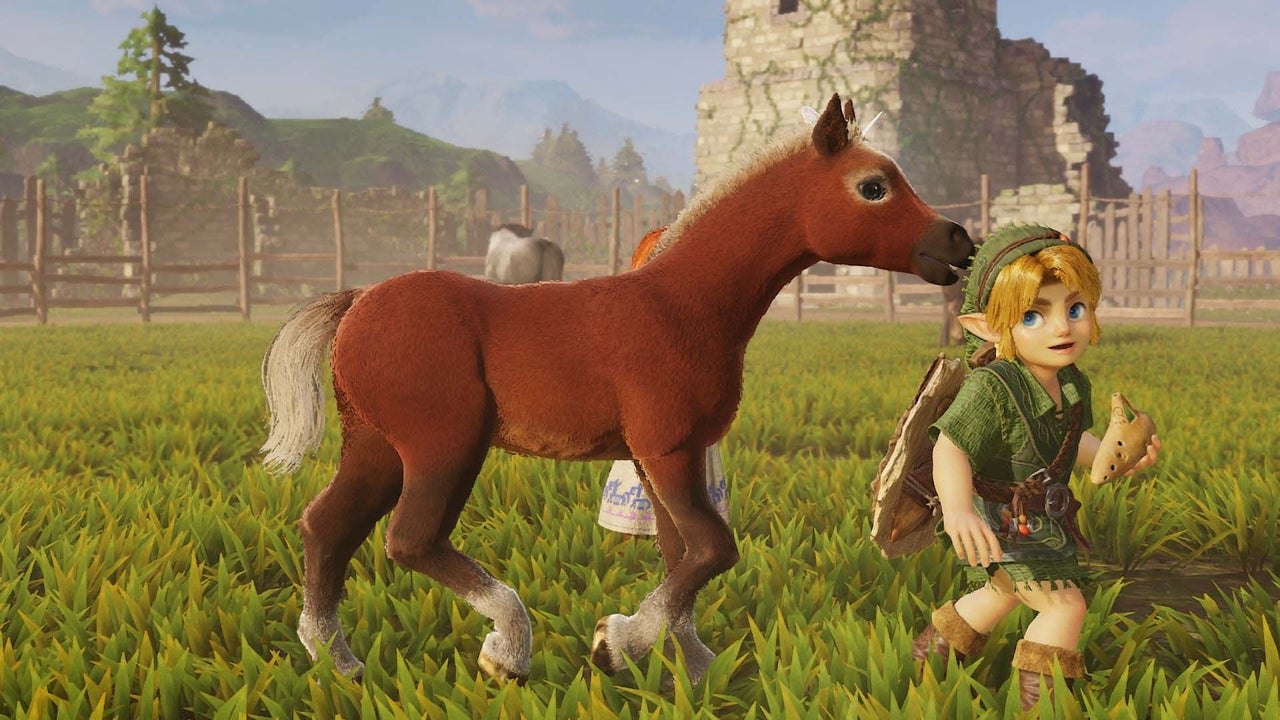
Fans have already got The Legend of Zelda: Ocarina of Time remake running on PC, using emulators and recompilation tools that appeared shortly after the Switch 2 release. Some players have even set up an unofficial multiplayer version, and Nintendo has started seeing videos of the PC port pulled from YouTube over copyright claims.
The people behind these tools say they will not hand over the game itself. Emulators and recompilation software, they argue, need users to supply their own game files, so nothing works out of the box. That is a thin shield, and everyone we spoke to knows it. The bigger question is whether Nintendo will go after the developers at all, and the answer from legal experts is more complicated than most fans would expect.
Nintendo has a reputation for going after emulators. It has sued them before and recently began taking down Switch 2 emulators earlier this month. Many assumed a crackdown on the Ocarina of Time PC scene would follow quickly. Legal experts see it differently.
Emulators may be on solid legal ground
Kirk Sigmon, founding partner at KellDann Law, believes the basic setup is what matters most. An emulator is a piece of software that runs games you have to provide separately. “At least in theory, the law is very favorable towards emulators,” he said.
He pointed to a 2000 case in which Sony tried and failed to sue the creator of an original PlayStation emulator. Sigmon said that case shows emulators can be legal on their own, and that reverse engineering game consoles can also be legal, even when it might otherwise arguably infringe copyright. That reasoning could cover the tools now running Ocarina of Time on PC, including the popular new emulator Lichii.
Sigmon added a condition. If the tool was developed with AI and without stealing trade secrets, and if it never includes Nintendo’s other intellectual property, “it’ll be hard to stop.” Zohaib Hashim, CEO of Blackmont Legal, agreed that emulator makers are not automatically breaking copyright law just by building and supplying emulator software. He also cited the Sony case and said there is established case law going back years.
Michael Dilworth, managing partner of Dilworth IP LLC, offered a more cautious view. He said emulation itself is not inherently unlawful under U.S. copyright law. The trouble, in his view, lies with the Digital Millennium Copyright Act, which limits circumventing technological protections and distributing certain circumvention technologies. Insisting users supply their own game files “only gets them so far,” he said.
Nintendo’s likely strategy
Sigmon was blunt about what he expects Nintendo to do. The company will look for any possible reason to act, he suggested, including accidental use of an art or music asset, an inadvertent logo, or evidence of stolen trade secrets. He even raised the chance that Nintendo could go after creators for related activity, such as uploading videos of emulated game content to YouTube.
“Nintendo is absolutely going to try to shut Lichii and/or the decompilation teams down,” he predicted.
Sigmon also noted the commercial pressure. Some players are already enjoying the remake on their computers only days after release, and that cannot be good for the game’s sales targets.
Dilworth thinks the DMCA route is where Nintendo could make real progress. He said the company relied heavily on that statute in its case against Yuzu, and its recent enforcement suggests circumvention still sits at the center of its legal approach. Instead of simply objecting that emulators exist, Nintendo could examine how these tools actually work.
What about the people playing the game
The legal picture gets murkier when it comes to individual players. Switch 2 owners agree to an end-user licence agreement, or EULA, and decompiling a legitimately purchased game could break it. Sigmon did not think Nintendo has much to stand on there. The EULA is just words on a page, he argued, and enforcing it would mean going to court or arbitration, which brings its own hurdles. He also raised the possibility of someone buying a Switch 2 for reverse engineering without ever agreeing to the EULA.
Hashim came at the issue from a different angle. He argued that circumventing DRM protections counts as infringement, and that there is no permitted purpose for decompiling the code in this way. Decompiling may also violate Nintendo’s EULA and terms of service, which would let the company cancel the licence of the infringing party. He stressed that this applies whether you bought the game physically or digitally, because either way you purchased a licence.
Marcus Denning, principal and senior lawyer at MK Law, made a similar point. Owning a legitimate copy does not necessarily give a user permission to bypass a console’s technical protections, he said, and that holds even if you never share the files with anyone. Copyright law covers activities like reproducing and distributing protected works, and separate provisions may apply when technological measures controlling access are bypassed. How the emulator works and how users reach the game files both matter.
Sharing instructions is its own gray area. Sigmon said content creators could in theory be free to post videos showing how they got a legally purchased copy running on PC. Dilworth was more wary. Explaining how software works is not necessarily unlawful, he said, but distributing tools or instructions designed specifically to defeat technological protections can raise additional concerns under the DMCA.
The Yuzu precedent
Nintendo has already shown it can win against an emulator. Yuzu was shut down after Nintendo sued, and the outcome included a $2.4 million payout in Nintendo’s favor. Sigmon said the case, Nintendo of America v. Tropic Haze LLC, focused on Yuzu decrypting game files immediately before and during runtime, using copies of Nintendo Switch-derived cryptographic keys. If Nintendo wants to make the same argument against the Ocarina of Time tools, it would need to prove those tools are actively bypassing protections. Sigmon said it is “unclear” whether that would work.
He argued that AI-based development has made it far easier to build emulators without needing to circumvent anything or steal trade secrets. He also said current Switch 2 ROMs floating around appear to be already decrypted. If Lichii only plays those files without circumvention, Sigmon believes it could be in a stronger position than Yuzu was.
Dilworth raised a different concern. Some projects, including Lichii, are built on Yuzu’s work, and that connection could come up in court. He noted Nintendo pursued Yuzu’s developer in 2024, but the case was resolved without a trial, so it did not establish that video game emulators are generally unlawful. Using code derived from Yuzu does not automatically make Lichii illegal, he said. If Lichii keeps functionality Nintendo previously challenged, Dilworth expects similar arguments. He also said Lichii has “good reason to be concerned.”
The legal picture, then, is unsettled. Emulators themselves look defensible, players face murkier exposure, and the real battleground may be the anti-circumvention rules that Nintendo has used before. Whether the company moves against the Ocarina of Time PC tools will depend heavily on how they were built, and on whether any Yuzu-derived code or protection-bypassing features made it into the final product.
TL;DR
- Ocarina of Time remake players have been running the game on PC through emulators and recompilation tools shortly after launch.
- Nintendo has sued emulators before and recently began taking down Switch 2 emulators, but experts say a crackdown is not clear-cut.
- Legal experts say emulators are likely defensible, provided they do not include Nintendo IP or circumvent protections.
- Users may face murkier exposure, since EULA enforcement and DMCA questions could come into play.
- Nintendo won the Yuzu case with a $2.4 million payout, but Lichii may be on different legal ground.
- Copyright claims have already removed some videos of the Ocarina of Time PC port from YouTube.