TL;DR
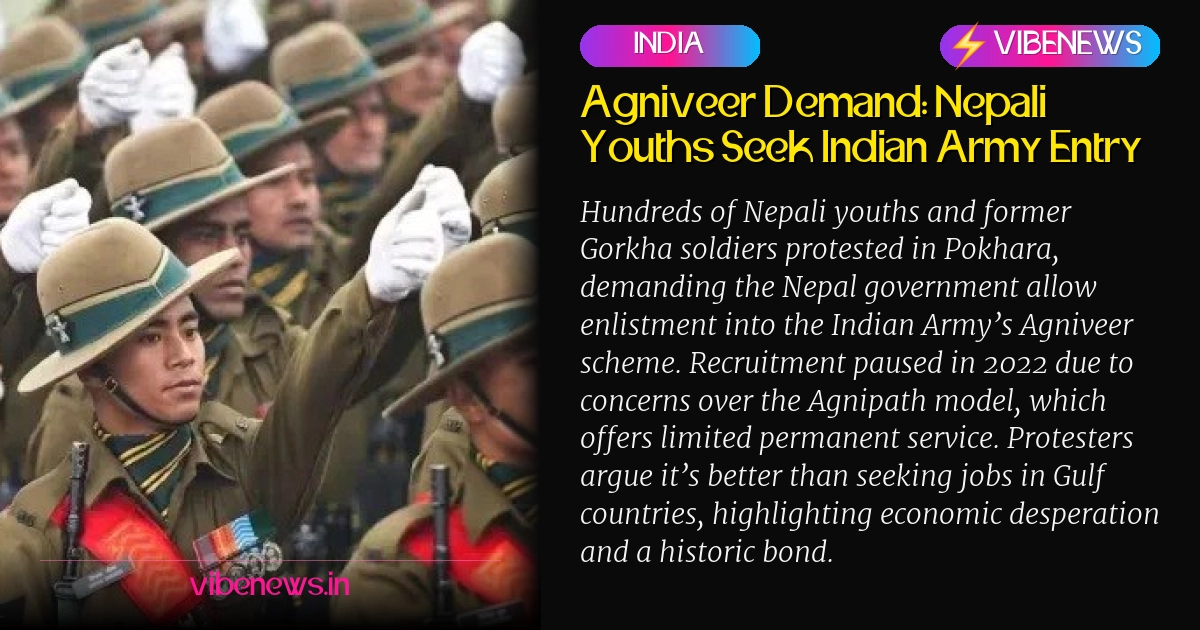
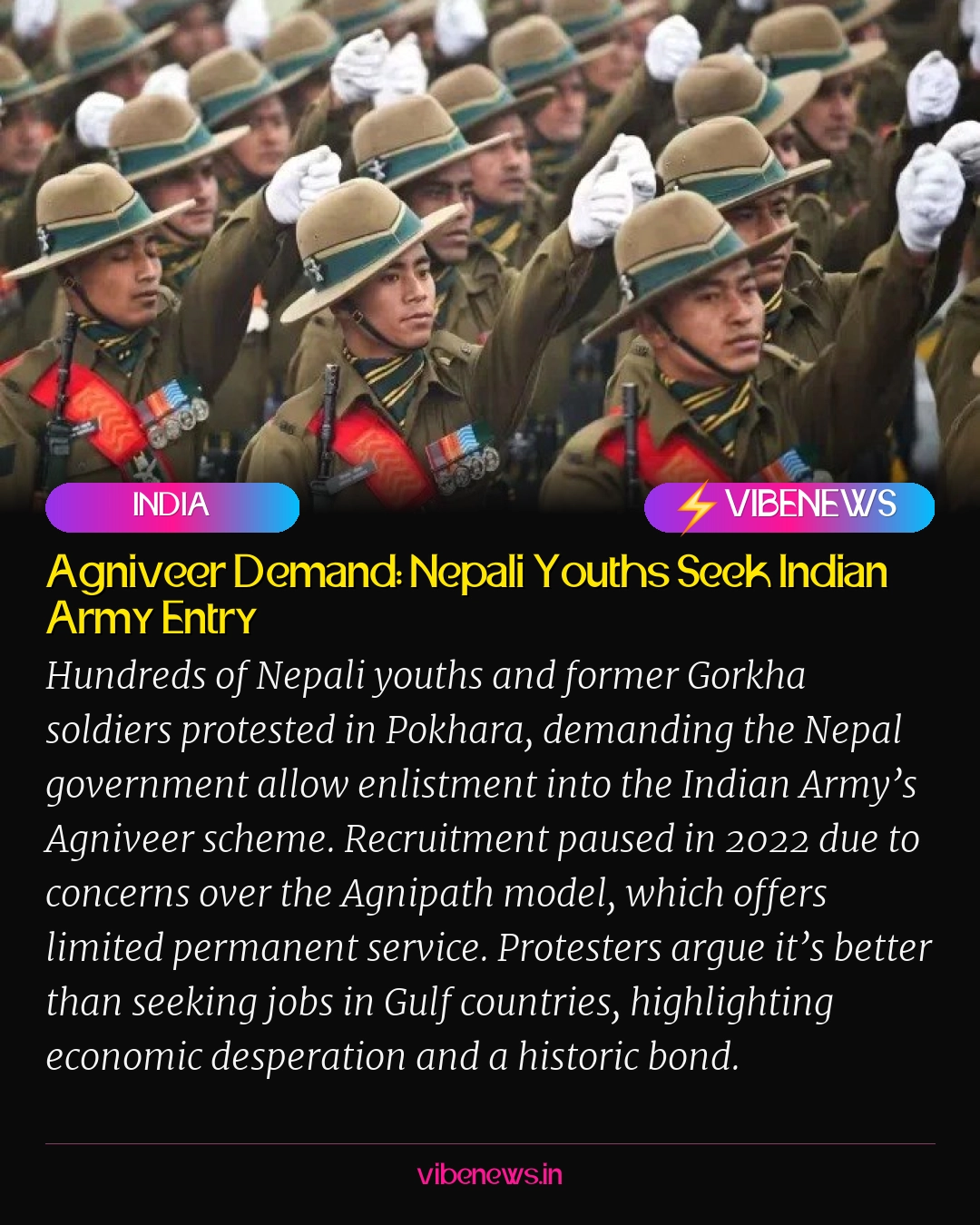
- Nepali youths and former Gorkha soldiers protested in Pokhara, Nepal, demanding the resumption of Agniveer recruitment into the Indian Army.
- Nepal halted recruitment in 2022, citing the Agnipath scheme’s inconsistency with the 1947 Tripartite Agreement between India, Nepal, and Britain.
- The Agnipath scheme offers a four-year tenure, with only 25% of recruits retained for permanent service and no pension for the majority.
- Protesters highlighted limited employment opportunities in Nepal, preferring Indian Army service over seeking jobs in Gulf countries.
- The protest, organized by the Indian Ex-Servicemen Gorkha Brigade Nepal, occurred ahead of Indian Army Chief General Dhiraj Seth’s visit to Nepal.
- Key demands included immediate recruitment resumption and safeguarding organizations representing former soldiers’ rights and dignity.
Nepali youths, joined by former Gorkha soldiers and their families, recently staged significant protests in Pokhara, Nepal. Their unified demand was clear: allow Nepalese citizens to enlist as Agniveers under the Indian Army’s Agnipath scheme. This demonstration underscores a deep-seated desire for economic opportunity and a continuation of a historic military tradition that has long bound India and Nepal.
The Agnipath Scheme: A New Paradigm
The Agnipath scheme, introduced by the Indian government in 2022, represents a significant shift in military recruitment. Under this model, recruits, known as Agniveers, serve for a period of four years. Crucially, only up to 25 percent of these recruits are retained for permanent service, while the remaining 75 percent are discharged with a one-time lump-sum payment. These discharged individuals do not receive pensions or other long-term career benefits, a departure from previous recruitment models.
Kathmandu’s Reservations and the 1947 Pact
The Nepali government subsequently suspended the recruitment of its youths into the Indian Army following the introduction of Agnipath. Kathmandu argued that the scheme was inconsistent with the provisions of the 1947 Tripartite Agreement between India, Nepal, and Britain. This agreement governs the terms of Gorkha recruitment, ensuring their rights and welfare. Nepal’s concerns primarily revolve around the short-term nature of the Agnipath service and the lack of post-service benefits, which they believe do not align with the spirit of the long-standing pact.
A Legacy Forged in Service
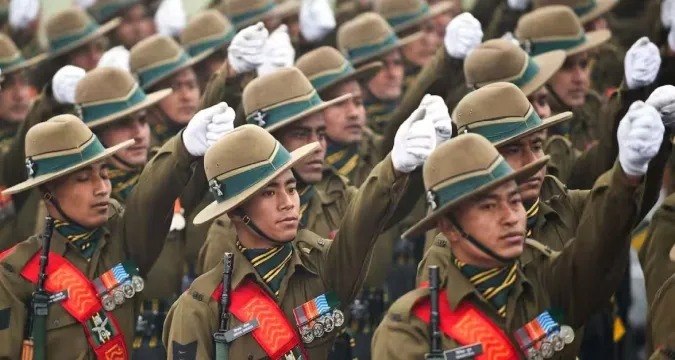
The enlistment of Gorkha soldiers into the Indian Army is not merely a recruitment process; it is one of the strongest shared links between India and Nepal, steeped in over two centuries of tradition. Gorkha regiments are renowned globally for their bravery, loyalty, and professionalism. For generations, joining the Indian Army has provided a stable career path, economic security, and a sense of pride for countless Nepali families. This tradition has fostered deep cultural and familial ties across the border.
Economic Pressures Fueling Aspirations
The protests in Pokhara highlight the severe economic pressures faced by many young people in Nepal. With limited employment opportunities within the Himalayan nation, the prospect of a stable job, even for a four-year term, in the Indian Army holds significant appeal. Protesters explicitly stated that Nepali youths should be allowed to join as Agniveers rather than being compelled to seek often precarious employment in Gulf countries. This sentiment underscores a preference for a familiar, respected, and historically significant career path over distant, culturally disparate alternatives.
The Pokhara Demonstration
The protest march in Pokhara, a major tourism city in western Nepal, was meticulously organized by the Indian Ex-Servicemen Gorkha Brigade Nepal. It saw participation from former soldiers, their family members, and numerous youths who had already undergone training with aspirations of joining foreign armies. Participants carried placards demanding the immediate resumption of recruitment under the Agnipath scheme.
Beyond Recruitment: Protecting Veterans’ Rights
Beyond the core demand for recruitment, protesters also called for the continued registration process for organizations representing former soldiers and bearing the term "ex-servicemen." They emphasized that such organizations are crucial for safeguarding the dignity, rights, and interests of those who have served. The rally, commencing at Pokhara Stadium, culminated at the District Administration Office, where organizers formally submitted a memorandum to the Chief District Officer of Kaski, articulating their grievances and demands to local authorities.
Diplomatic Overtures and Bilateral Ties
These protests gain additional significance as they precede the scheduled visit of Indian Army Chief General Dhiraj Seth to Nepal. Such high-level visits often involve discussions on bilateral defense cooperation and security matters. The timing of the protests suggests an attempt to bring the issue to the forefront of diplomatic discussions, hoping for a resolution that addresses the aspirations of Nepali youths and the concerns of the ex-servicemen community.
Editorial Context
The ongoing debate surrounding Agniveer recruitment for Nepali citizens transcends a mere employment issue; it touches upon the very fabric of India-Nepal relations and the future of a unique military tradition. In the long term, a sustained halt in Gorkha recruitment could erode a significant pillar of bilateral trust and cooperation. Economically, it exacerbates unemployment challenges in Nepal, potentially pushing more youths towards less desirable overseas labor markets. For India, it means a potential loss of access to a historically reliable and highly skilled pool of recruits. The resolution of this issue will require delicate diplomatic negotiations, balancing India’s new recruitment policies with Nepal’s sovereign concerns and the welfare of its citizens. The outcome will not only shape military ties but also influence the broader geopolitical dynamics in the Himalayan region, impacting cultural exchanges and the shared heritage of both nations for decades to come.