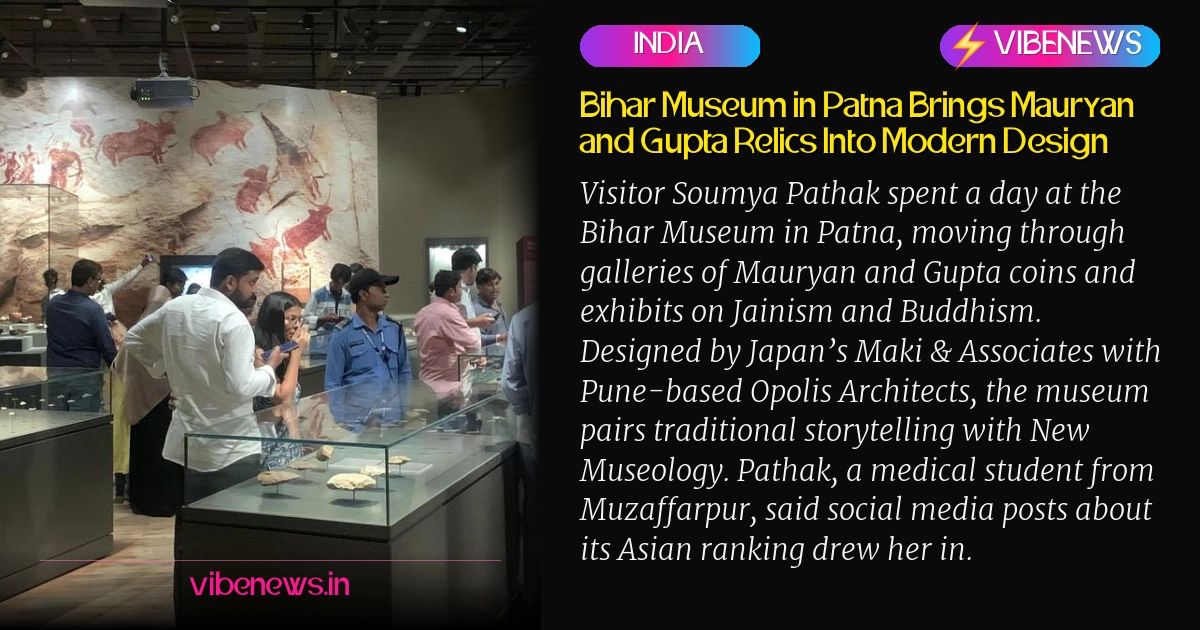
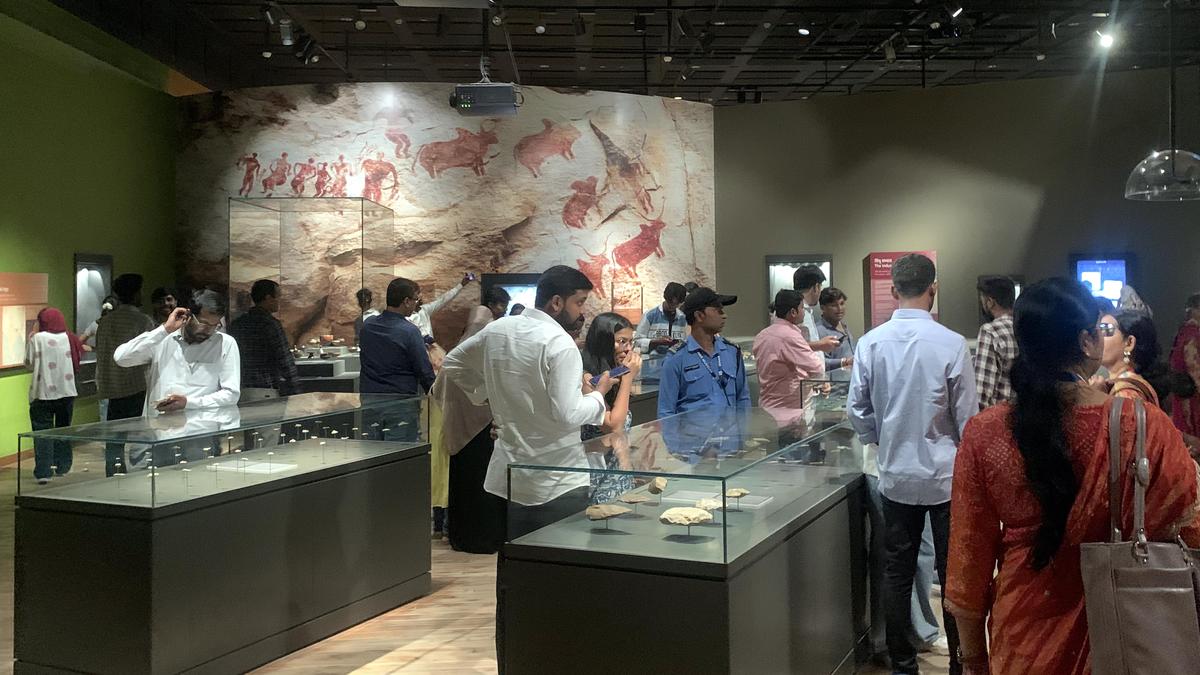
The Bihar Museum in Patna is a building that asks visitors to see the state’s past in a new light. Designed by Japan’s Maki & Associates in partnership with Pune-based Opolis Architects, the museum combines traditional storytelling with the contemporary principles of New Museology. On November 3, one visitor was there to test that idea for herself.
Soumya Pathak, 23, is a final-year medical student at a medical college in Ambala, Haryana. She spent her afternoon among the relics of prehistoric times, stopping at coins from the Mauryan period (321–185 B.C.E.) and the Gupta age (early 4th to mid-6th century C.E.). Each case offered a small, concrete link to rulers and markets that existed more than fifteen centuries ago.
From there, the galleries turn to faith. Pathak moved through interactive displays that highlight Bihar’s pivotal role in shaping two major world religions, Jainism and Buddhism. For a visitor who grew up in the state, the story of how a single region helped set the course of those traditions carries its own weight. Pathak belongs to Muzaffarpur, and she is proud of Bihar in a way that does not depend on the headlines.
Her reason for coming was a familiar one in the age of social media. Pathak said she had wanted to visit for a long time, but a post she read online pushed her to finally make the trip.
“I have been thinking of coming here for a long time, but after reading on social media that the museum is ranked the best in Asia, I decided to spend a day here,” she says.
It is worth being clear about what that line does and does not establish. Pathak’s account is that she read the ranking on social media. The article does not verify the claim, and it is her reason for visiting rather than an independent assessment of the museum. What the visit does show is how a single online mention can turn a plan that has been sitting on the back burner into an actual day out.
Her route to the museum was just as practical. She came straight from Jay Prakash Narayan airport in Patna, roughly four kilometres away, and she was on her way to Muzaffarpur for the Deepavali holidays. A stop at a museum before a family festival is an unusual itinerary, but it fits a pattern of visitors who treat a city’s cultural sites as part of the journey rather than a detour.
Pathak’s pride in her state sits alongside an awareness of how Bihar is usually described outside it. She noted that the state is often in the news for poverty and violence. The museum does not argue with that picture. What it offers is another thread: a record of coins, sculptures and ideas that show the region was once central to the story of two world religions. For Pathak, the experience seemed to make that history feel personal rather than abstract.
The building itself is part of that argument. Maki & Associates and Opolis Architects were tasked with blending traditional storytelling with modern museum thinking, and the result is a space where older narratives are presented through contemporary design. The exhibits, from prehistoric relics to Mauryan and Gupta coinage, follow that same logic, moving from the earliest traces of the region to the religious movements that spread from it.
Patna’s airport, Muzaffarpur and the Deepavali holidays are all part of the everyday rhythm of Bihar. The museum sits within that rhythm, a place where a medical student on a short break can spend an hour or a day with coins that were minted centuries ago. Whether it earns the ranking that drew Pathak in is a question the article leaves open. What it does show is a visitor who came for one reason and left with a clearer sense of why her state’s past still matters.
TL;DR
- Bihar Museum in Patna combines traditional storytelling with New Museology in a building designed by Japan’s Maki & Associates and Pune-based Opolis Architects.
- Visitor Soumya Pathak, a 23-year-old medical student from Muzaffarpur, toured the galleries on November 3.
- Exhibits include Mauryan and Gupta coins, plus interactive galleries on Bihar’s role in shaping Jainism and Buddhism.
- Pathak said a social media post calling the museum the best in Asia convinced her to visit, a claim the report does not verify.
- She came straight from Jay Prakash Narayan airport, about four kilometres away, before heading home for Deepavali.