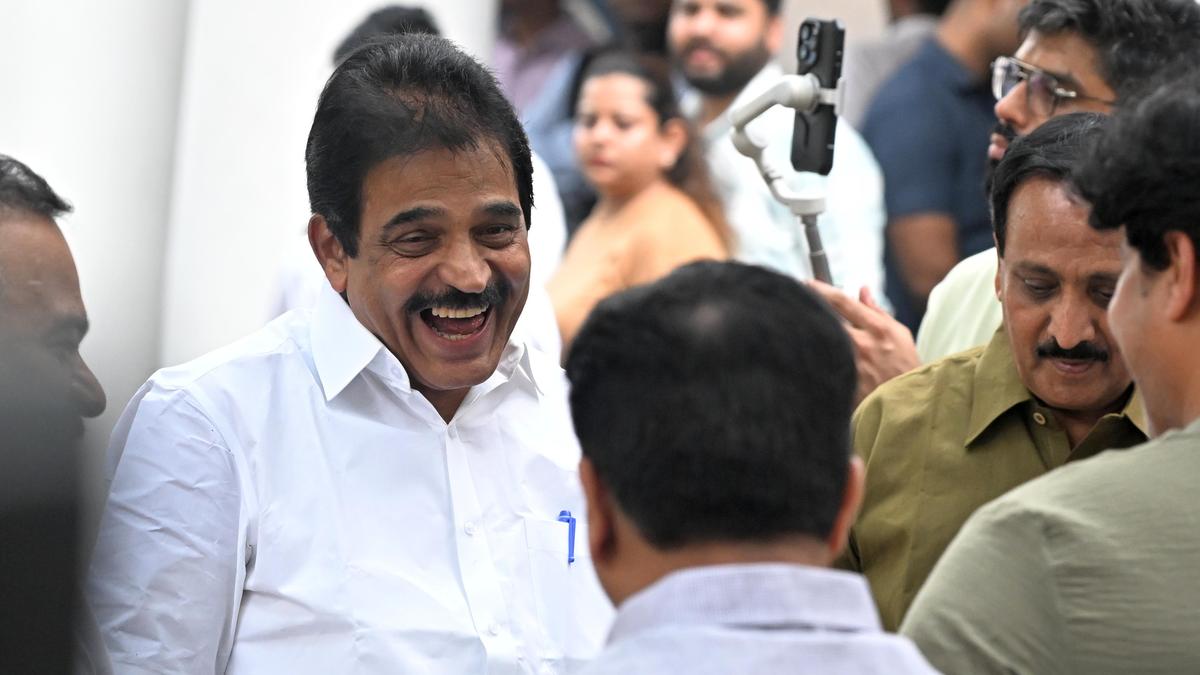
Congress general secretary K.C. Venugopal said on Sunday that the party’s agitation against Chief Election Commissioner Gyanesh Kumar will continue until he is removed from the post. He made the remarks while speaking to reporters in Alappuzha, and his message left no room for a quick truce.
Venugopal said protests were continuing across states and districts, with only a brief pause expected during the Deepavali festival. The movement, in his telling, is not a short burst of anger. It is a sustained campaign that his party intends to keep running through the festive break and beyond.
He pointed to the November 1 rally organised by the Congress in New Delhi as one of the strongest protests the country has witnessed. Venugopal said the party was fighting against Prime Minister Narendra Modi and Union Home Minister Amit Shah. Those are the two most powerful figures in the national government, and the Congress is now framing this fight as a direct confrontation with them.
The core demand
Venugopal’s central demand is clear. He said the party would step back only when Gyanesh Kumar is gone and India’s electoral system is made fair. The line below captures the tone of his remarks.
We will withdraw from this agitation only after Gyanesh Kumar is removed from the post and steps are taken to make India’s electoral system and processes flawless, impartial and fair. This is not a struggle that we will abandon midway.
The electoral roll is where Venugopal’s argument becomes personal for ordinary voters. He alleged that the deletion of names from electoral rolls would deprive poor people of their right to vote. He also claimed they would lose access to various government benefits, which he said were increasingly being linked to voter identity cards. In his account, a deleted name is not a paperwork problem. It is a loss of both a vote and a welfare entitlement.
A campaign built at the booth level
To counter those deletions, Venugopal said the Congress would launch a nationwide ‘Vote Bachao, Desh Bachao’ (Save the Vote, Save the Nation) campaign at the panchayat level over the next one-and-a-half months. The most concrete part of the plan is the appointment of a ‘Vote Rakshak’, or guardian, in every polling booth.
These guardians would scrutinise electoral rolls and identify people whose names had been deleted. They would then visit those people’s homes and help them get their names restored. It is a door-to-door model, and it puts the burden of checking the rolls on local party workers rather than on any formal process Venugopal described.
Congress units are already organising programmes across states and districts, he said. Plans are also being drawn up for joint programmes with other political parties. That detail matters, because it suggests the party wants this to be a broader opposition effort rather than a single-party protest.
Parliament is next
Venugopal said the issue would be strongly raised during the upcoming Parliament session. The Opposition, he added, would take up recent controversies and issues affecting the public. He did not specify which controversies would be raised first.
He also looked back at the previous session. He claimed that Amit Shah could not enter the House for nearly two weeks because of the Opposition’s protests. The claim is Venugopal’s own, and the report presents it as his assertion rather than an established fact.
The Keralam government under pressure
Venugopal was also asked about the functioning of the Keralam government. He said the State had a capable administration and would address the issues raised against it. He acknowledged that isolated incidents and administrative shortcomings were inevitable. He said the government would take appropriate action wherever necessary.
He defended the government’s handling of allegations linking Excise Minister M. Liju to bar owners. Public representatives, he said, are familiar with people in their constituencies, including businesspersons, and that familiarity alone should not be read as wrongdoing.
Venugopal also turned his fire on the former Excise Commissioner, Seeram Sambasiva Rao. In his view, Rao should have raised allegations of corruption in the department while he was still in office. Venugopal said the government had agreed to examine the complaint and take necessary action.
Why this fight matters beyond Delhi
For readers outside India, the story is about who watches the people who run elections. Venugopal’s argument is that the Election Commission’s head has lost the public’s trust, and that the remedy is his removal. Whether or not one accepts that view, the demand puts the independence of the election machinery at the centre of a national argument.
The report does not include a response from the Election Commission to Venugopal’s allegations or to his demand for Gyanesh Kumar’s removal. Without that response, the dispute stays as it was on Sunday: a sitting opposition leader pledging a long fight, and the country’s electoral referee facing public accusations without a direct reply on the record.
What happens next will depend on whether the Parliament session turns Venugopal’s booth-level campaign into a national confrontation. For now, the Congress has set its terms in public, and it has told voters that the protests will not stop until its demand is met.
TL;DR
- Congress says its agitation against CEC Gyanesh Kumar will continue until he is removed from office.
- K.C. Venugopal said the November 1 New Delhi rally was among the strongest protests seen in the country.
- Party plans a ‘Vote Bachao, Desh Bachao’ campaign with a ‘Vote Rakshak’ in every polling booth.
- Venugopal alleged deleted voter names would strip poor people of voting rights and welfare access.
- He said the issue will be raised strongly in the upcoming Parliament session.
- The report includes no response from the Election Commission to the allegations.