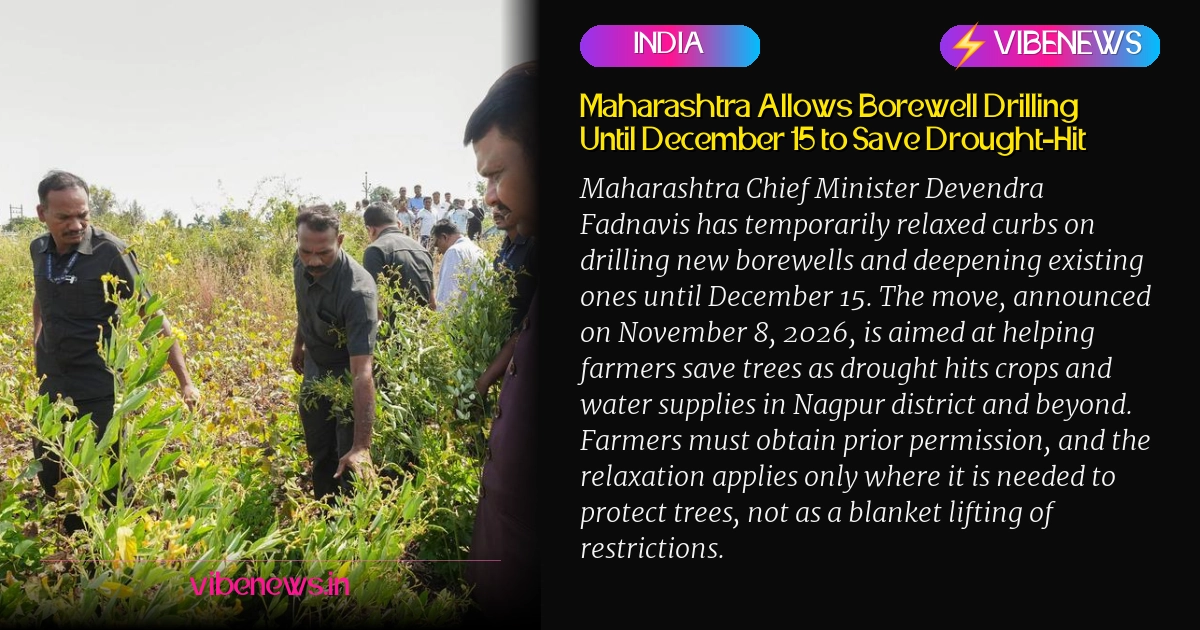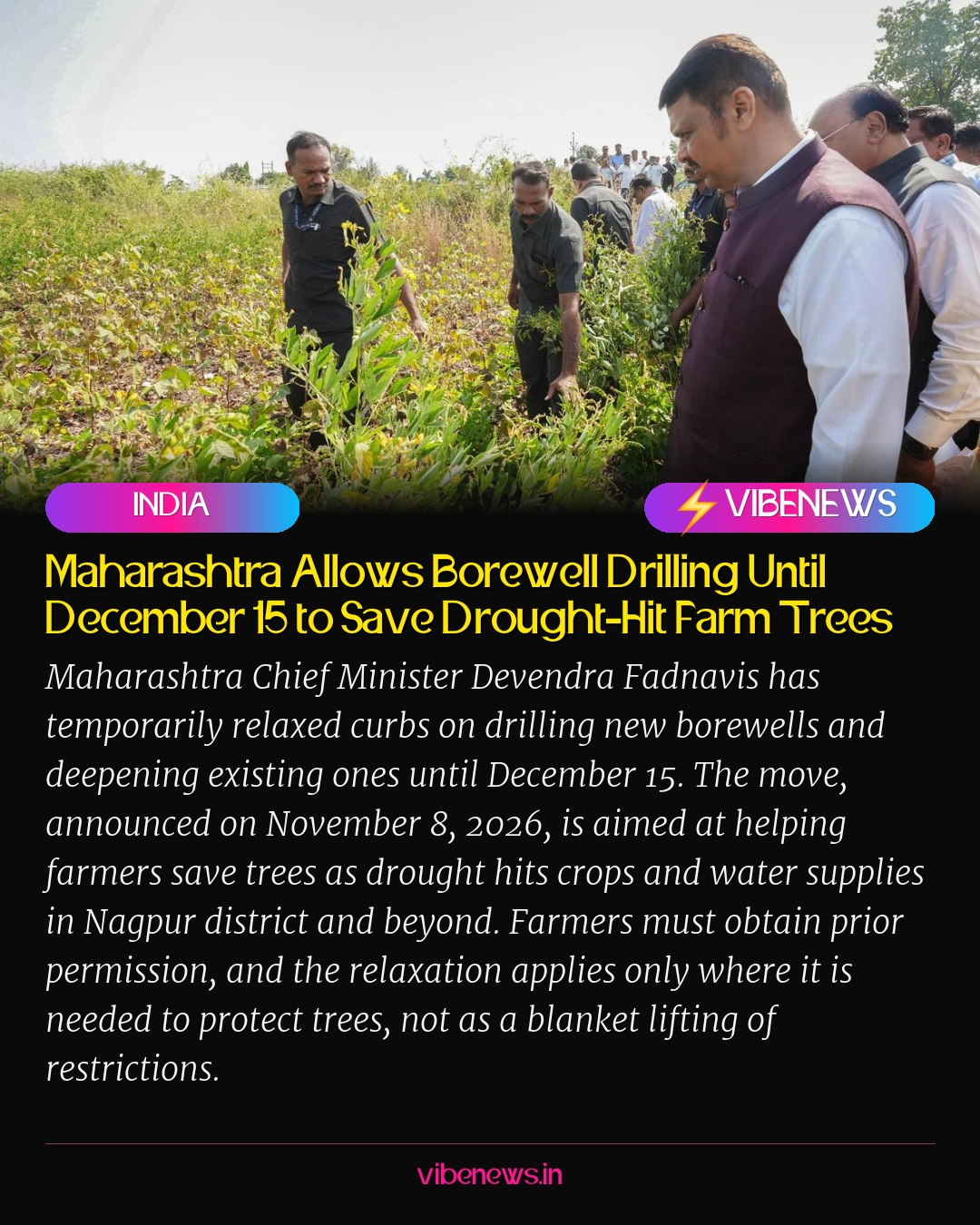
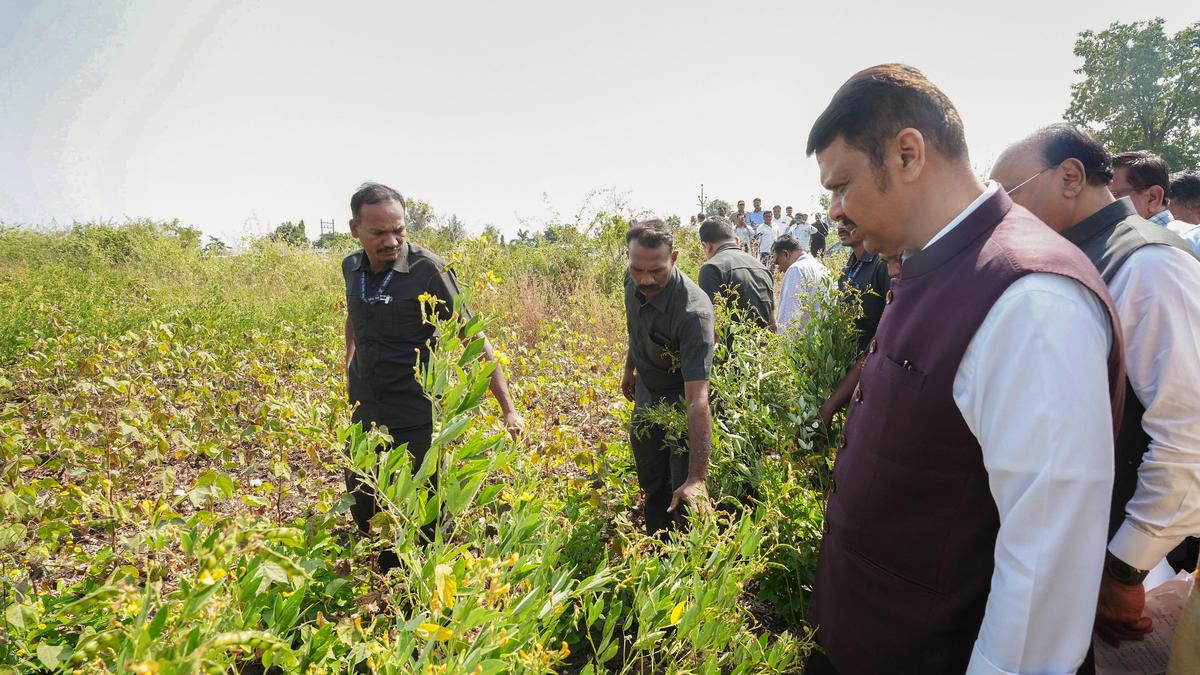
Maharashtra has temporarily relaxed restrictions on drilling new borewells and deepening existing ones, and the window stays open until December 15. Chief Minister Devendra Fadnavis made the announcement on Sunday, November 8, 2026, as drought conditions continue to squeeze farms across the state. The stated goal is simple: help farmers keep their trees alive.
The relief comes with conditions. Farmers will need prior permission from the authorities before they drill a new borewell or deepen an existing one. Fadnavis was clear that the change is not a blanket lifting of the rules. It applies only where the work is essential to protect trees.
The announcement came at Lohari Sawanga, a village in Nagpur district’s Narkhed taluka. Fadnavis had stayed overnight there on Saturday, November 7, at the home of farmer Rambhau Balpande, where he was celebrating Deepavali with the family. The Sunday interaction brought together village sarpanches and local representatives, who used the meeting to raise a problem that farmers in the area have been living with for weeks.
Their concern was direct. The drought has left water scarce, and local representatives warned that standing crops could be destroyed if nothing changes. For farmers who depend on those fields, the threat is not abstract. A failed crop means lost income for the season, and it means the trees and plants that hold the land together are at risk too.
Fadnavis did not dismiss the concerns, but he did not offer a sweeping fix either. He acknowledged that lifting restrictions on borewell drilling or deepening creates real difficulties for the government. Still, given the severity of the drought, the government had decided to allow such work as a special measure wherever it was necessary. He put the principle plainly.
The relaxation would be granted only in cases where it was essential to protect trees, and would not amount to a blanket lifting of the restrictions.
That message echoed a promise he had made the previous day. On Saturday, during his conversation with farmer Rambhau Balpande, Fadnavis said the government would permit borewell drilling wherever it was feasible to help farmers cope with the drought. The Sunday announcement turned that assurance into a formal, time-limited relaxation.
The scale of the problem helps explain why the state is willing to bend its rules. Figures cited alongside the report put Maharashtra’s rain deficit at 18.8 percent. Several districts are doing far worse, with deficits of 40 to 50 percent across six districts. The government has also declared drought in 265 talukas. Those numbers describe a crisis that reaches well beyond a single village, and they explain why local officials pushed hard for flexibility.
Water was not the only issue raised at the meeting. Several local representatives pointed out that the region has a large livestock population but no veterinary hospitals. Fadnavis directed the Zilla Parishad Chief Executive Officer to assess the situation and take an immediate decision on veterinary facilities. For families who rely on animals for milk, draught power and income, the absence of nearby medical care adds another layer of pressure during a dry spell.
Fadnavis also addressed delays in projects under the Jal Jeevan Mission. He admitted that several works remain unfinished because funding has fallen short. His plan is to prioritise projects that are more than 75 percent complete, so they can be finished quickly. The remaining projects will be completed in phases. For villages still waiting on water schemes, the sequencing will decide how soon the taps run.
Crop damage from wild animals came up as well. The Chief Minister said the existing fencing scheme will be expanded, with first priority going to agricultural fields that border forest areas. Farmers in those fields already face a double threat, with drought thinning yields and wildlife taking what is left. Extending the fencing scheme is an attempt to protect the harvest that the drought has not already claimed.
The state has also taken steps on the water side. Fadnavis said desilting work has been carried out in water bodies because of the drought. The excavated silt is being used to improve agricultural land, so the removal effort serves two purposes at once: it deepens storage in ponds and gives farmers richer soil. He also urged citizens to conserve water and to take up groundwater recharge measures.
Whether the borewell relaxation can save the trees and crops it is meant to protect will depend on how quickly permissions move through the system. The deadline of December 15 leaves a short window. Farmers who need approval will have to act fast, and officials will have to decide fast too. The coming weeks will show whether the special measure reaches the fields where it is needed most.
TL;DR
- Maharashtra has relaxed borewell drilling and deepening curbs until December 15 to help farmers save trees during drought.
- Chief Minister Devendra Fadnavis announced the move on Sunday, November 8, 2026, at Lohari Sawanga in Nagpur district.
- Farmers must obtain prior permission, and the relaxation applies only where essential to protect trees.
- Local representatives warned that standing crops could be destroyed because of water scarcity.
- The government has also been asked to address the lack of veterinary hospitals in a region with a large livestock population.
- Fadnavis said projects over 75 percent complete will get priority funding under the Jal Jeevan Mission.