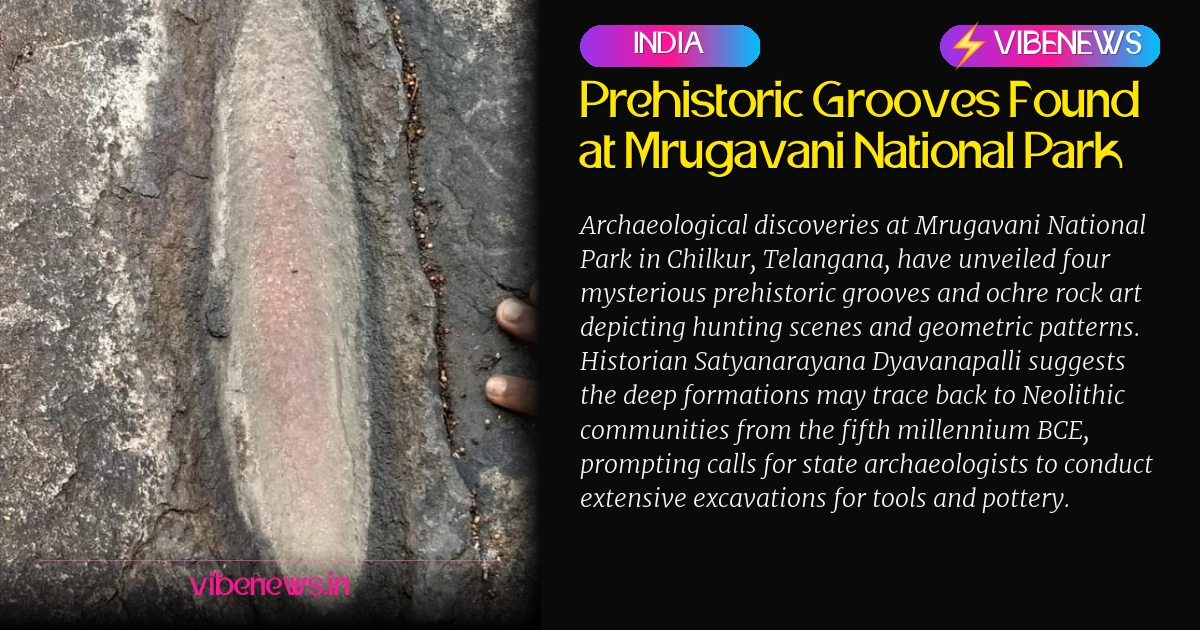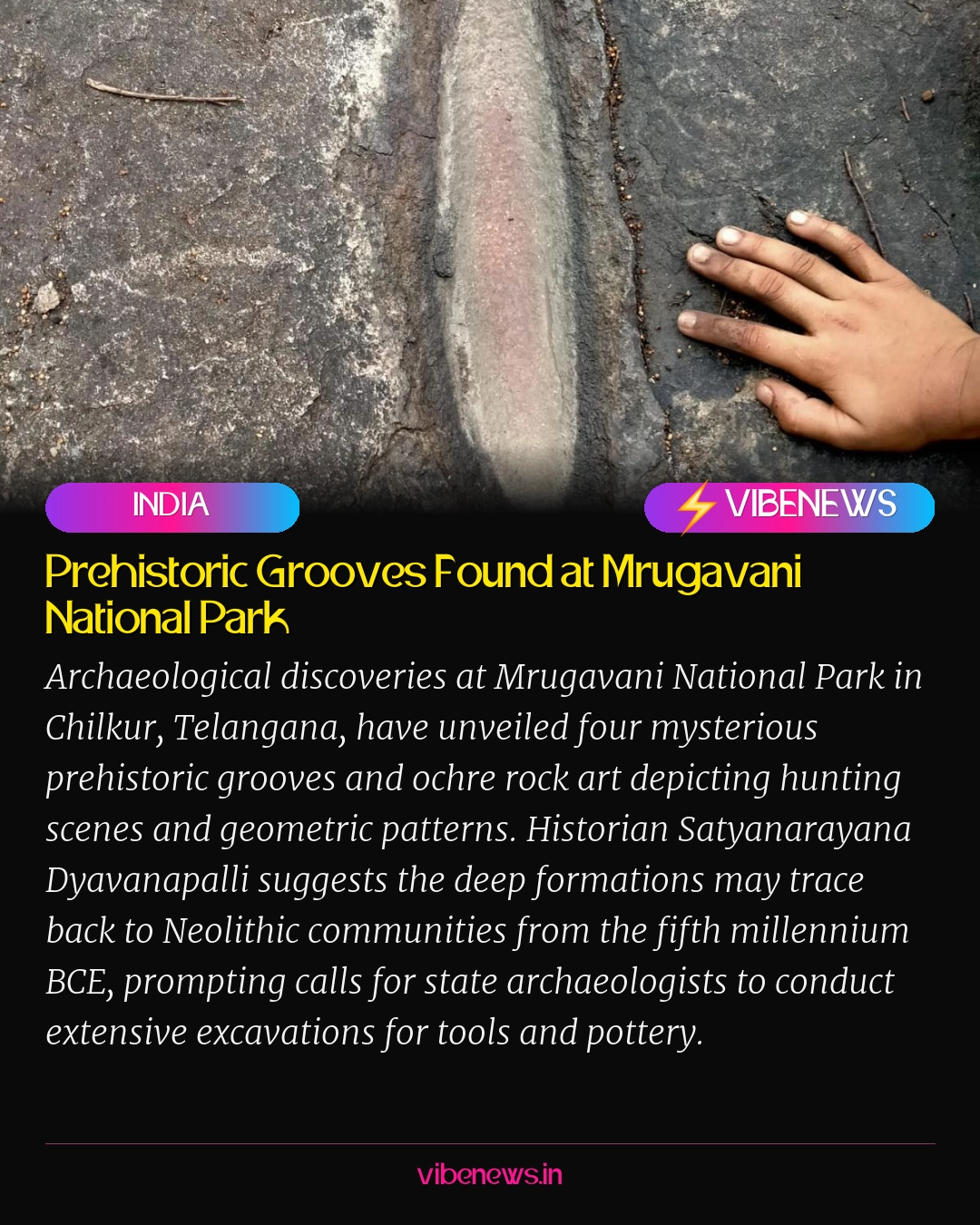
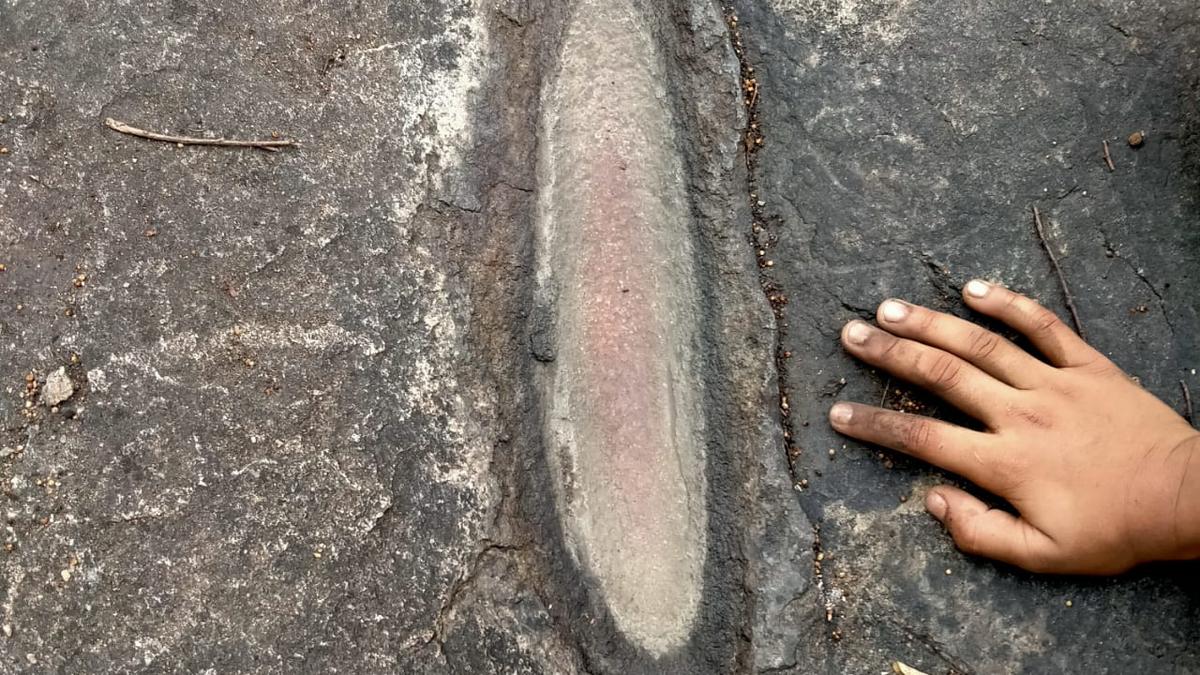
Four deep prehistoric grooves linked to early human activity dating back to the fifth millennium BCE have been uncovered near the Banda Juvvi watchtower inside Mrugavani National Park at Chilkur, Telangana.
Unearthing Traces of Prehistoric Communities
The discovery pulls back the veil on ancient human settlements that once inhabited the landscape now preserved as a wildlife sanctuary. Initial observations were spearheaded by historian Satyanarayana Dyavanapalli after he received key preliminary details from B. Anand Kumar, an Administrative Officer serving in the Forest Department of Rangareddy district. Upon inspecting the site situated beside the Banda Juvvi watchtower, Dyavanapalli identified four distinct, deep rock grooves carved into the terrain, pointing toward intense tool-working or settlement practices typical of ancient societies.
According to Dyavanapalli, these distinctive rock formations strongly suggest engagement with Neolithic-era livelihoods. If formal investigations corroborate this initial assessment, human beings were purposefully utilizing this rugged landscape approximately seven thousand years ago, during the fifth millennium BCE. The sheer presence of such modifications carved straight into natural geological features invites immediate curiosity regarding what everyday rituals, crafting traditions, or communal tasks took place across these rock surfaces.
they could be associated with Neolithic-period activities dating to around the fifth millennium BCE
Vivid Ochre Canvases Deep in the Wilderness
Adding another layer of fascination to the site, researchers identified an extraordinary gallery of ancient artistic expression merely one kilometre away, located adjacent to the park’s Forest Trek Park. Spread across exposed rock shelters, ancient hands applied ochre-coloured pigments to craft expressive scenes that have endured through countless centuries. The artwork showcases dynamic hunting episodes, diverse wild animals, and intricate geometric designs.
The exact chronological timeline of these ochre illustrations remains unresolved, as does their functional or temporal relationship to the newly recorded grooves near the watchtower. Whether the paintings were rendered by the identical community that carved the grooves or created by differing cultures visiting the terrain across disparate millennia represents one of the most compelling puzzles awaiting scientific assessment. The visual depictions of wildlife and pursuit provide an extraordinary snapshot into how early inhabitants perceived their ecological surroundings and sustained their communities amidst dense scrubland.
Preservation Urgency for Telangana Heritage
For the state of Telangana, the discoveries within Mrugavani National Park highlight an urgent imperative to safeguard unexplored cultural treasures nestled right beside urban peripheries. Because these relics sit within Rangareddy district’s Chilkur region, they emphasize how modern administrative sanctuaries double as invaluable archives of regional human antiquity. Preserving such vulnerable rock carvings and delicate pigment applications requires specialized archaeological interventions alongside routine environmental forestry management.
In light of the vulnerable status of these ancient remnants, Dyavanapalli has formally called upon the Department of Archaeology and Museums, Telangana, to intervene without delay. The historian has urged the state body to initiate an extensive and systematic physical survey encompassing both the rock painting zone and the watchtower perimeter. Formal documentation, surface scraping, and meticulous fieldwork are crucial to determine if associated cultural material—such as polished stone implements, microliths, and ancient pottery fragments—lies buried beneath the undergrowth.
A Protected Forest Doubling as an Ancient Archive
The occurrence of profound human antiquities within a demarcated wildlife reserve brings forward rare possibilities for conservation and scientific understanding. National parks are routinely recognized for their flora and fauna, yet the findings at Chilkur demonstrate that Earth’s prehistoric heritage remains silently embedded throughout these protected forests. Rigorous stratigraphic analysis and paint pigment sampling by certified archaeologists will ultimately determine whether these surfaces constitute a key missing chapter in the prehistoric narrative of the Deccan plateau.
TL;DR
- Four deep prehistoric grooves identified near Banda Juvvi watchtower in Mrugavani National Park.
- Historian Satyanarayana Dyavanapalli links the grooves to Neolithic activity around 5000 BCE.
- Ochre-coloured rock art discovered one kilometre away depicts animals, hunters, and geometric designs.
- Forest Department official B. Anand Kumar provided initial inputs leading to the discoveries.
- Experts have urged Telangana’s archaeology department to launch comprehensive site surveys.