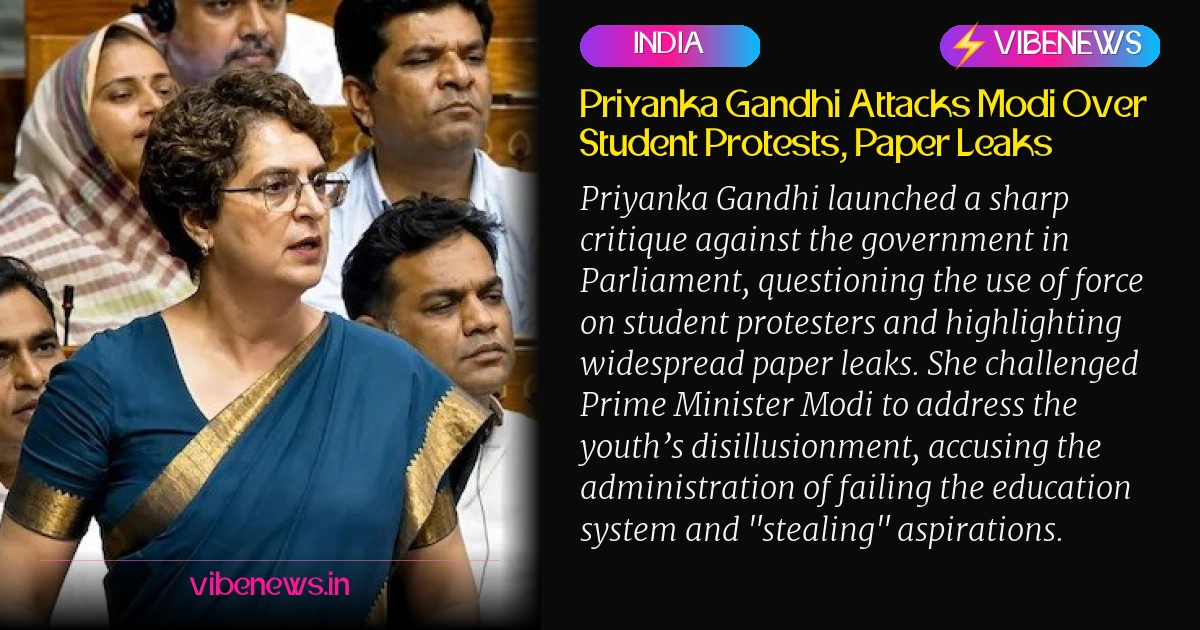
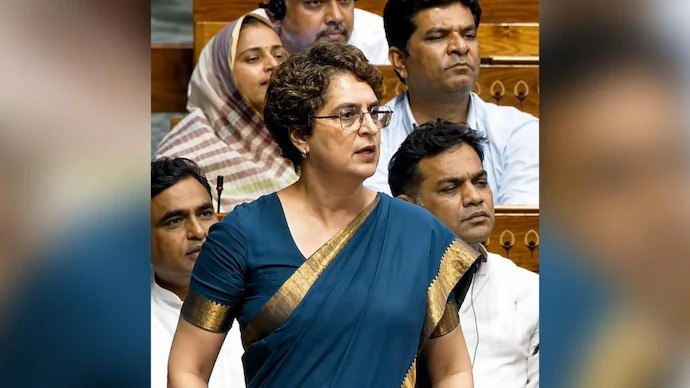
Congress MP Priyanka Gandhi delivered a powerful address in the Lok Sabha, launching a scathing attack on the government regarding its handling of student protests and the pervasive issue of examination paper leaks across the country. Her speech, delivered during a debate on the anti-paper leak bill, combined sharp sarcasm with direct accusations, particularly targeting Prime Minister Narendra Modi’s approach to youth engagement.
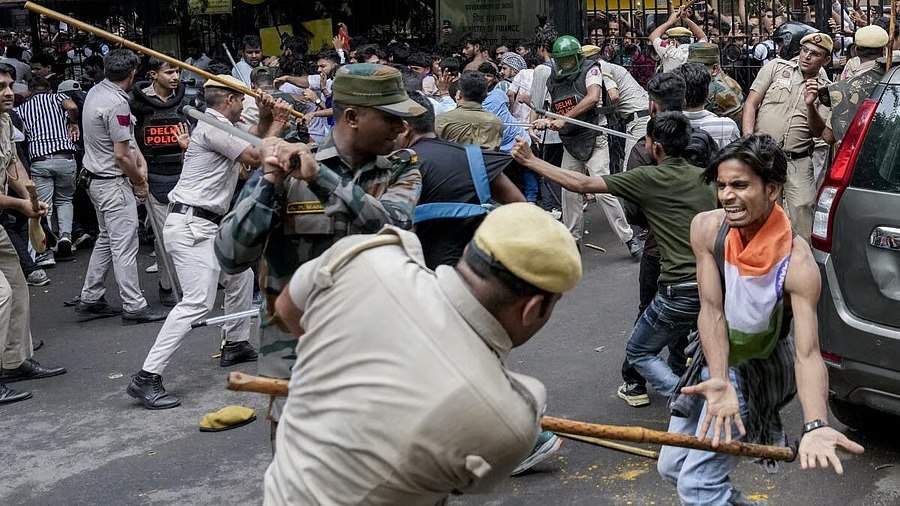
Gandhi’s remarks centered on the perceived brutality against student protesters, questioning the necessity of deploying pellet guns and AK-47s against the nation’s youth. She directly challenged whether Prime Minister Modi or Home Minister Amit Shah had ordered these "police excesses and brutality," demanding accountability for the actions taken against students.
Questioning the Use of Force
The use of force against protesting students has become a contentious issue, drawing widespread condemnation from various quarters. Gandhi highlighted the stark contrast between the government’s rhetoric and the reality faced by young people expressing their grievances.
Her query about the deployment of high-grade weaponry against unarmed students underscored a deeper concern about the state’s response to dissent. This line of questioning aimed to expose what she described as a disproportionate and unwarranted use of power against a demographic seeking answers and justice.
The protests themselves are a culmination of widespread frustration over systemic failures in the examination process, particularly recent controversies surrounding national entrance tests. Students across various states have taken to the streets, demanding transparency and accountability from examination bodies.
The Deepening Crisis of Examinations
Priyanka Gandhi meticulously detailed the alarming frequency of paper leaks, citing 152 instances over the past decade. She emphasized that these leaks have impacted crores of students, yet, critically, not a single culprit has faced adequate punishment.
This statistic paints a grim picture of an examination system riddled with vulnerabilities and a perceived lack of political will to address the root causes effectively. The anti-paper leak bill, while debated, was framed by Gandhi as an insufficient measure without genuine accountability for past failures.
The human cost of these leaks was brought into sharp focus as Gandhi recounted the tragic story of a family in Maharashtra mourning their daughter’s death, allegedly linked to the despair caused by a paper leak. This personal anecdote served to underscore the severe emotional and psychological toll on students and their families.
Erosion of Educational Integrity
Beyond the immediate crisis of paper leaks, Gandhi broadened her critique to encompass the fundamental integrity of India’s education system. She accused the government of "hollowing out" the system by allegedly filling it with "RSS pracharaks" and further complicating matters through the forceful establishment and centralization of the National Testing Agency (NTA).
This centralization, she argued, has inadvertently created a single point of failure, exacerbating the impact of any systemic flaw. The NTA, intended to streamline examinations, has instead become a focal point of criticism amid the recent controversies.
The Congress leader asserted that the "biggest theft" committed by the government was not just of public assets or farmers’ land, but of the dreams and aspirations of the youth. This powerful statement resonated with the widespread sentiment of disillusionment among young Indians who feel their future is being jeopardized by administrative incompetence and corruption.
The Political Optics Versus Ground Reality
In a direct jab at Prime Minister Modi, Gandhi urged him to "change ‘dil ka angle, not camera angle’." This remark was a sarcastic reference to the Prime Minister’s social media presence and his perceived attempts to connect with Gen Z through curated videos, rather than addressing their genuine concerns.
She argued that trust cannot be won through superficial outreach or carefully crafted Instagram clips when the underlying issues of unemployment, exam irregularities, and police action against protesters remain unaddressed. This highlights a growing disconnect between political messaging and the lived experiences of a significant portion of the electorate.
The youth of India, a crucial demographic, are increasingly vocal about their frustrations. Their protests are not merely about specific exam results but reflect deeper anxieties about economic opportunities, fairness, and the responsiveness of democratic institutions.
Editorial Context: A Test of Governance
Priyanka Gandhi’s parliamentary intervention marks a significant moment in the ongoing political discourse surrounding youth issues and governance in India. Her comprehensive critique, spanning from police brutality to systemic educational failures, positions the Congress as a strong voice for the disillusioned youth.
The long-term implications of these developments are profound. A generation of young people, facing intense competition and economic uncertainty, is witnessing repeated failures in the very systems designed to provide them with opportunities. This erosion of trust in institutions, particularly the education and examination bodies, poses a serious challenge to social stability and national progress.
The government’s response to these criticisms and the broader student movement will be a critical test of its commitment to transparency, accountability, and the welfare of its youngest citizens. Addressing these deep-seated issues requires more than punitive legislation; it demands comprehensive reform, genuine dialogue, and a renewed focus on building robust, equitable, and trustworthy public systems.
TL;DR
- Priyanka Gandhi sharply criticized the government in Parliament over the use of pellet guns and AK-47s against student protesters.
- She questioned if Prime Minister Modi or Home Minister Amit Shah ordered the "police excesses and brutality" against students.
- Gandhi highlighted 152 paper leaks in the last decade, affecting crores of students, with no significant punishment for culprits.
- She accused the government of "hollowing out" the education system and politicizing institutions like the National Testing Agency (NTA).
- Gandhi stated the "biggest theft" was of the youth’s dreams and aspirations, linking it to broader accusations of "multiple choris."
- She urged PM Modi to "change ‘dil ka angle, not camera angle’," criticizing his social media outreach amidst student discontent.