The Supreme Court of India has once again underscored its firm stance on the intersection of religious conversion and Scheduled Caste (SC) status. In a significant development, the apex court dismissed a review petition challenging its March 24 ruling, which stipulated that an individual from a Scheduled Caste community forfeits their SC status the moment they adopt a religion other than Hinduism, Sikhism, or Buddhism.
A bench comprising Justices Prashant Kumar Mishra and Manmohan found no compelling reason to revisit the earlier verdict. Their July 15 order stated, "Application seeking oral hearing of the review petition is rejected. We have gone through the review petition and perused the judgment dated March 24, 2026, which has been sought to be reviewed. There is no error apparent on the record. The Review Petition is, accordingly, dismissed."
The Court’s Unwavering Stance on Status Loss
The March 24 judgment, now reaffirmed, had upheld an Andhra Pradesh High Court order. This earlier ruling unequivocally stated that a person belonging to a Scheduled Caste community loses their SC status "immediately and completely" upon converting to Christianity. The Supreme Court had emphasized that this loss of status takes effect at once, irrespective of the individual’s birth into the caste.
The court’s reasoning centered on Clause 3 of the Constitution (Scheduled Castes) Order, 1950. This provision explicitly states, "No person who professes a religion other than Hindu, Sikh or Buddhist shall be deemed to be a member of a Scheduled Caste." The court described this bar as "categorical and absolute," asserting that conversion to any religion not specified in Clause 3 results in an "immediate and complete loss of Scheduled Caste status from the moment of conversion regardless of birth."
Historical Context of the 1950 Order
To provide context, the Supreme Court delved into the legislative history of Clause 3 of the Constitution (Scheduled Castes) Order, 1950. Initially, this provision applied exclusively to Hindus. Over time, it underwent amendments to include other religions deemed to share similar socio-economic disadvantages within their structures.
In 1956, Sikhs were brought under its ambit, followed by Buddhists in 1990. Crucially, the court highlighted that Christianity has never been included in this Order through any of these amendments. The judgment also noted that Christianity, by its theological foundation, does not recognize or incorporate the institution of caste, a point often raised in debates surrounding this issue.
Implications for Benefits and Identity
The ramifications of this ruling are profound for individuals who convert. The court clarified that once a person ceases to be a member of a Scheduled Caste under the 1950 Order, this loss of status leads to the "automatic and immediate termination" of eligibility for all benefits, protections, reservations, preferences, and entitlements linked to that status. This includes access to educational quotas, government jobs, and other affirmative action measures designed to uplift marginalized communities.
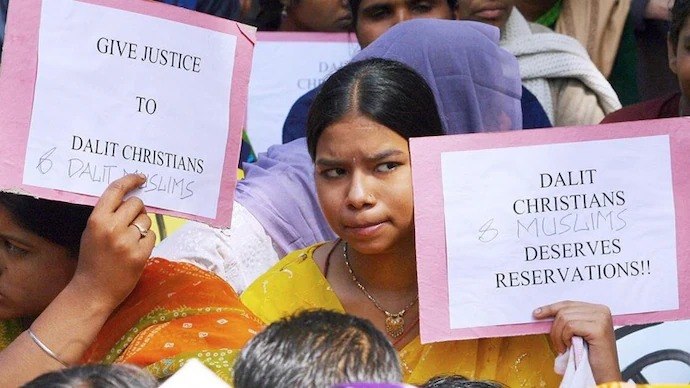
The decision reinforces a long-standing legal interpretation that links caste identity, for the purpose of state benefits, to specific religious affiliations. It means that individuals who convert to faiths like Christianity or Islam, despite potentially facing continued social discrimination, will not be able to avail themselves of SC-specific reservations.
Distinction with Scheduled Tribe Status
While the ruling on Scheduled Castes is definitive, the court drew a distinction when it came to Scheduled Tribe (ST) status. It stated that a person can claim benefits under the Constitution (Scheduled Tribes) Order, 1950, only if they continue to belong to the particular tribe in substance. If, due to conversion or long-term abandonment of tribal customs, that identity comes into doubt, the issue becomes a question of fact to be decided at trial.
The court elaborated that if it is proven that a person has completely renounced the customs, rituals, and other traits of their tribe and assimilated into the converted religion, "a reasonable inference can be drawn that such a person shall not be considered a part of the tribe." This implies a more nuanced, case-by-case assessment for ST status compared to the automatic loss for SC status.
Path to Reconversion and Reclaiming Status
The Supreme Court also addressed the scenario of reconversion. It stated that anyone claiming Scheduled Caste or Scheduled Tribe status must present clear and unimpeachable evidence of their belonging to a caste or tribe specifically notified under the 1950 Orders. Furthermore, a person cannot simultaneously profess and practice a religion other than those specified in Clause 3 of the Constitution (Scheduled Castes) Order, 1950, and claim membership of a Scheduled Caste.
For those seeking to reclaim SC status through reconversion to Hinduism, Sikhism, or Buddhism, the court laid down specific conditions. They must prove their original membership of a notified caste, demonstrate a bona fide reconversion, and show acceptance and assimilation by their original caste and community. This places a significant burden of proof on individuals seeking to regain their former status.
Editorial Context
The Supreme Court’s dismissal of the review petition is more than a procedural formality; it is a definitive reaffirmation of a critical legal precedent with far-reaching implications for India’s social fabric and constitutional framework. This ruling solidifies the judicial interpretation of caste identity as intrinsically linked to specific religious affiliations for the purpose of affirmative action, particularly for Scheduled Castes.
In the long term, this decision will undoubtedly reignite debates surrounding religious freedom, social justice, and the efficacy of reservation policies. It forces a national conversation on whether the state’s definition of backwardness should evolve to encompass socio-economic realities irrespective of religious conversion, especially when converts may continue to face discrimination. The ruling also sets a clear judicial benchmark for lower courts and administrative bodies, streamlining the process of determining eligibility for SC benefits but potentially complicating the lives of converts.
The distinction drawn between Scheduled Castes and Scheduled Tribes in the context of conversion highlights the complexities inherent in India’s diverse social structures. While SC status loss is automatic, ST status requires a factual assessment, reflecting the unique cultural and customary aspects of tribal identities. This nuanced approach for STs, contrasted with the absolute bar for SCs, will likely continue to be a point of discussion and potential legislative review in the years to come, as India grapples with balancing constitutional guarantees with evolving societal dynamics.
TL;DR
- The Supreme Court dismissed a review petition, reaffirming its March 24 ruling on Scheduled Caste (SC) status loss upon religious conversion.
- SC status is lost "immediately and completely" if a person converts to a religion other than Hinduism, Sikhism, or Buddhism.
- This loss of status results in the automatic termination of eligibility for all associated benefits, protections, and reservations.
- The ruling upheld an Andhra Pradesh High Court order and is based on Clause 3 of the Constitution (Scheduled Castes) Order, 1950.
- Scheduled Tribe (ST) status loss is not automatic but depends on a factual assessment of whether tribal customs have been renounced.
- Reconversion to Hinduism, Sikhism, or Buddhism requires proving original caste membership, bona fide reconversion, and acceptance by the original community.