Supreme Court Upholds Protest Sanctity
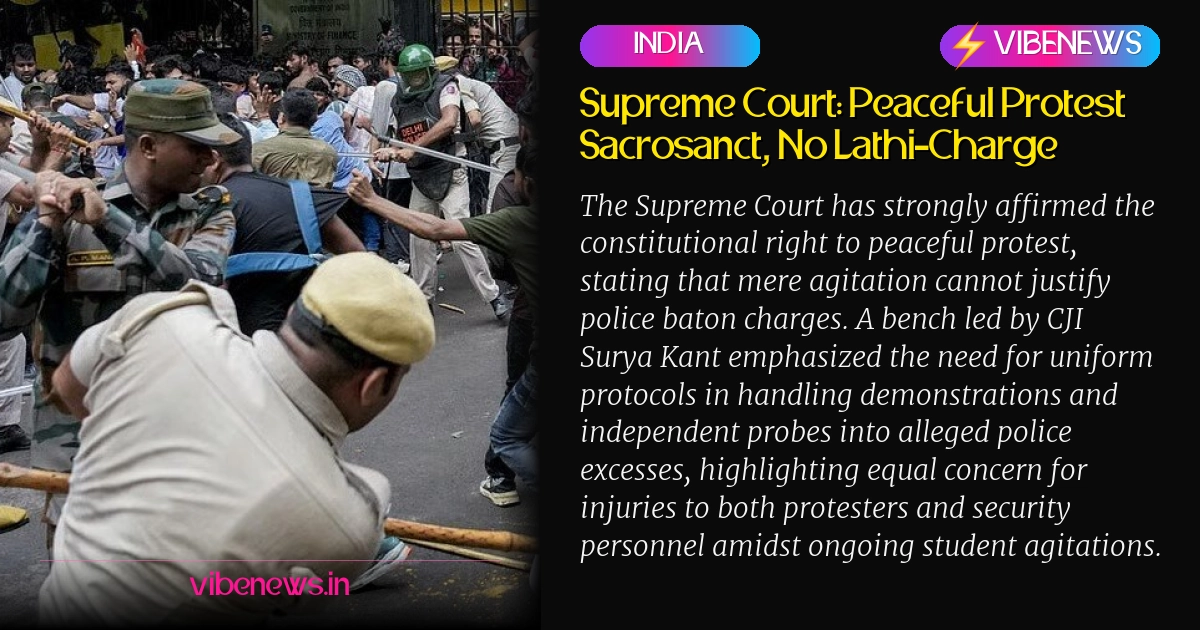
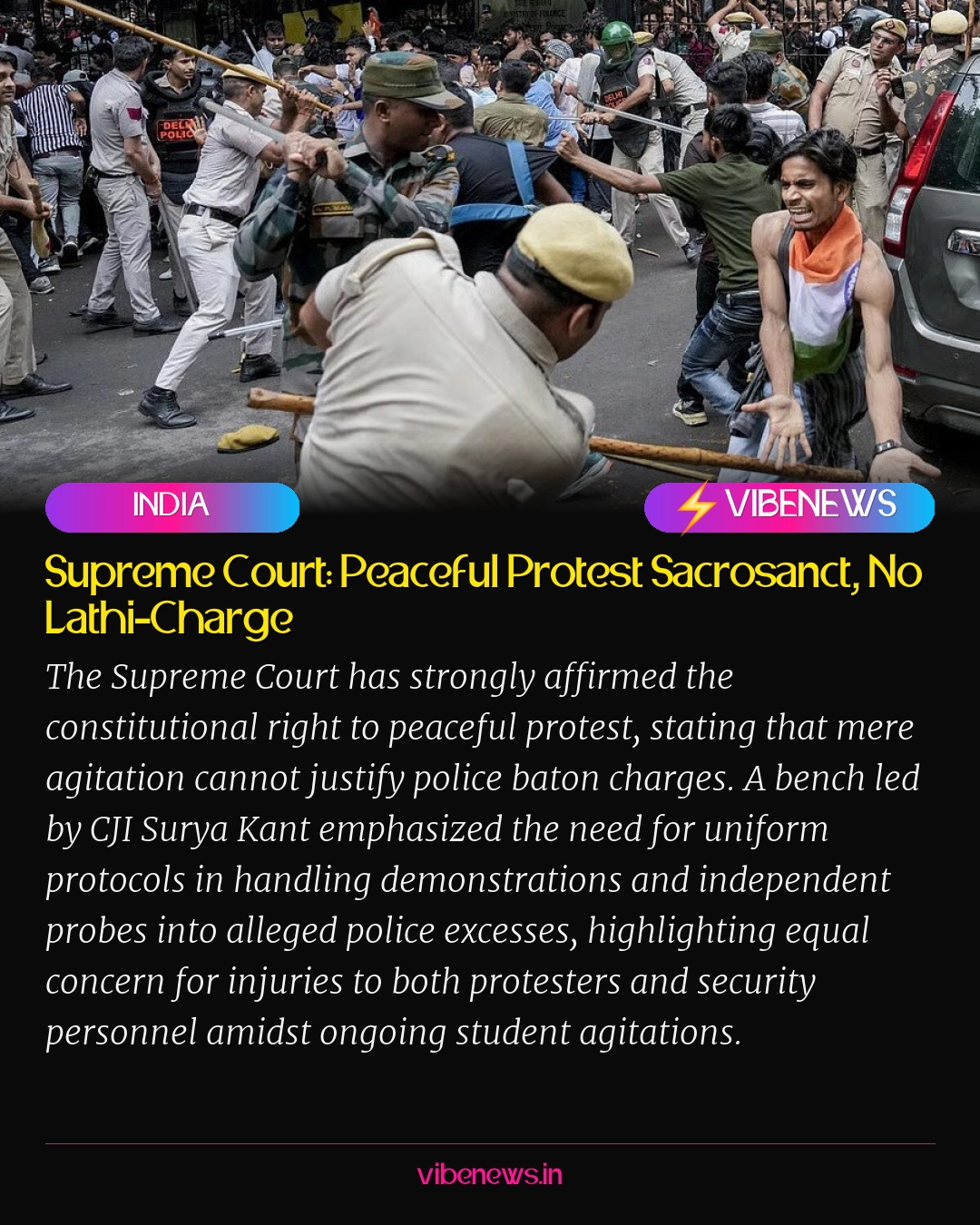
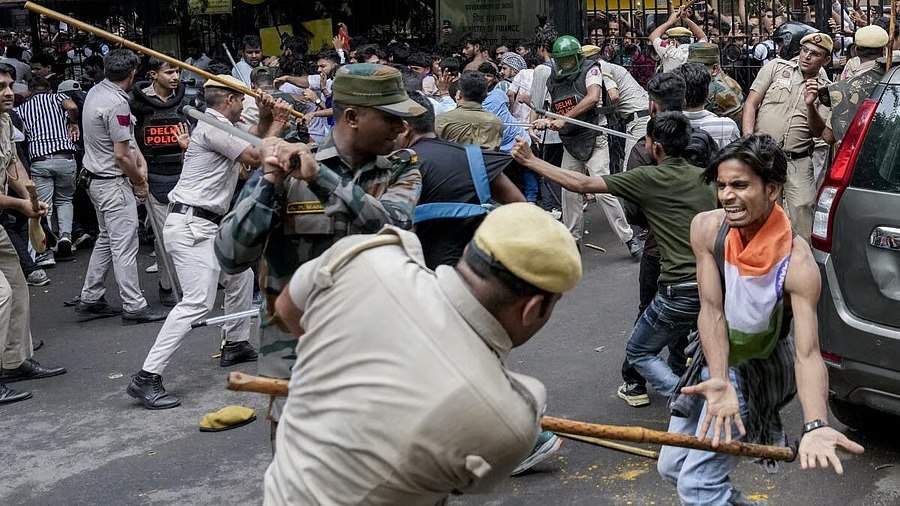
The Supreme Court of India on Monday delivered a robust affirmation of the constitutional right to peaceful protest, unequivocally stating that mere agitation cannot serve as a justification for police baton charges. This significant pronouncement came from a bench led by Chief Justice of India Surya Kant, which underscored the fundamental protection afforded to lawful demonstrations under the Constitution.
The court’s observations emerged during the hearing of petitions alleging excessive force by security personnel against students protesting various issues, including examination paper leaks. The bench emphasized that any allegations of police excess must be independently examined, calling for the establishment of uniform protocols across the country to manage public demonstrations effectively.
The Judiciary’s Firm Stance on Dissent
CJI Kant orally remarked, "Right to peaceful, lawful protest is absolutely guaranteed under Constitution. So long as it is peaceful agitation, merely because there is agitation, there can’t be (excess)... Merely because agitation is there, it doesn’t mean lathi charge. Discipline is integral to democratic process." This statement highlights the judiciary’s commitment to safeguarding civil liberties even amidst public unrest.
Justice Joymalya Bagchi, also part of the bench, added a crucial dimension by stating that injuries sustained by individuals, whether students or policemen, are of equal concern. He questioned the adequacy of equipment provided to police personnel, such as helmets, to manage such volatile situations, suggesting a need for better preparedness and protection for law enforcement.
Genesis of the Legal Challenge
The batch of petitions before the Supreme Court stems from recent student protests that have swept across various parts of the country. These demonstrations were fueled by a range of grievances, including widespread concerns over examination paper leaks, rising unemployment, and the escalating costs of education. Protesters also demanded the resignation of Union Education Minister Dharmendra Pradhan, reflecting a broader dissatisfaction with governance.
One of the key petitions, filed by advocate Shailendra Mani Tripathi, seeks comprehensive guidelines to regulate police conduct during public protests. It specifically calls for a ban on plainclothes personnel for crowd control, stricter norms for prohibitory orders issued under Section 163 of the BNSS (which replaced Section 144 of the CrPC), and an independent investigation into alleged police actions on July 20 in Delhi.
Allegations of Excessive Force and Rights Violations
The plea drew a stark parallel to the tragic 1919 Jallianwala Bagh massacre, alleging that peaceful protesters faced severe police action. This included lathi charges, the deployment of tear gas, and the use of pellet guns. Disturbingly, there were also allegations of gender-based misconduct against female students, arbitrary detentions, metro closures, and internet shutdowns, all of which significantly disrupted public life and infringed upon fundamental rights.
It was claimed that at least 60 protesters sustained injuries during these incidents. The petition invoked fundamental rights enshrined in Articles 14 (equality before law), 19 (freedom of speech and expression, assembly), and 21 (protection of life and personal liberty) of the Constitution. It further criticized the repeated and often vague application of prohibitory orders and Section 152 of the BNS, arguing that these provisions have a chilling effect on free speech and political dissent.
Balancing Public Order and Civil Liberties
The Supreme Court’s decision to allow counsel representing families of injured policemen to participate in the proceedings reflects a balanced and comprehensive approach to the complex issue. This ensures that the concerns and experiences of all parties involved, including law enforcement personnel, are considered in the formulation of any future guidelines or rulings.
Senior advocate Gopal Sankaranarayanan had earlier pressed for an urgent listing of these matters, citing the ongoing nature of protests and persistent reports of excessive force. The court’s prompt attention to the issue underscores its recognition of the urgency and public importance of safeguarding democratic rights while maintaining public order.
A Legacy of Dissent in Indian Democracy
The right to protest has been a cornerstone of Indian democracy, deeply rooted in the nation’s struggle for independence. From Mahatma Gandhi’s non-violent civil disobedience movements to contemporary agitations, public demonstrations have served as a vital mechanism for citizens to voice grievances, demand accountability, and influence policy. This historical context imbues the Supreme Court’s current stance with profound significance, reaffirming the judiciary’s role as a guardian of democratic freedoms.
Past instances, such as the farmer protests or the CAA-NRC agitations, have frequently brought the conduct of police during protests under intense scrutiny. The recurring debate over the use of force, the imposition of Section 144, and the balancing act between maintaining law and order and protecting fundamental rights highlights the perpetual tension in a vibrant democracy. The Supreme Court’s intervention seeks to provide much-needed clarity and a framework for future engagements.
The Path Forward for Democratic Expression
The matter is slated for further detailed hearing, indicating the court’s intent to delve deeper into the intricacies of police conduct and protest management. The eventual outcome is expected to spark a wider debate on balancing the fundamental right to protest with the imperative of maintaining public order and ensuring police accountability. The call for uniform national protocols could lead to a standardized approach to crowd control, potentially reducing instances of excessive force and fostering greater trust between citizens and law enforcement.
This ruling could pave the way for clearer guidelines on the use of non-lethal weapons, the role of plainclothes officers, and the conditions under which prohibitory orders can be imposed. It signals a judicial push towards a more humane and rights-respecting approach to managing public dissent, reinforcing the idea that a healthy democracy thrives on the ability of its citizens to express their views freely and peacefully.
Editorial Context: A Landmark for Democratic Freedoms
The Supreme Court’s unequivocal declaration that peaceful agitation cannot justify police lathi-charges marks a pivotal moment for civil liberties in India. In a democratic society, the right to protest is not merely a legal provision but a fundamental pillar that allows citizens to hold power accountable and participate actively in governance. This ruling reinforces the judiciary’s role as a crucial check on executive overreach, particularly concerning the use of state force against its own citizens.
Over the long term, this development could lead to significant reforms in police training, crowd management techniques, and accountability mechanisms. It sends a strong message that the state’s response to dissent must always be proportionate, lawful, and respectful of human rights. By demanding uniform protocols and independent probes into excesses, the Supreme Court is laying the groundwork for a more transparent and rights-sensitive approach to public order, fostering a healthier environment for democratic expression and strengthening the fabric of Indian democracy.
TL;DR
- The Supreme Court affirmed the constitutional right to peaceful protest, stating mere agitation is not grounds for police lathi-charge.
- A bench led by CJI Surya Kant called for uniform national protocols for handling demonstrations.
- The court emphasized that allegations of police excess must be independently examined.
- Justice Joymalya Bagchi highlighted that injuries to both protesters and police personnel are of equal concern.
- Petitions seek comprehensive guidelines to regulate police conduct, including banning plainclothes personnel and stricter norms for prohibitory orders.
- The ruling is expected to spark wider debate on balancing protest rights with public order and police accountability.