CJP Issues Ultimatum to Government
The Cockroach Janta Party (CJP) has delivered a sharp warning to the Modi government, stating it will be compelled to restart its nationwide protests if assurances, particularly the withdrawal of cases against demonstrators, are not fulfilled by Tuesday. This ultimatum comes just two days after the CJP concluded its significant agitation at Jantar Mantar, following the resignation of Union Minister Dharmendra Pradhan.
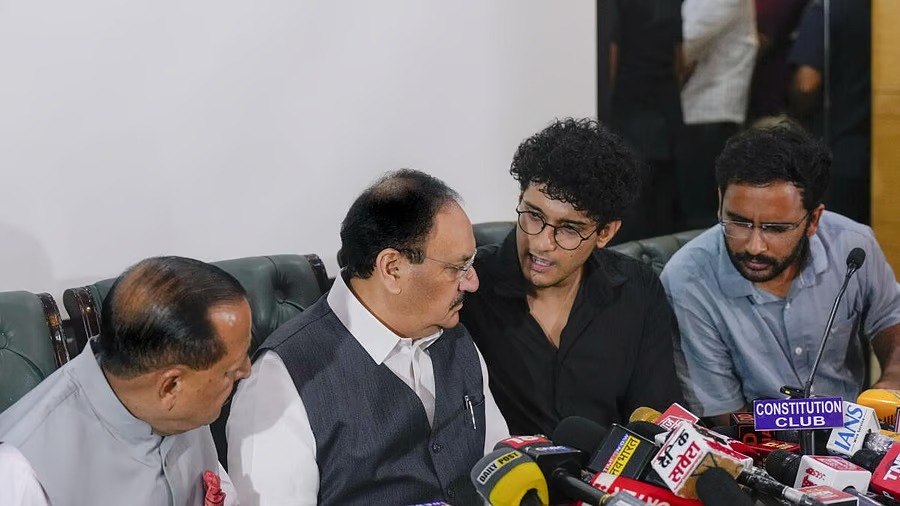
CJP spokespersons Saurav Das and Ashutosh Ranka addressed the media, highlighting that Union Ministers JP Nadda and Jitendra Singh had provided assurances. These included a written agreement, pending legal vetting, by Tuesday, promising the withdrawal of all First Information Reports (FIRs) filed against protesters and organizers across the country, and a guarantee against any new cases in the future.
Allegations of Breach of Trust
The CJP’s warning stems from emerging reports across various states indicating that the promised FIR withdrawals have not materialized. Instead, there are accounts of police continuing to apprehend and harass protesters, directly contradicting the government’s assurances.
Das and Ranka expressed profound concern over these developments, particularly noting instances in Bihar, West Bengal, and Assam, where students and other participants in the protests are reportedly being targeted, detained, or arrested by state agencies. Similar surveillance and harassment have also been reported in Delhi and other regions.
The Legislative Shift
The CJP leaders emphasized that their decision to call off the protest was made in "good faith," trusting the government’s commitment to address their principal demands. However, Ranka articulated a pre-existing apprehension within the party that once the momentum of the protest subsided, the government might resort to individually targeting participants—a tactic observed in previous protest movements across India.
This alleged breach, according to Das, extends beyond a mere failure to uphold an agreement with the CJP. He argued it constitutes a significant breach of public trust with millions of young Indians who opted for dialogue over continued agitation. Such a failure, he warned, would be unacceptable to the youth, reminding the government that its credibility is built on honoring promises, not just making them.
Historical Context of Protest and Promises
India has a long history of protest movements, from farmer agitations to student-led demonstrations, often culminating in negotiations with the government. A recurring challenge in these scenarios is the implementation of agreements, particularly concerning legal repercussions for protesters. Past instances have shown that while immediate demands might be met to de-escalate tensions, the withdrawal of legal cases can often become a protracted and contentious issue.
The government’s handling of such post-protest commitments is crucial for maintaining faith in democratic processes and the efficacy of dialogue. When assurances regarding FIR withdrawals are not honored, it can lead to deep cynicism among civil society groups and the public, potentially fueling future unrest and making it harder for authorities to engage in good-faith negotiations.
Implications for Public Discourse
The current standoff between the CJP and the government underscores the delicate balance between the right to protest and the state’s response. Should the government fail to honor its commitments by the stipulated deadline, it risks not only reigniting the CJP’s agitation but also sending a chilling message to other dissenting voices about the reliability of official assurances.
A renewed wave of protests could further strain public resources and divert attention from other pressing national issues. For the Modi government, which has often emphasized stability and governance, a failure to resolve this issue amicably could lead to questions about its commitment to dialogue and its approach to managing dissent. The coming days will be critical in determining whether trust can be restored or if the streets will once again become the arena for this political confrontation.
Editorial Context
This development is significant because it highlights the enduring challenge of trust and accountability between civil society movements and the state in India. The CJP’s warning is not merely about a specific set of FIRs; it touches upon the broader principle of governmental integrity and the sanctity of agreements made to de-escalate public unrest. In a vibrant democracy, the ability of citizens to protest and engage in dialogue with their government, with the expectation that commitments will be honored, is fundamental. A failure to uphold such promises can erode public faith in institutions, making future negotiations more difficult and potentially fostering an environment where dissent is met with suspicion rather than engagement. This situation could set a precedent for how future protest movements perceive government assurances, impacting the landscape of public discourse and the dynamics of state-citizen relations over the long term.
TL;DR
- The Cockroach Janta Party (CJP) has warned the Modi government of renewed nationwide protests.
- The ultimatum demands the withdrawal of FIRs against protesters by Tuesday, as previously assured.
- CJP ended its Jantar Mantar agitation based on promises from Union Ministers JP Nadda and Jitendra Singh.
- Reports indicate continued police action, arrests, and surveillance against protesters in states like Bihar, West Bengal, and Assam.
- CJP leaders Saurav Das and Ashutosh Ranka allege a significant breach of trust and fear individual targeting of activists.
- The party emphasizes that honoring public commitments is crucial for government credibility and public trust.