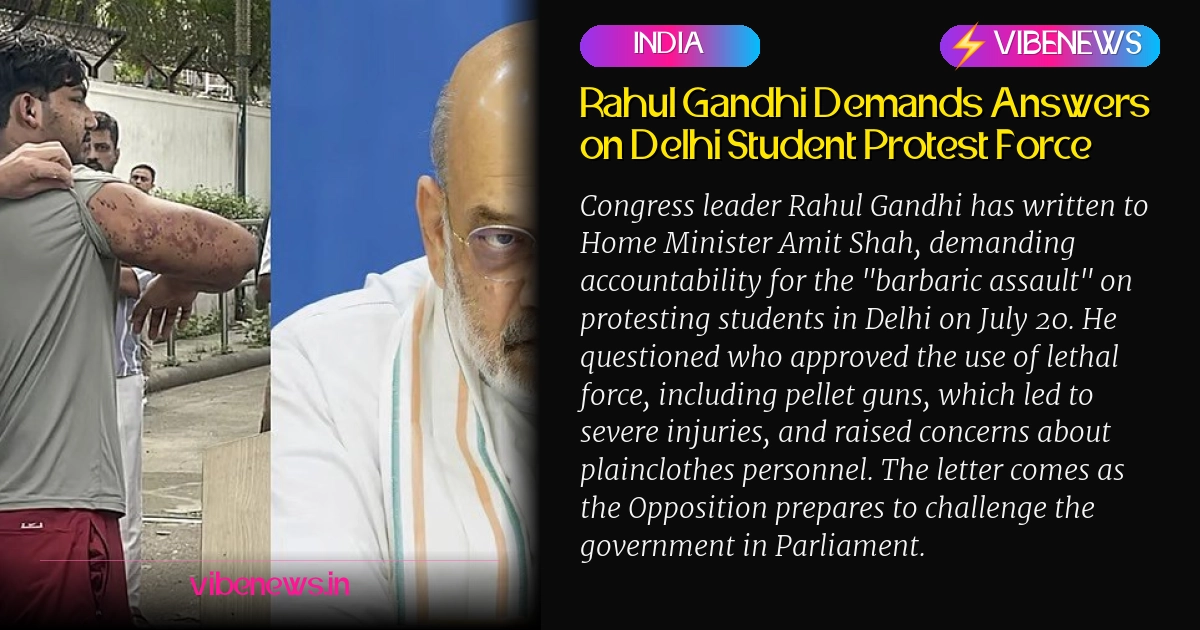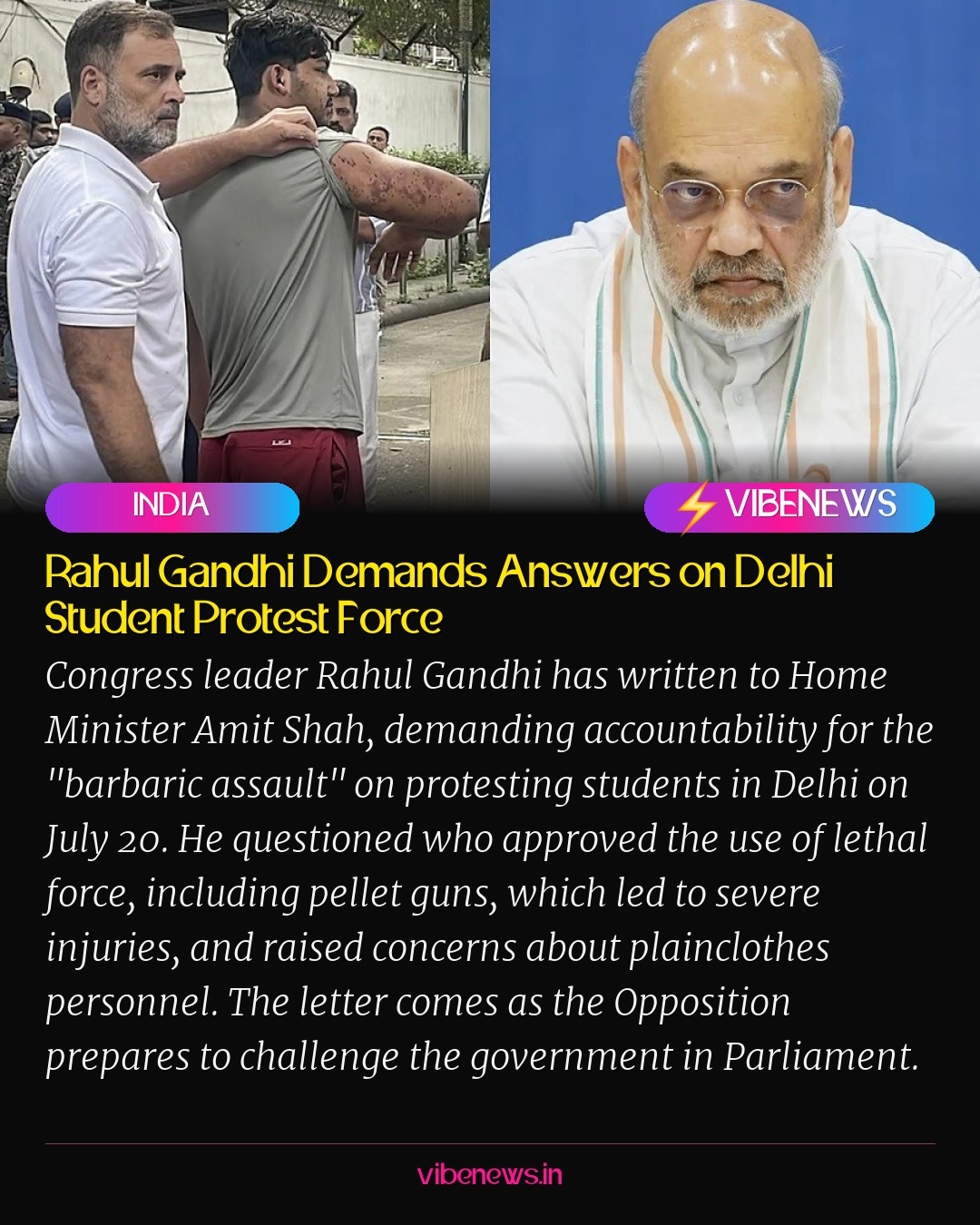
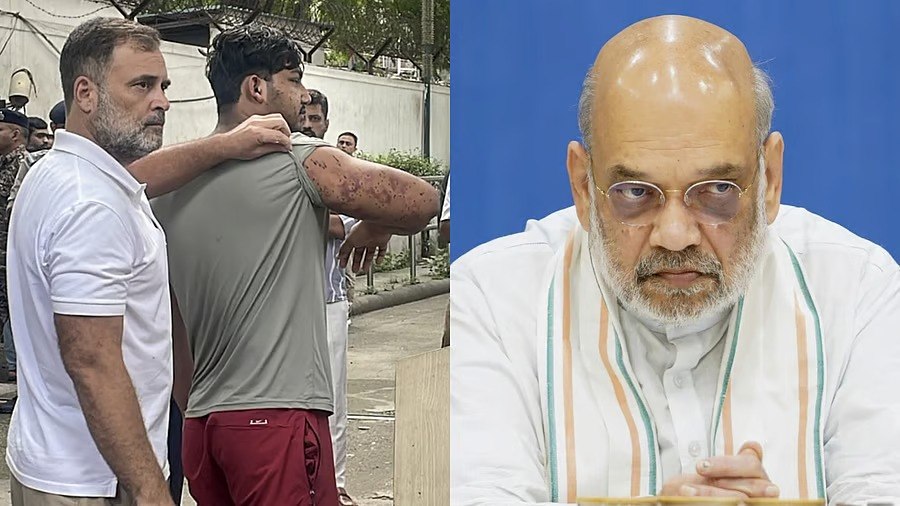
Congress leader Rahul Gandhi, the Leader of the Opposition in the Lok Sabha, has intensified his critique of Union Home Minister Amit Shah, seeking clarification on whether Shah sanctioned the use of lethal force, including pellet guns, against students protesting in Delhi last week. In a strongly worded letter dispatched on Saturday, Gandhi called for accountability regarding what he termed a “barbaric assault” on students who were engaged in peaceful demonstrations on July 20.
The students had concluded their protests following the resignation of Union Education Minister Dharmendra Pradhan, a development that underscored the gravity of their grievances. Gandhi emphasized that the nation’s youth and students, representing its future, are demanding answers and accountability for the events that transpired. This letter arrives at a crucial juncture, as the Congress and other Opposition parties are strategizing to confront the government on student-related issues when Parliament reconvenes on Monday.
The Unfolding Protests and Allegations of Brutality
The student protests stemmed from demands for a fair and accountable education system, a core issue that resonated deeply with a significant segment of the youth. However, instead of their concerns being addressed through dialogue, Gandhi alleged that security forces responded with “indiscriminate” force, employing lethal weapons and tear gas against the demonstrators. Reports indicate that hundreds of students sustained serious injuries, with particularly disturbing accounts of women students being assaulted by police personnel, including deliberate targeting of their private parts.
Among the most shocking allegations highlighted by Gandhi was the deployment of lethal pellet guns. He referenced numerous media and social media reports detailing severe injuries, and specifically cited his meeting with 19-year-old student Sahil Lochab. Lochab is reportedly in immense pain and faces the grim prospect of losing an eye, allegedly due to being shot with pellet guns during the protest. Such incidents have ignited widespread outrage and raised serious questions about the proportionality of the force used.
A Direct Challenge to the Home Minister
Given that security forces deployed in Delhi ultimately report to the Home Minister, Rahul Gandhi directly posed several critical questions to Amit Shah. He explicitly asked whether Shah had approved the use of lethal force, including pellet guns, against the students. If not, Gandhi demanded to know who authorized such measures.
Furthermore, Gandhi sought clarification on the identity of individuals in plainclothes who were reportedly seen beating students with lathis. He questioned whether these individuals were police personnel or volunteers, and who had authorized their deployment in such a capacity. These inquiries underscore a broader concern about accountability and the chain of command in managing public protests.
Parliamentary Showdown Looms
The timing of Gandhi’s letter is strategically significant, preceding the upcoming parliamentary session. The Opposition is poised to leverage the student protest issue to corner the government, aiming to highlight perceived failures in governance and the handling of dissent. The resignation of the Education Minister has already provided a political victory for the protesting students and the Opposition, and the allegations of police brutality offer another potent point of contention.
The Congress party, along with its allies, is expected to demand a thorough investigation into the events of July 20 and press for accountability from the highest levels of government. This issue is likely to dominate parliamentary debates, potentially leading to disruptions and a heated political environment as the government attempts to defend its actions and the Opposition seeks to capitalize on public sentiment.
The Contested Right to Dissent
Rahul Gandhi underscored the fundamental importance of peaceful protest in any functioning democracy. He asserted that it is the government’s responsibility not only to protect protesters but also to address their grievances through constructive dialogue. The alleged brutal violence, he argued, violates every democratic norm and has deeply outraged the country.
India has a rich history of student activism and protests, often serving as a crucial voice for social and political change. However, the state’s response to such dissent has frequently been a point of contention, with debates often revolving around the balance between maintaining law and order and upholding fundamental rights. The use of pellet guns, in particular, has been a controversial topic in various contexts across the country, drawing criticism from human rights organizations for its potential to cause severe and permanent injuries.
Editorial Context: A Test of Democratic Principles
The events surrounding the Delhi student protests and Rahul Gandhi’s subsequent letter to Amit Shah represent more than just a political skirmish; they are a critical test of India’s democratic principles and the government’s commitment to upholding fundamental rights. The long-term implications of such incidents extend to the future of student activism, the freedom of expression, and the state’s approach to managing dissent.
When allegations of excessive force, especially the use of potentially lethal weapons like pellet guns, are made against peaceful protesters, it erodes public trust in institutions and can stifle legitimate democratic participation. The outcome of the accountability demands, both within Parliament and through public discourse, will set a precedent for how future protests are handled and how seriously the government takes its responsibility to protect its citizens’ right to peaceful assembly and expression. This episode will undoubtedly shape perceptions of governance and democratic health in the years to come.
TL;DR
- Rahul Gandhi wrote to Home Minister Amit Shah, demanding accountability for the alleged "barbaric assault" on protesting students in Delhi on July 20.
- He questioned who approved the use of lethal force, including pellet guns, and the deployment of plainclothes personnel against students.
- Students were protesting for a fair education system; many suffered severe injuries, with 19-year-old Sahil Lochab potentially losing an eye due to pellet gun injuries.
- The letter comes amidst Opposition plans to corner the government in the upcoming Parliament session, following the resignation of the Union Education Minister.
- Gandhi emphasized that peaceful protest is crucial to democracy and that the government has a responsibility to protect protesters and resolve grievances through dialogue.