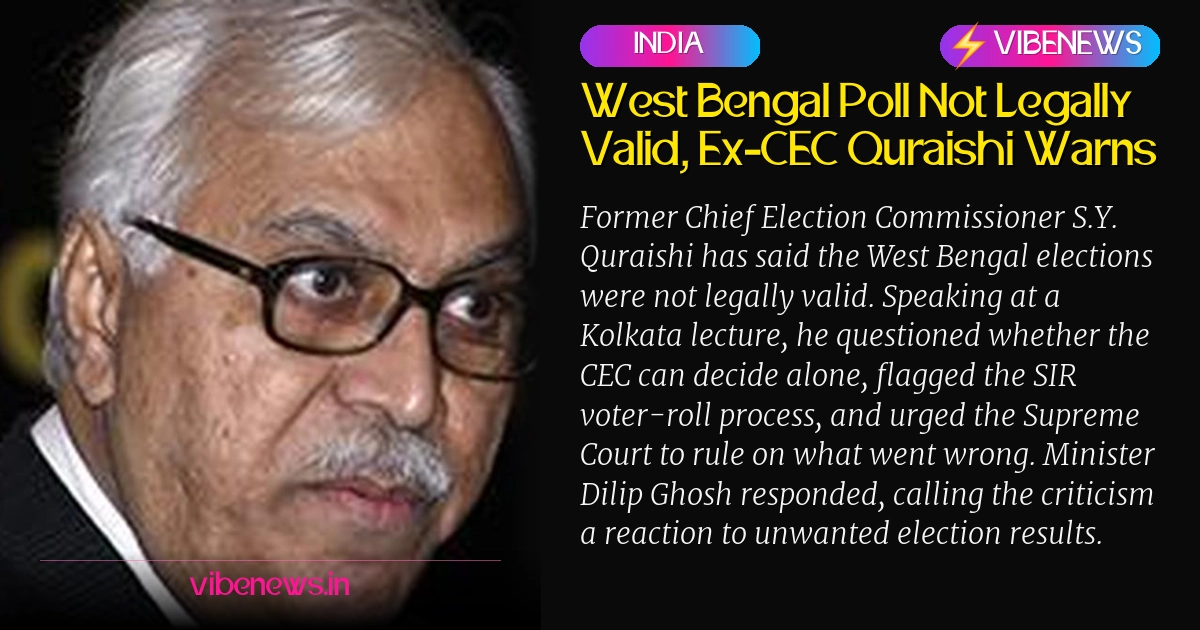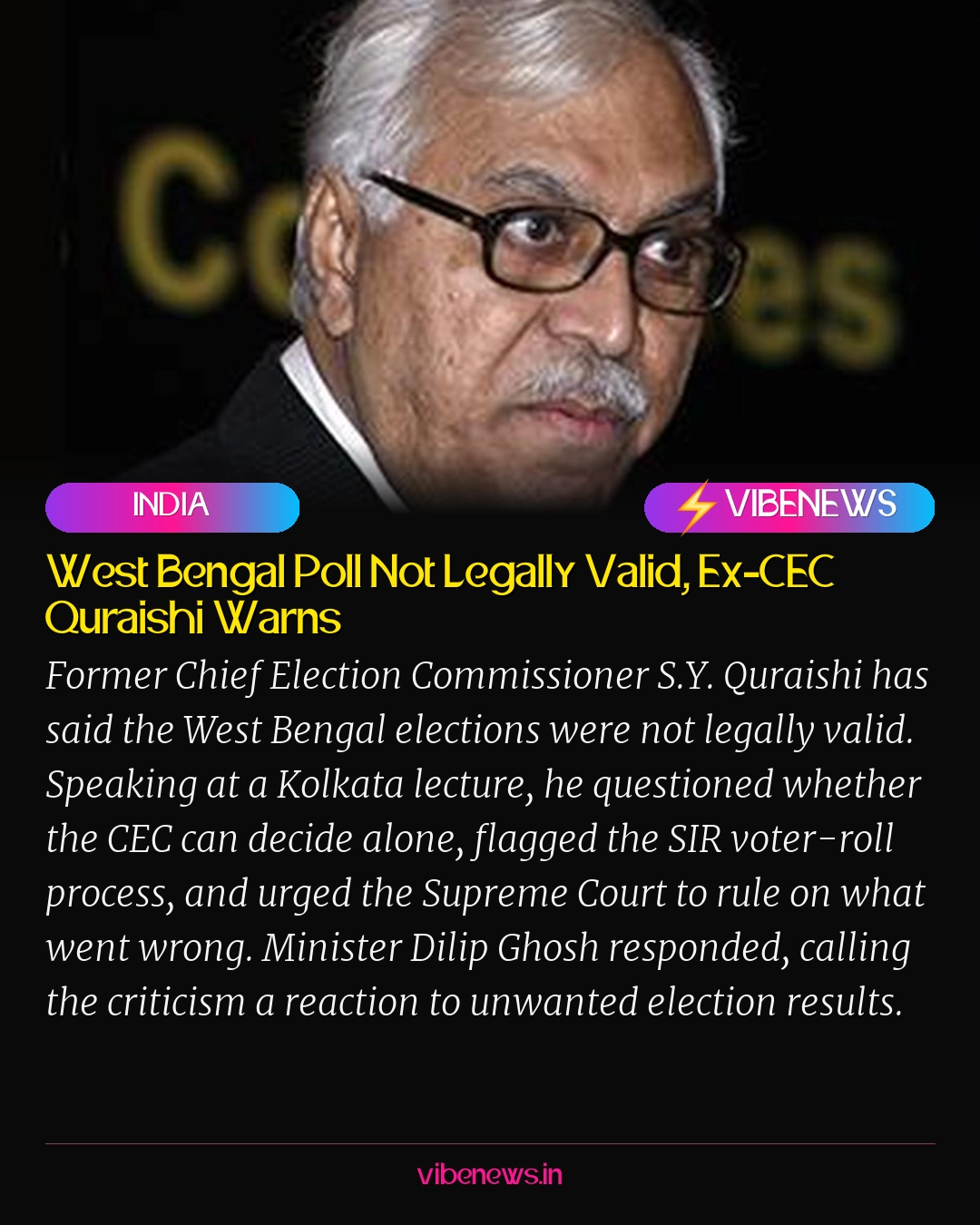
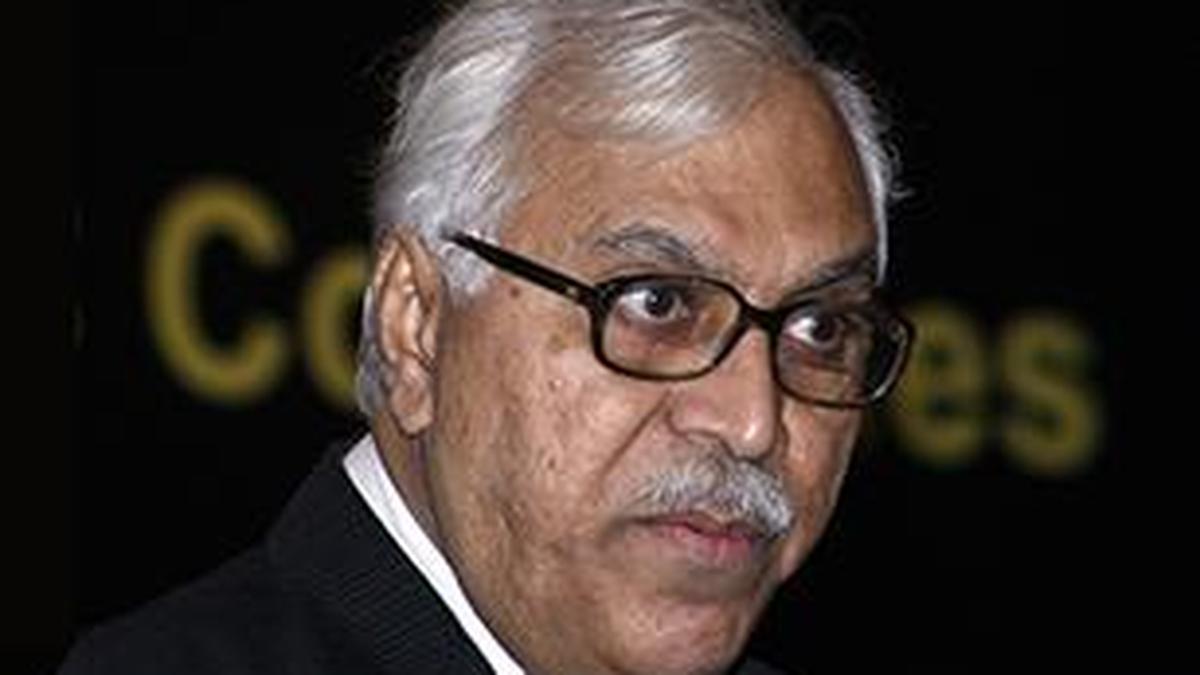
Former Chief Election Commissioner S.Y. Quraishi has said the West Bengal elections were not legally valid, and he wants the Supreme Court to decide the matter once and for all.
He made the claim on Thursday, November 5, 2026, while delivering the keynote address at the Hashim Abdul Halim Memorial Lecture in Kolkata. He repeated the position on Friday, November 6, when reporters asked him to respond to the reaction it had triggered.
The question he put on the table
Quraishi did not hedge. Asked directly whether the polls were legally valid, he answered in one line that he has now repeated several times.
“Were the West Bengal elections legally valid? In my opinion, it was not. I have said this several times; I will say it again.”
He added that the matter is now before the Supreme Court and said he hopes the court will take the right decision. He was careful to say that parts of the election may have been valid. But he drew a firm line where he believes the process broke down. In places where there was suspicion that majority Muslim voters had been removed from the rolls, he argued those areas must be rechecked and, if needed, sent for re-polls.
The CEC versus the full Commission
The sharpest part of his argument goes to how the Election Commission of India makes decisions. Quraishi said the Chief Election Commissioner is not the Election Commission on their own. “The CEC is not the Election Commission. The rules first call for unanimous decisions. If that is not possible, there must be a majority-based decision among the three members of the ECI,” he said.
In his view, a decision taken by the CEC alone cannot be final. That is the core of the constitutional problem he is pressing. If the commission is a three-member body, the authority to settle contested decisions sits with the members collectively, not with one person at the top.
He tied this directly to a newspaper report that claimed two election commissioners, Sukhbir Singh Sandhu and Vivek Joshi, had raised at least 14 objections to various decisions allegedly taken unilaterally by CEC Gyanesh Kumar. Quraishi used that claim to make his point about process. Those objections, as reported, were the kind of internal dissent the rules are meant to resolve through unanimity or a majority vote.
Special intensive revision under fire
Quraishi also turned his fire on the special intensive revision, known as SIR. He accused the exercise of being used as a process for backdoor checks on citizenship. That is a serious charge, and he did not soften it.
He said the revision was neither smooth nor transparent. According to him, so many questions were raised about it that they are now being heard in the Supreme Court. He framed the voter experience in blunt terms as well. A voter, he said, should not have to beg for their voting rights. In the past, he noted, voter cards were delivered to the homes of each voter, and people did not have to negotiate to be included in the electoral rolls.
He was clear that the court will have the final word. “Now, things will come out clearly once their judgment arrives, regarding what went wrong and what was correct,” he said.
Government hits back
Minister Dilip Ghosh responded on Friday, November 6, 2026, dismissing the allegations as the result of disappointment. “This government has been in power for 6-7 months. People are happy. But some people are raising questions, maybe because they did not get the outcome that they desired,” Ghosh said.
He also warned that accepting the people’s verdict and choice of government was the right course. Those opposing it, he said, would have a “tough” road ahead. The exchange sets up a direct clash between a former constitutional authority questioning the validity of the result and a senior political voice insisting the mandate is settled.
Why the legal question matters beyond Bengal
The dispute is no longer only about one state election. It touches how the Election Commission reaches decisions, who holds the final say when members disagree, and whether a revision of voter rolls can be used for purposes beyond maintaining electoral lists. Quraishi’s argument turns on the difference between a decision taken by one commissioner and a decision backed by the full body, and that distinction will matter to anyone studying the constitutional structure of India’s electoral machinery.
For now, the most important fact is procedural and simple. The matter is pending before the Supreme Court. Quraishi says the court will need to examine what went wrong in the SIR process, the handling of contested decisions, and the places where he believes voters may have been unfairly removed. Until that judgment arrives, the legal validity of the West Bengal elections remains an open question, and a former Chief Election Commissioner has put his name firmly on the side of doubt.
TL;DR
- Former CEC S.Y. Quraishi says West Bengal elections were not legally valid and wants the Supreme Court to decide.
- He made the claim at a Kolkata lecture on November 5, 2026, and repeated it the following day.
- Quraishi argues the CEC alone cannot make final decisions; the rules call for unanimity or a majority of three members.
- He accused the SIR voter-roll revision of being used for backdoor citizenship checks.
- Minister Dilip Ghosh dismissed the criticism, saying people are happy and some are unhappy with the outcome.