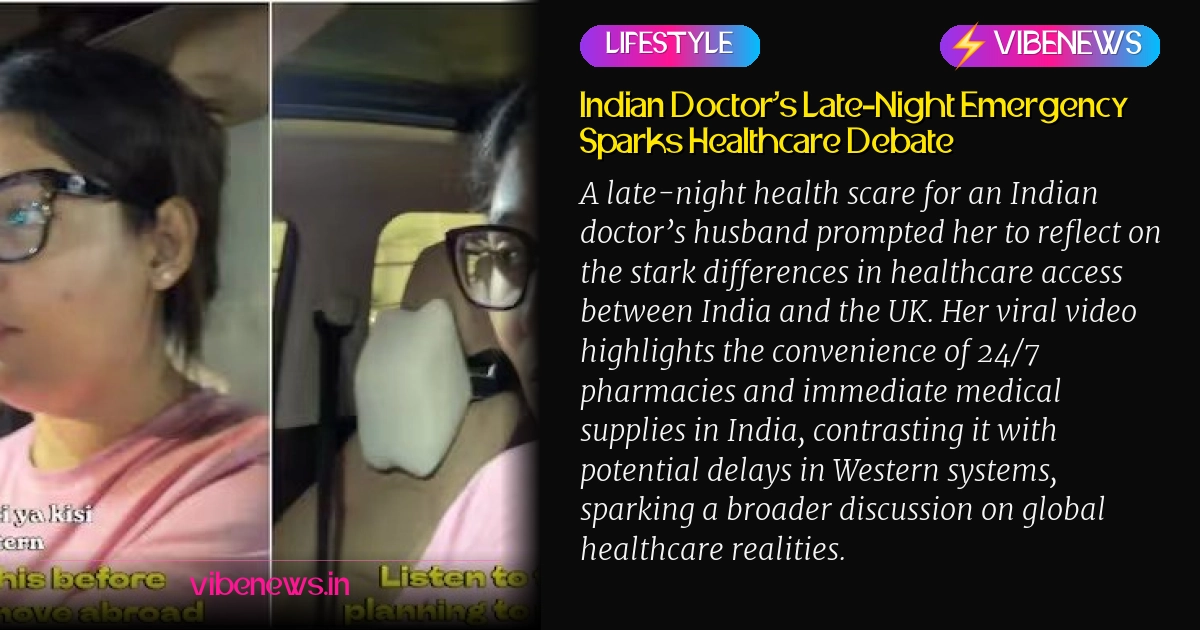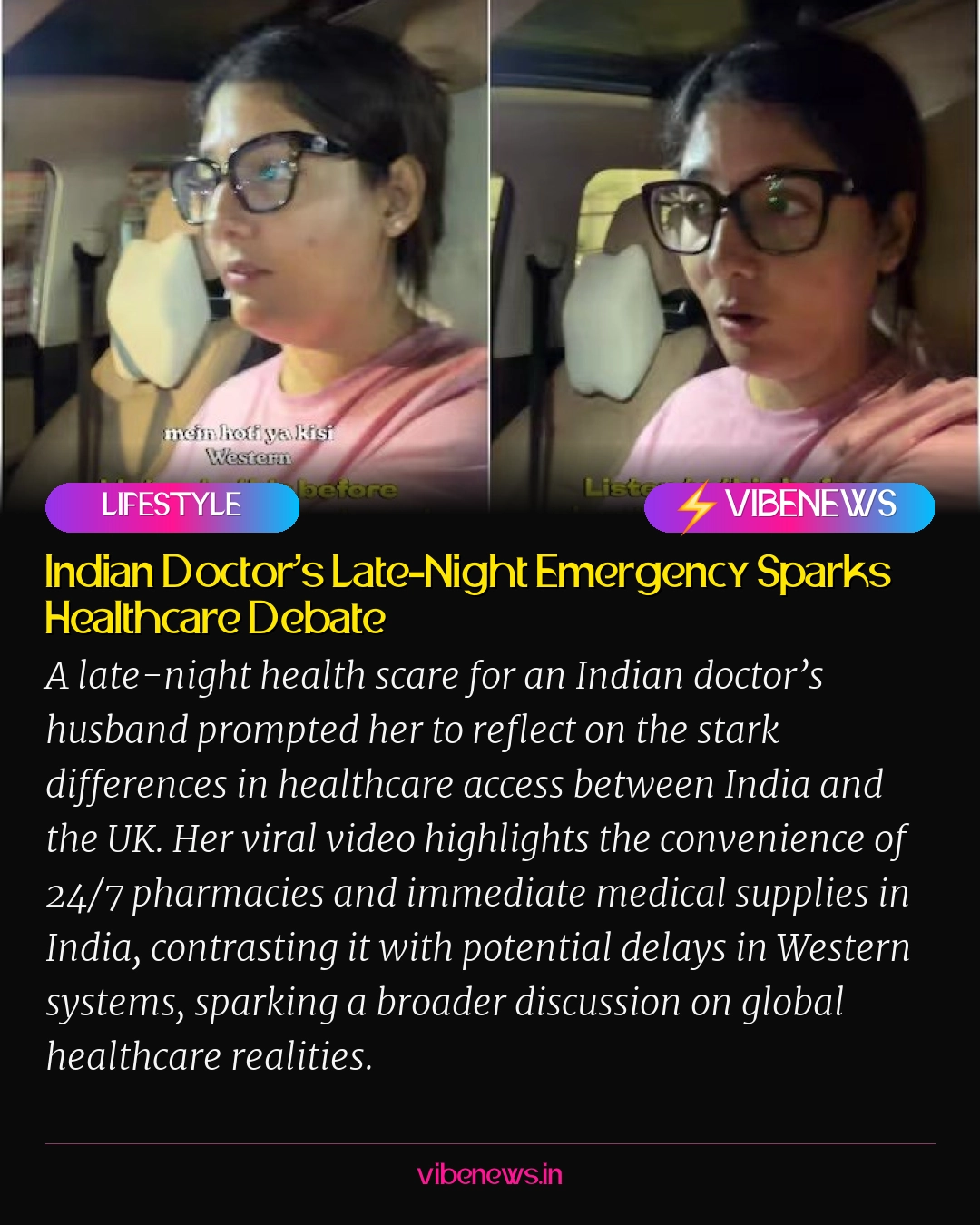
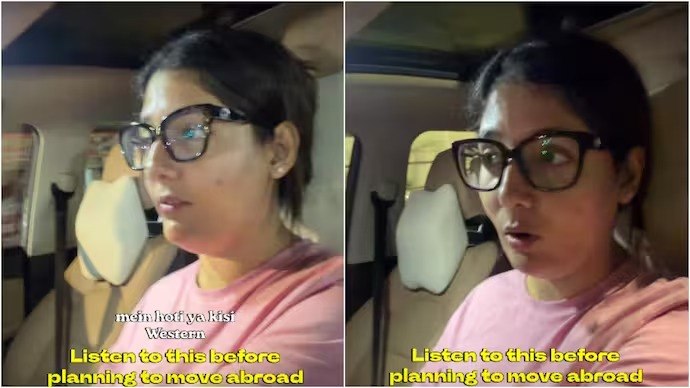
A sudden health emergency involving her husband prompted Dr. Deepanjali Sharma, an Indian pulmonologist, to share a poignant comparison of healthcare access between India and Western nations like the UK. Her experience, detailed in a viral Instagram video, began late one evening when her husband, also a doctor, developed a severe headache followed by repeated vomiting.
Faced with the urgent need for medication and intravenous injections at 10 PM, Dr. Sharma quickly headed out. It was during this late-night errand that she experienced a profound appreciation for the immediate availability of medical supplies and services in India, a convenience she felt might be overlooked by many.
Contrasting Healthcare Realities
Dr. Sharma recounted her impressions of healthcare access abroad, particularly in the UK. She noted that even as a medical professional, securing immediate assistance or specific medications outside regular hours in Western countries could be a significantly more complex and time-consuming process. Emergency departments, often grappling with heavy patient loads, might not offer instant attention for conditions that, while urgent, are not life-threatening.
The contrast was stark for her: in India, she could readily access a pharmacy late at night to procure necessary medicines and return swiftly to care for her husband. This ease of access, she suggested, stands in sharp relief to the structured and often appointment-driven systems prevalent in many Western healthcare models, where prescription requirements and limited operating hours for pharmacies can pose considerable hurdles.
India’s healthcare landscape, particularly in urban and semi-urban areas, is characterized by a dense network of private pharmacies, many of which operate round-the-clock. This accessibility is often taken for granted by residents, providing a crucial safety net for unexpected medical needs. The system, while having its own set of challenges, offers a level of immediate retail medical access that differs significantly from the more regulated and often centralized distribution models found in countries like the UK, where the National Health Service (NHS) primarily dictates access to care, often through general practitioners and hospitals.
The Nuance of Privilege and Perception
Dr. Sharma was careful to qualify her observations, emphasizing that her comparison was not an assertion of India’s healthcare system being flawless. She acknowledged that numerous aspects of healthcare in India require substantial improvement, from public health infrastructure to equitable access across all socio-economic strata. Her experience, she admitted, also stemmed from a position of personal privilege, recognizing that easy and affordable healthcare access is not a universal reality for every Indian citizen.
Her broader message, however, resonated with many: the tendency to idealize life abroad, particularly in Western countries, often overlooks the unique conveniences and comforts available in India. She highlighted that many aspects of daily life and essential services, which are taken for granted in India, can become significant struggles or logistical challenges in other nations.
Public Discourse and Systemic Reflections
The doctor’s video quickly gained traction online, sparking a wide-ranging discussion among users. Many echoed her sentiments, sharing their own experiences and appreciating the convenience of 24-hour pharmacies, the relative ease of consulting doctors, and the quick availability of medicines in India. This collective affirmation underscored a shared value for immediate medical access.
Conversely, some commentators used the discussion to highlight deeper systemic differences. They raised concerns about the regulatory environment in India, particularly regarding the easy access to certain prescription drugs without stringent oversight, a point that often contrasts with the stricter controls in Western pharmaceutical distribution. The debate also touched upon the fundamental philosophies underpinning different healthcare systems – the market-driven private sector in India versus the publicly funded, universal access model of the NHS.
Ultimately, the conversation reinforced Dr. Sharma’s overarching point: no country offers a perfect living experience. Every nation presents its own unique blend of comforts, compromises, and frustrations, and a holistic understanding requires looking beyond superficial comparisons.
Editorial Context: Beyond the Immediate Comparison
Dr. Deepanjali Sharma’s viral account transcends a simple comparison of healthcare systems; it ignites a crucial dialogue about global mobility, cultural perceptions, and the often-unseen trade-offs involved in relocating. This development matters over the long term because it challenges a prevalent narrative that often idealizes Western living while overlooking the practical advantages of one’s home country.
For policymakers in India, it serves as a reminder of the strengths within the existing healthcare infrastructure, particularly the robust private sector and its accessibility, while simultaneously highlighting the persistent need to address disparities and improve public health services. For those considering emigration, it offers a nuanced perspective, urging a deeper consideration of daily conveniences and support systems that are often taken for granted.
The discussion also prompts a global reflection on healthcare models. It underscores the value of immediate access to basic medical supplies, a feature that many developed nations are now struggling to maintain amidst increasing demand and resource constraints. This incident encourages a more balanced and informed understanding of global healthcare realities, moving beyond simplistic judgments to appreciate the complex interplay of culture, policy, and infrastructure in shaping individual experiences.
TL;DR
- Dr. Deepanjali Sharma’s viral video highlighted the ease of accessing medicines and 24/7 pharmacies in India during a family health emergency.
- She contrasted this with potential difficulties and delays in obtaining immediate medical assistance or specific medications in Western countries like the UK.
- Sharma acknowledged her personal privilege in accessing healthcare in India and stressed that no country offers a flawless system.
- The video sparked a debate among users, with many agreeing on India’s conveniences while others raised concerns about regulation and prescription drug access.
- The broader message emphasized that moving abroad doesn’t guarantee an automatic upgrade in all aspects of life, each country having its own challenges and comforts.