Plot and Central Conflict
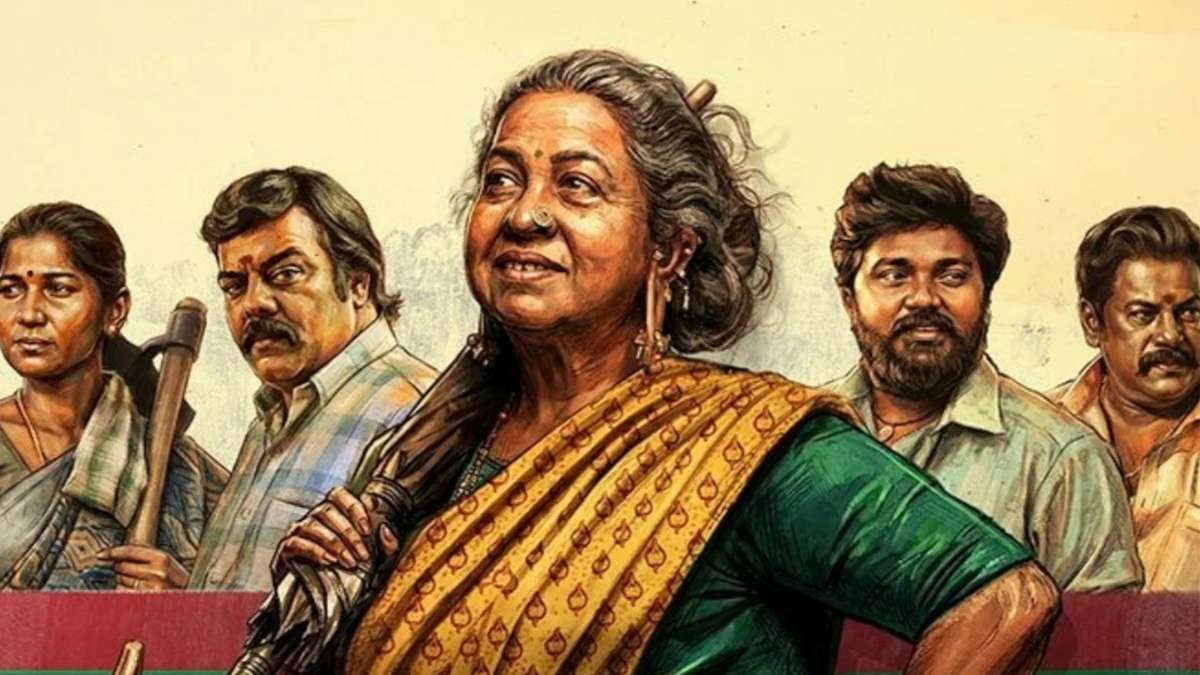
Thaai Kizhavi follows an elderly widow (Radikaa Sarathkumar) living in a conservative Tamil Nadu village. After her husband’s death, she faces pressure from her sons and extended family to surrender her property and independence. The story traces her journey from quiet endurance to open rebellion as she asserts her rights to her land, her home, and her dignity. The film explores generational conflict, widowhood stigma, and the intersection of gender and age-based oppression in rural India.
Radikaa Sarathkumar’s Performance
Radikaa delivers a tour-de-force performance, portraying a woman who is both deeply traditional and quietly revolutionary. Her physicality—stooped posture gradually straightening as she gains confidence—is remarkable. The emotional range from resigned pain to fierce determination is handled with subtlety and power. This role marks a triumphant return to lead parts for the veteran actress, showcasing her range beyond earlier glamorous roles.
Supporting Cast and Direction
The ensemble cast is strong, particularly the actors playing her sons and daughter-in-law, who embody different shades of patriarchal entitlement and internalized misogyny. The village setting feels lived-in and authentic, with excellent production design and cinematography capturing both beauty and harshness of rural life. Direction maintains a measured pace that allows character moments to breathe, though some middle sections feel slightly repetitive.
Thematic Depth and Social Commentary
The film unflinchingly examines how patriarchy operates through family structures, property laws, and cultural norms that devalue aging women. It highlights the economic dimension of gender oppression—land ownership as power—and the courage required to challenge entrenched systems. The narrative avoids melodrama, letting quiet scenes of humiliation and resistance speak volumes.
Minor Flaws and Overall Impact
Pacing occasionally lags in the second half, and some secondary characters feel underdeveloped. However, these are minor compared to the film’s strengths. Thaai Kizhavi succeeds as both an emotional family drama and a sharp social critique. It stands out in contemporary Tamil cinema for centering an elderly female protagonist and refusing easy resolutions.
TL;DR
- Thaai Kizhavi stars Radikaa Sarathkumar as an elderly widow fighting for dignity.
- The film examines women’s agency within patriarchal family structures.
- Radikaa delivers a career-best performance full of emotional depth.
- The story is set in a conservative Tamil Nadu village.
- It explores generational conflict, widowhood stigma, and property rights.
- Supporting cast effectively portrays different shades of patriarchy.
- Direction maintains a measured pace with authentic village setting.
- The narrative balances raw emotion with sharp social commentary.
- Minor flaws include occasional pacing issues and underdeveloped secondary characters.
- Overall, a powerful drama and important voice in contemporary Tamil cinema.