Plot and Historical Setting
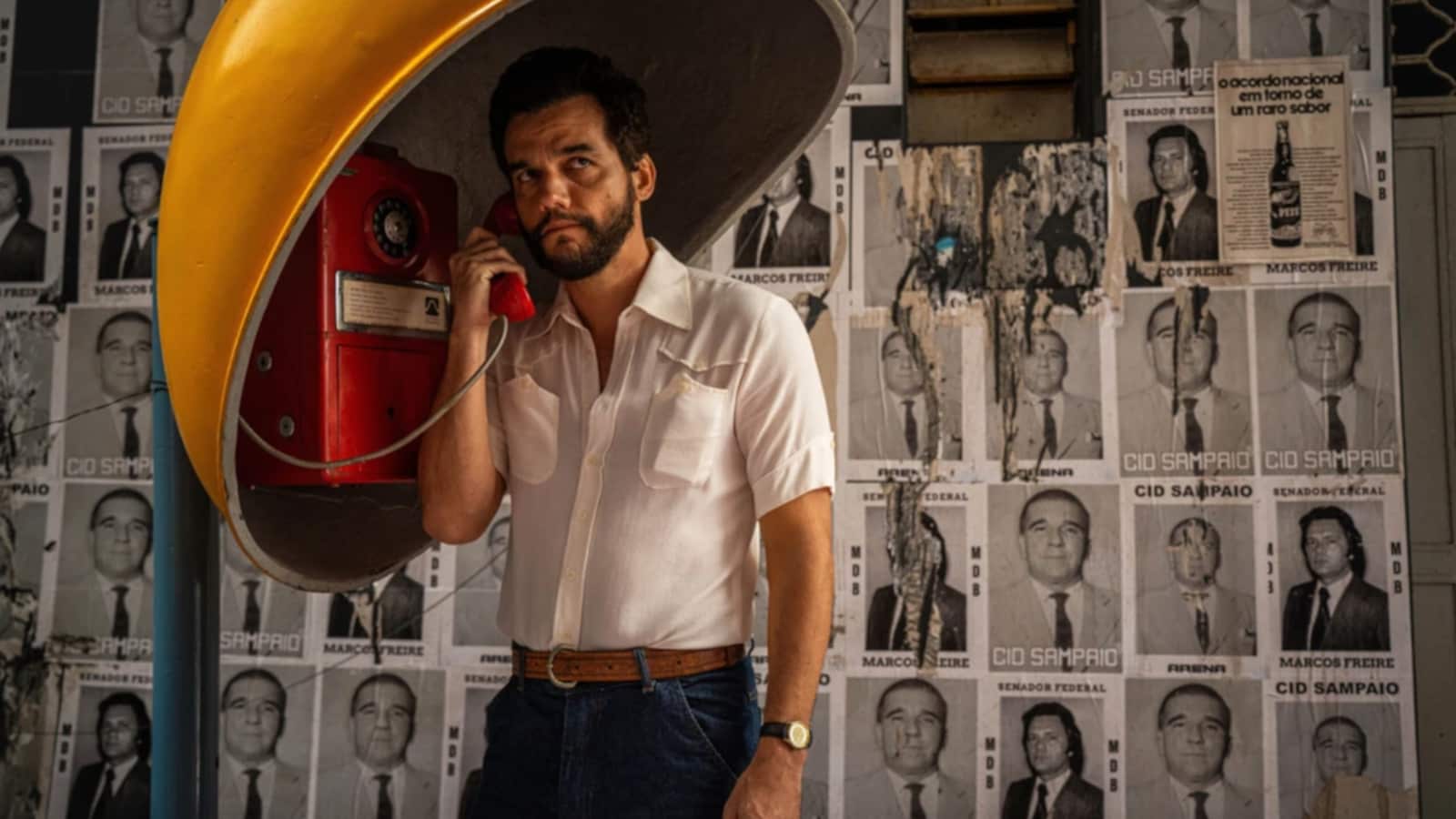
The Secret Agent is set in 1977 Brazil during the military dictatorship’s most repressive phase. Wagner Moura plays an experienced government operative tasked with infiltrating leftist groups while grappling with his own growing doubts about the regime’s methods. The narrative follows his double life—loyal agent by day, increasingly conflicted man by night—as he navigates surveillance, torture, betrayal, and the personal toll of serving an authoritarian state. The film draws from real historical events and the climate of fear under the military government, blending fact with fictionalized personal drama.
Wagner Moura’s Central Performance
Moura is the undeniable highlight. He portrays a man torn between duty and conscience with remarkable subtlety—quiet intensity in interrogation scenes, haunted silences in private moments, and barely contained rage when witnessing brutality. His physical transformation (aging makeup, weary posture) and vocal restraint make the character feel lived-in and authentic. Moura carries long dialogue-free sequences with his eyes alone, conveying volumes of internal conflict. This ranks among his strongest non-Portuguese-language performances.
Direction, Cinematography, and Atmosphere
The direction maintains a suffocating sense of paranoia through tight framing, muted color palette, and sparse sound design that amplifies footsteps, whispers, and slamming doors. Cinematography captures both the oppressive architecture of government buildings and the claustrophobia of safe houses. The 1970s period detail is meticulous—clothing, cars, office equipment—without ever feeling like a museum piece. The film’s restrained style suits the material, avoiding melodrama in favor of creeping dread.
Strengths and Minor Weaknesses
The film excels as a character study and historical snapshot. It avoids preachiness, letting the moral rot of authoritarianism emerge organically through actions and consequences. Supporting performances are solid, especially the actors playing Moura’s superiors and fellow agents. The main weaknesses are occasional pacing lulls in the middle act and some underdeveloped subplots involving family members. A late twist, while effective, arrives slightly too late to maximize impact.
Thematic Depth and Relevance
The Secret Agent is a stark examination of how ordinary people become complicit in authoritarian systems through incremental moral compromises. It examines loyalty, surveillance culture, the erosion of conscience, and the psychological cost of serving oppressive power. The film resonates strongly in 2026, drawing parallels to contemporary democratic backsliding and state overreach without being heavy-handed. It stands as both a compelling thriller and a sobering historical reflection.
TL;DR
- Wagner Moura stars as a conflicted government agent in 1977 Brazil.
- The film is set during the military dictatorship’s repressive phase.
- Moura delivers a nuanced performance full of internal conflict.
- The story explores loyalty, surveillance, and moral compromise.
- Direction maintains tension through tight framing and sparse sound.
- Cinematography captures the oppressive atmosphere effectively.
- Period details are meticulous and authentic.
- The film succeeds as both thriller and historical reflection.
- Minor weaknesses include occasional pacing lulls and underdeveloped subplots.
- It resonates with contemporary concerns about authoritarianism.