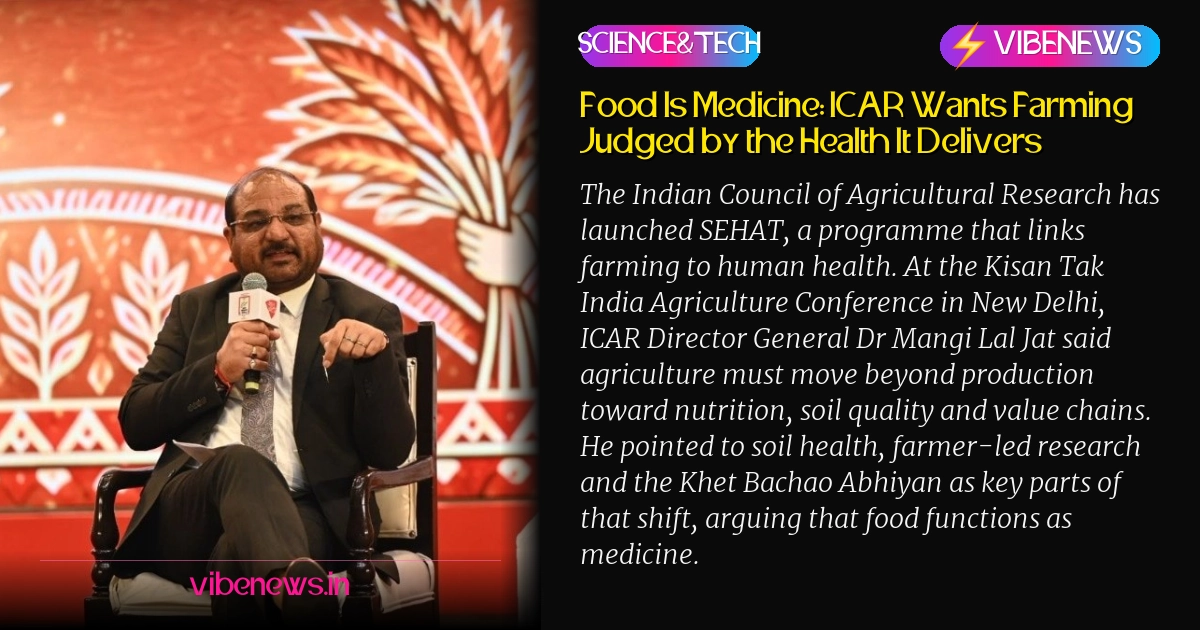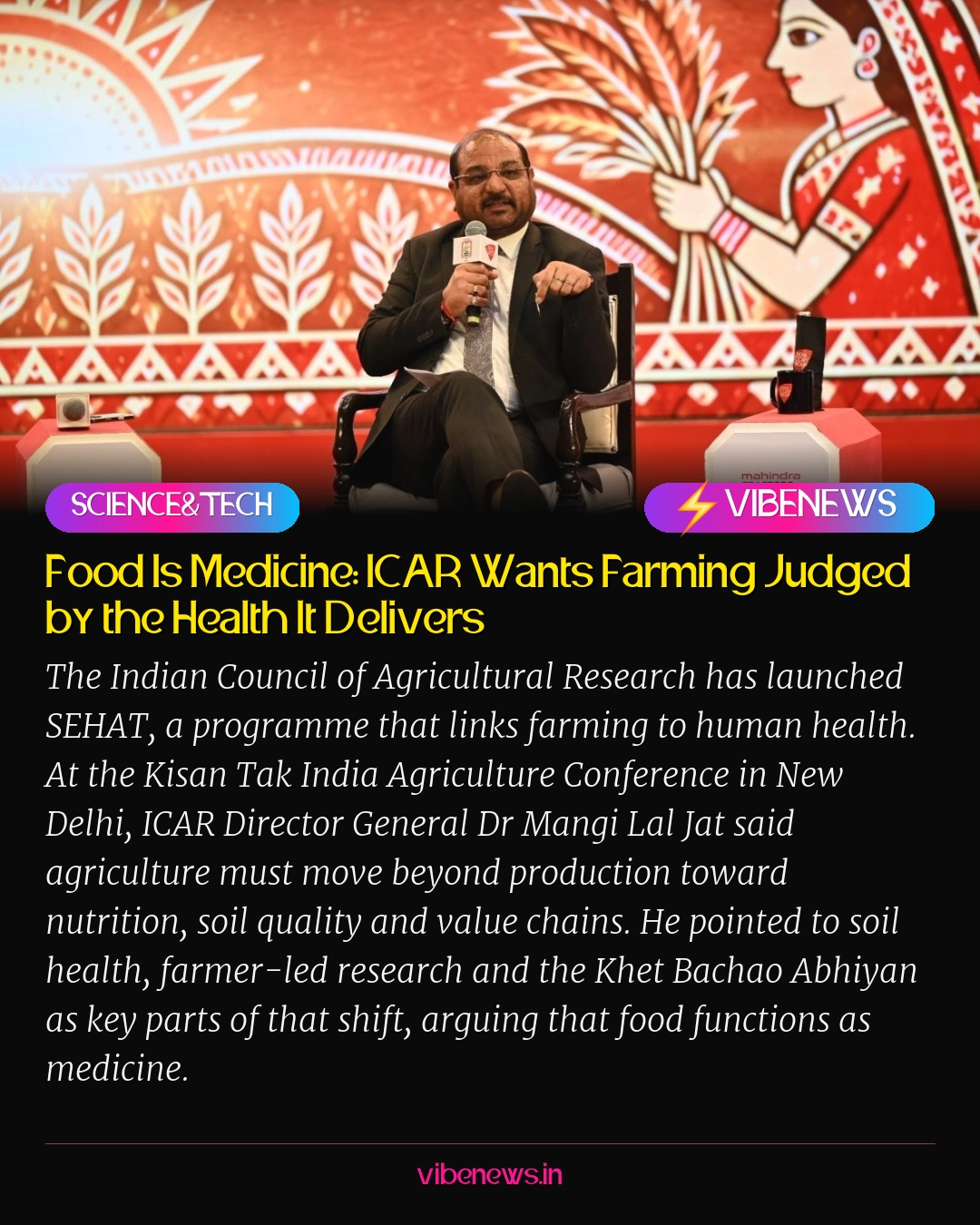
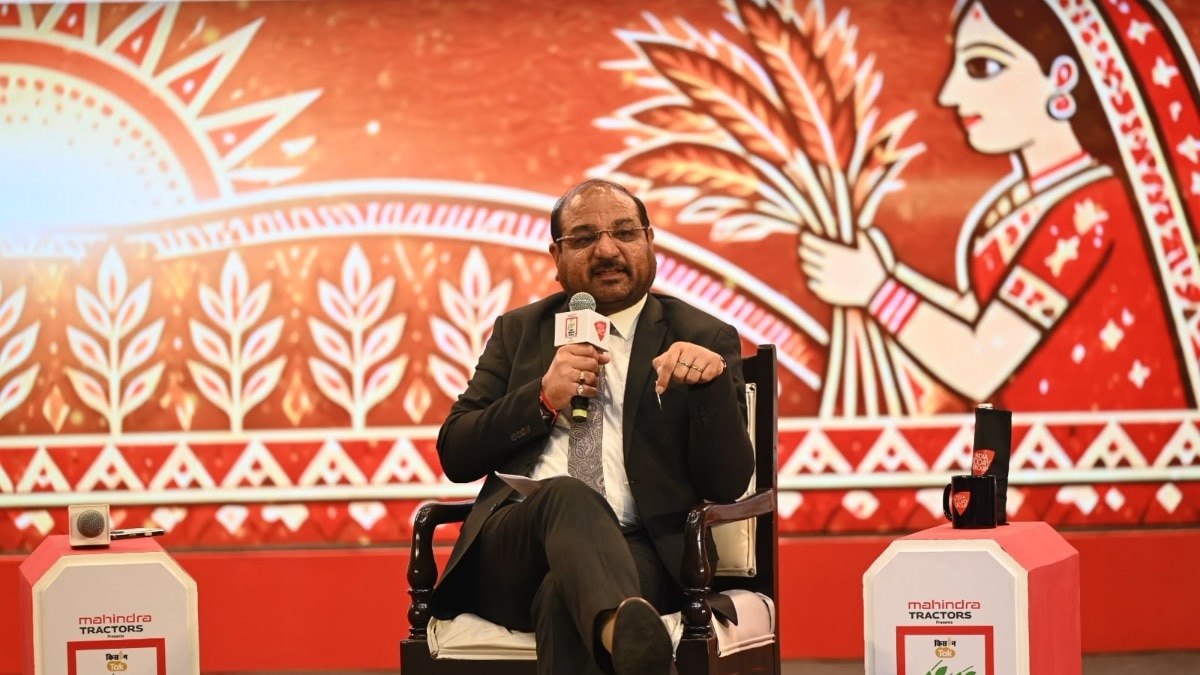
The Indian Council of Agricultural Research (ICAR) has launched a new programme called SEHAT, short for Science Excellence for Health through Agriculture Transformation, to tie farming more closely to human health. The launch was discussed at the Kisan Tak India Agriculture Conference in New Delhi on November 11, 2026, where ICAR Director General Dr Mangi Lal Jat made the case that agriculture has been judged by the wrong measure for too long.
Dr Jat, who is also Secretary of the Department of Agricultural Research and Education (DARE), said farming must evolve from a production-centric model into a market-driven agro-food system. In his view, that system should place health, nutrition, soil quality and value chains at its centre. A photo from the event shows Union Minister JP Nadda during the launch of the SEHAT mission.
"Food is medicine, and we need to look at agriculture in that context," Dr Lal said.
The line sums up the argument. If food shapes how people feel and how their bodies hold up over time, then the farm is where public health starts. SEHAT is meant to connect agricultural research directly with public health outcomes, so that the work done in fields and labs is measured by what ends up on people’s plates.
The idea is easy to state but harder to put into practice. Most agricultural success has traditionally been counted in tonnes harvested and yields per hectare. Dr Lal’s position pushes the conversation toward a different question: how much of what a farm produces actually nourishes the people who eat it.
Soil comes first
Soil health sits at the foundation of the new approach, according to the speakers at the conference. Dr Lal referred to the Khet Bachao Abhiyan, an initiative that has drawn attention to soil health, excessive fertiliser use and the impact of climate phenomena such as El Nino on agriculture. Union Minister for Agriculture and Farmers Welfare Shivraj Singh Chouhan was pictured at the launch of that nationwide campaign.
The logic connects directly to the health message. Food grown in depleted or overworked soil can only be as good as the ground it came from. Fertiliser overuse and climate stress are problems that show up on farms first, but their effects can travel much further, into diets and into the livelihoods of the families who grow the food.
Farmers as partners in research
Dr Lal was blunt about one of the weaknesses of the current system. Agricultural research, he said, cannot remain confined to laboratories and institutions. Scientists need to engage directly with farmers, learn what problems they face on the ground, and build solutions that fit those realities.
To make that point, Dr Lal said the ICAR had received more than 500 researchable issues from farmers and had started what he called double-loop farming. He stressed that farmers are scientists in their own right, often developing innovative fixes through years of hands-on experience. The approach treats their knowledge as a starting point for research rather than an afterthought.
Digital technologies are also changing how the sector works, and the speakers said that shift makes farmer input more important. Building a stronger agricultural data ecosystem will depend on closer collaboration between researchers and farming communities. Data is only useful if it reflects what happens in the field, and farmers are the ones who can say whether a recommendation actually works.
From production to value chains
India’s farm story has changed sharply since the Green Revolution. Foodgrain production has more than doubled since that period, a result the speakers credited to better agricultural policies, technology and the work of farmers themselves. Dr Lal’s message was that this achievement is no longer the whole job.
The next phase, he said, requires moving beyond simply growing more. The focus must shift toward agro-food systems, market linkages and value-chain agriculture. The aim is to make sure farmers share in the benefits across the entire journey of food, from the field through processing and distribution, rather than capturing only the first step.
Climate change adds another layer to the problem. Its effects do not stop at the edge of an individual farm, which is why the speakers argued that planning and cooperation need to operate at a broader scale. Farms are connected through water, soil, weather and markets, and solutions that ignore those links are likely to fall short.
What the conference signalled
The conference’s closing message was direct. The future of farming in India will depend not just on how much food the country produces, but also on how that food nourishes people, sustains soil and protects livelihoods. Whether SEHAT can deliver on that promise will depend on how closely research, policy and farmers’ own experience are tied together in the years ahead.
TL;DR
- ICAR has launched SEHAT, a programme meant to connect agricultural research with human health and nutrition.
- ICAR Director General Dr Mangi Lal Jat said farming must shift from production-centric models to market-driven agro-food systems.
- "Food is medicine," Dr Lal said, urging a health-focused view of agriculture.
- ICAR says it received over 500 researchable issues from farmers and started double-loop farming.
- Foodgrain production has more than doubled since the Green Revolution, but the next phase focuses on value chains.